
Turlock mayor candidates continue to punch it out
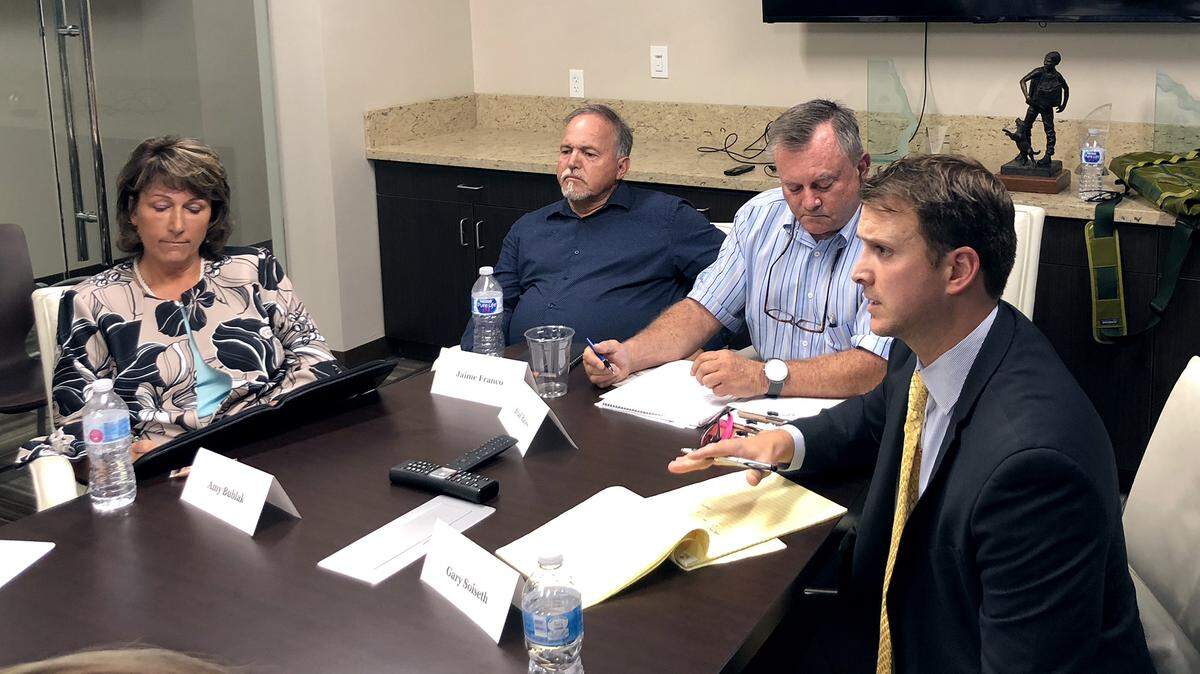
The candidates for Turlock mayor in the November election traded verbal body blows Wednesday during a question-and-answer session before The Bee’s editorial board.
Councilwoman Amy Bublak and former Mayor Brad Bates hit on some of the same issues they have raised against Mayor Gary Soiseth, including that he has driven off department heads because of his aggressive micromanaging and that under his leadership the city is on pace to spend all of its general fund budget reserves within three years.
“We’ve got to fix what’s broken, and that’s the leadership of the city of Turlock,” said Bates, who was mayor from 1982 to 1990.
He said he decided to run because of what’s happened under Soiseth’s tenure, including the Turlock Certified Farmers Market’s moving from downtown to the fairgrounds after another market run by a family member of businessman Matt Swanson — who is Soiseth’s biggest financial contributor — received City Council permission to displace the certified farmers market from its Main Street location.
Bublak and Bates said Soiseth has interfered with employees and city operations, and not acted as he is required to act, as one of five elected officials who set policy that is implemented by the city manager and department heads.
“Our turnover is directly related to the micromanaging of our mayor,” said Bublak who has been on the council for a decade. “... I’m actually running because so many employees asked me to. They know I’d stand up to Gary.”
Soiseth called Bublak’s and Bates’ remarks “alarmist rhetoric.” He said he reviewed the city’s turnover rate among police and fire and management and said it’s typical among cities. He said department heads left for better jobs or because they retired. He added that morale is high among rank-and-file employees.
Soiseth was elected to his first term in November 2016, and under his tenure Turlock has lost two city managers, a city attorney, a police chief, a city clerk, a fire chief, a city engineer and the deputy director of development services and planning.
Gary Hampton, one of the two city managers who left, accused Soiseth of bullying him and other staff and of trying to pressure him to use his influence to help then City Attorney Phaedra Norton get Hampton’s job when he retired. Hampton retired in July 2017, about six weeks earlier than he planned. He later filed a claim against the city for the six weeks in compensation he gave up.
The city settled his claim by paying him $39,000 this year. Soiseth and Norton have denied Hampton’s accusations.
Jaime Franco, who ran unsuccessfully for City Council in 2016, is the fourth candidate for mayor. His candidacy is a long shot, he did not know many of the issues facing the city, and he did not take part in the verbal skirmishes. He was the most civil among the candidates.
Soiseth said he has been focused on solutions to problems Bates and Bublak failed to address. For instance, Soiseth pointed to his leadership in the effort for Ceres and Turlock to build a drinking water plant along the Tuolumne River. That would get the cities away from relying solely on groundwater, which is not as reliable or as clean as river water.
He said the plant will secure Turlock’s water and economic future, though the cost of the project will roughly double what water customers pay in five years. The plant is expected to be running by 2022.
Soiseth also talked about his support of Measure L, the half-cent transportation tax Stanislaus County voters passed in November 2016. He said he has been able to leverage Turlock’s share of the tax to secure additional state and federal funding for transportation projects.
Bublak did not support Measure L. Bates said it was misrepresented to voters.
According to a staff presentation at the City Council’s Aug. 14 meeting, Turlock is on pace to exhaust all of its general fund budget reserves in about three years. New City Manager Bob Lawton told the council: “The picture before you is serious, but I would not say hopeless.”
The roughly $42 million general fund primarily pays for public safety. Reserves were $14.9 million in the city budget just before Soiseth’s election, according to the staff presentation.
Soiseth said the council built up reserves and then decided to invest in Turlock by paying off some of its public safety pension debt, which cost the city 7.5 percent in annual interest, and by approving labor agreements that provide adequate compensation for city employees who took pay cuts during the recession.
He added Turlock is looking for new revenue sources, which could include raising the transient occupancy tax, which is what motels and hotels charge guests, and entering into a tax sharing agreement with the county regarding businesses just outside of city limits but that use Turlock services.
Soiseth challenged Bublak and Bates for setting a negative tone and spreading misinformation. But Soiseth also said a Stanislaus County grand jury report said Bates had acted unprofessionally while on the council regarding a contract the council awarded to trash hauler Turlock Scavenger. Soiseth provided no details.
But the grand jury in its 1984-85 report said Turlock had acted unprofessionally in how it awarded a contract to Turlock Scavenger, according to Bee archives. The city awarded the contract to the local trash hauler, even though its bid was higher than several other qualified competitors.
Still, the grand jury concluded that the city was allowed to do that, and council members said the cost of service was just one of several factors they considered in awarding the contract. The council rejected the grand jury’s report. Bates, who was an insurance agent and had done business with Turlock Scavenger, did not take part in the vote, according to the archives.
This story was originally published September 27, 2018 at 1:18 PM.