
Teacher training in the spotlight as shortages loom
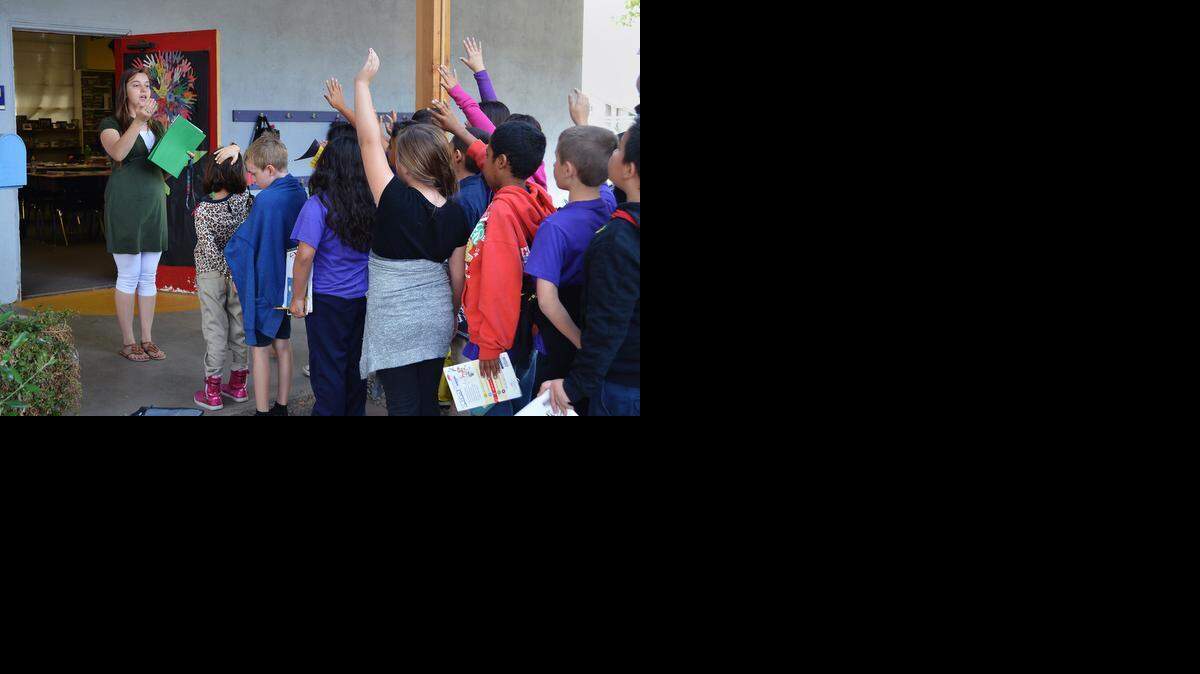
Remember that terrific teacher who made you smile, helped you through, lit the light bulb over your head? That teacher has probably retired, as will roughly one-third of all teachers in California over the next few years. Local districts scrambled this year to fill spots, and teacher preparation programs are gearing up.
But amid the upheaval, new ideas are taking hold. Aspire Public Schools has developed its own system, molding master’s degree-holding teachers to staff its charter schools, and a new study suggests reforms in traditional teacher training.
“There were two or three years there where nobody could get a job,” said Elmano Costa, chairman of the department of teacher education at California State University, Stanislaus. “But in about a year and a half, we’ve gone from a surplus to all of a sudden hiring people all over the place.”
“They (districts) are looking for 80, 90, 100 teachers in some cases,” Costa said.
A wave of retirements and a state push to bring class sizes back down are opening lots of teaching jobs, said Oddmund Myhre, dean of the College of Education, Kinesiology & Social Work at the Turlock campus. “Job fairs are going to be popping,” he said.
Fresh on the heels of four years of layoffs when, by state tally, 32,000 newer teachers had to look elsewhere for work, the industry expects to lose 100,000 to retirement.
Meanwhile, thanks to that earlier flood of pink slips, little fresh blood has flowed in over the last few years. Enrollments in teacher preparation programs plummeted to less than 20,000 in the 2012-13 school year, a decline of 74 percent since 2001-02, notes a study released Oct. 8 by EdSource.
“During the recession, all of the new teachers were getting pink-slipped,” said Lisa Tiwater, director of school district support for the Stanislaus County Office of Education. “I had people crying in the room, saying ‘We heard there are no jobs.’ People stopped enrolling in credential programs.”
“Now, we’ve got the baby boomer bubble retiring and our districts are looking for teachers,” she said, noting many schools scrambled to cover classrooms as the school year started. “I guarantee you there are some classes that started with 30-day subs,” she said. By state law, 30 days is the limit a substitute without the appropriate credential can stay in one class.
Teaching is the largest occupational group in the nation, by Census Bureau count. There are many paths into the classroom, but the two main roads are the credential program, a year of coursework followed by student teaching, and intern programs. Interns are student teachers who essentially learn while doing, paid to lead a class with oversight by a mentor teacher.
But Aspire, which has three public charter campuses in Modesto, uses an entirely different system. After passing an intense interview process, aspiring teachers become residents, earning a master’s degree in education and co-teaching for a year with a master teacher.
“They’re very purposeful in the program,” said Veronica Romero, a lead teacher for fourth and fifth grades at Aspire Summit Charter Academy on Hatch Road in south Modesto. “You’re co-teachers. Residents are there in the summer planning process. You’re part of all the background decisions.”
Fourth-grade teacher Amanda Brown did her residency at Summit with teacher Kenny France. Unlike traditional student teaching programs, mentor and trainee were equals in front of the class, she said. “We would debrief every day after class, what worked, what we could do better. Now I do that naturally, in my head. It made me a more reflective teacher.”
“It benefits both,” Romero said. “Mentors are learning just as much as the resident.”
While a resident, Brown earned a master’s degree from the University of the Pacific through Aspire. She said she paid $10,000 for the degree, which Aspire partially reimburses each year she teaches. “But what was more beneficial was not the coursework, it was time spent in the classroom,” Brown said.
Aspire’s program emphasizes class management skills. In her classroom last week, Brown kept kids on task with short, catchy phrases students instantly responded to. Even when focused on a small group, she kept the classroom noise level at a low simmer.
While effective instructors everywhere use such techniques, they are not as easy as they look. Newer teachers launched into the field as interns said learning on the job, flying solo in a classroom, can be a year of struggle.
“Instead of doing student teaching, you were working. With student teaching, you get more support,” said second-year teacher Tiffany Guenthart, speaking to upcoming teachers at the CSU Stanislaus Student to Teacher Conference last month.
Fellow panelist and former teaching intern Jessica Romo, now a junior high math teacher, said, “Looking back, I wouldn’t have changed it, but my advice is not to do it.”
Teaching students take these jobs for the challenge and for financial need, Tiwater said. “They’re filling a gap – and you have a paying job,” she said. “Some interns do beautifully. It’s just more difficult.”
Because of the local shortage of teachers this year, interns are very much in demand, Costa said, “We have lots of interns, and it’s growing by the hour.” But, he added, teacher interns have a university mentor as well as the district mentor.
Such additional supports for teachers in training are among recommendations of the EdSource study, “Preparing World-Class Teachers, Essential Reforms of Teacher Preparation and Credentialing in California.” The report zeroed in on ways the state could improve teacher training. Among its top targets was student teaching.
“With virtually no state oversight, student teaching, a critically important part of the teacher preparation process, varies widely in quality,” notes the report. It concludes the state should set quality standards for student teaching, giving extra training to mentor teachers and a stipend or release time for the added work.
“The mentor teacher is where the rubber hits the road,” said the county office’s Tiwater. “They’re either stellar or it bombs.”
Another recommendation was to expand programs that blend teaching skills into undergraduate studies, something Stanislaus State is looking at doing, Myhre said. “We have a liberal studies major that most our education students take,” he said. “We started talking last spring of making it more of a continuum.”
“Our goal would be to begin credential courses in the senior year and students could get out of here in 41/2 years, or conceivably even four,” Costa said.
However, teachers looking back may see the value of having more in-depth preparation, said Brandman University instructor Mary Jones. She served in 2012-13 on the California Commission on Teacher Credentialing and now teaches a class on doing educational research.
“A lot of people in the class are working teachers and they tell me, ‘I wish I’d had this research before I actually went into the classroom,’” Jones said.
The bottom line for Tiwater is that with higher expectations, more attention needs to be paid to preparing teachers to meet them.
“California has a long way to go,” she said. “This is just the beginning.”
Bee education reporter Nan Austin can be reached at naustin@modbee.com or (209) 578-2339. Follow her on Twitter @NanAustin.
This story was originally published October 26, 2014 at 9:19 PM with the headline "Teacher training in the spotlight as shortages loom."