
Homelessness among K-12 students up 73% in Stanislaus County since pandemic
Homelessness among K-12 students in Stanislaus County has increased across all racial demographics and school districts since the COVID-19 pandemic. It has doubled among Latino and Asian students.
During the 2024-25 school year, 2,932 students across the county experienced homelessness, up 73% from 1,697 during the 2019-20 school year. The increase in students experiencing homelessness is in line with statewide trends, according to data from the California Department of Education.
Pandemic funding, in addition to new legislation requiring districts to administer a housing questionnaire to families, has helped both identify and assist students experiencing homelessness since 2021. And while improved identification efforts, in part, contribute to higher numbers, so do rising costs and housing challenges, according to the Public Policy Institute of California.
The number of students experiencing homelessness more than tripled in the Turlock Unified School District and Patterson Joint Unified School District since the 2019-20 school year. Ceres Unified School District has had the highest number of students experiencing homelessness since the 2021-22 school year of the four districts The Bee looked at, despite having less than half the population of Modesto City Schools.
Latino students were disproportionately represented among students experiencing homelessness, comprising 85% of students experiencing homelessness at CUSD, 64% at MCS, 51% at TUSD and 77% at PJUSD.
Of students experiencing homelessness in the county, 83% were “doubled up,” per the 2024-25 school year, meaning their families were staying with relatives or friends, according to data from the California Department of Education. About 17% were in shelters, hotels or motels, or temporarily unsheltered.
Asked what psychological and academic challenges children face when their basic needs aren’t reliably met, Stanislaus County Office of Education responded, “Every school district in Stanislaus County has a liaison assigned to assist families, children and youth experiencing homelessness or at-risk of becoming homeless.”
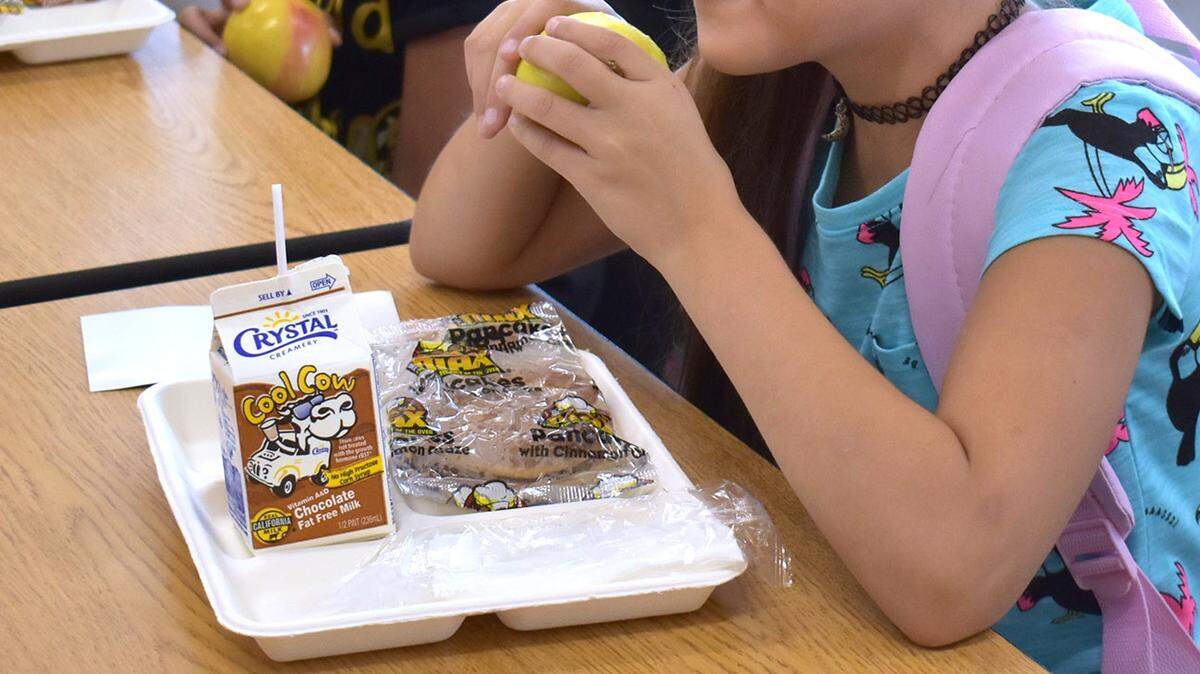
While schools provide free breakfasts and lunches Monday through Friday, and look to arrange transportation for students who struggle to get to campus, their ability to meet all of a student’s basic needs outside of school hours — such as consistent access to food, shelter and running water — is limited.
As many schools report a higher number of classroom disruptions, violence, chronic absenteeism and more since the pandemic, the academic, mental and physical challenges for students experiencing homelessness are tough to navigate.
Children experiencing homelessness are more likely to repeat a grade, receive disciplinary action, have lower graduation rates, be isolated from their friends and social circle, and have depression and anxiety, according to the Learning Policy Institute.
According to Child Trends, more than a third of students experiencing homelessness also experience chronic absenteeism — a rising issue in education since the pandemic. It also noted that existing subgrants provided to students experiencing homelessness by the McKinney Vento Act are usually insufficient to meet all the students’ educational needs.
“Under the McKinney-Vento Homeless Assistance Act, schools in Stanislaus County have a clear, legal role. They are not responsible for ‘fixing’ homelessness, but they are responsible for removing educational barriers,” SCOE said in a statement to the Bee.
This story was originally published December 8, 2025 at 5:04 PM.