
New CA law will make CSUs more accessible for Modesto-area students. Here’s how
AI-generated summary reviewed by our newsroom.
- State law SB 640 enables direct admissions by transferring student records to CSUs.
- Modesto City Schools expands A-G support, dual enrollment and college advising.
- Direct admissions aim to cut application costs and boost access for first-gen students.
Just as Modesto City Schools amps up its efforts to improve college readiness among its students, the state passed a bill into law that will provide high schools students who meet requirements a conditional admission to California State Universities even before they apply.
“Additional education is never going to hurt you. It will always be a value add, 100% of the time,” district Superintendent Vanessa Buitrago said. “This legislation could be a game changer for [our parents’] children.”
Senate Bill 640 puts in place a process called direct admissions with the goal of improving accessibility to CSUs and higher education to the state’s high school students.
Working with the participating 16 CSUs, school districts will transfer student records with GPA and A-G classes completion – a set of 15 courses required for UC and CSU admission– to the universities, which will then send a letter to students if they are offered a conditional admission.
Modesto City Schools is working to improve its A-G readiness rate of 40.5%, which is a bit more than 10% below the state average.
The district launched a Map Your Mission program, which aims to help students set post-graduate goals and understand how to achieve them. It also increased its dual enrollment numbers, offering students a taste of college in high school. MCS already has a direct admissions program in partnership with UC Merced, called MAAPS.
The college application process is expensive, with each application costing $80. A conditional admission reduces application costs for many students, who won’t have to waste fees for a multitude of schools in the hopes of getting into one.
SB 640 also aims to make the application process more equitable for underrepresented students by reducing barriers for entry. And for many students who haven’t considered college or who don’t have close relatives who attended college, a conditional admission might help them consider that path.
In Modesto, only 25% of adults 25 and older have an associate’s degree or higher. In Stanislaus County, it is only 23%.
“It opens up some unique opportunities to support our marginalized student groups, our first-generation goers, our English learners, even our students with disabilities who may not have thought about it to go deeper, engage while understanding you already have [admissions] in your hand now how do we make it a reality for you,” MCS Senior Director of Student Support Services Tony Lomeli said.
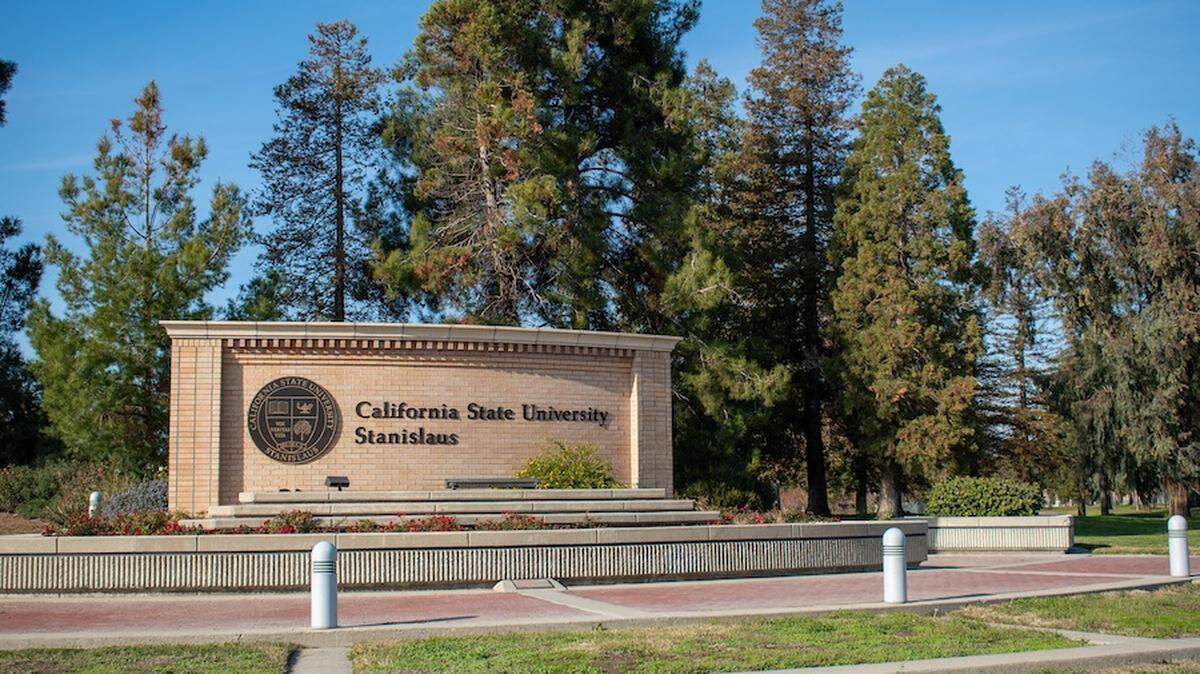
Buitrago said she’s excited about the bill and the doors it opens for students in the district. She said CSU Stanislaus, one of the partnering schools, will be a great option for families who would like for their children to get a four-year degree without going too far from home.
“That being said, our success with getting students into a four-year directly out of high school is not where it needs to be,” Buitrago said. “I think what this legislation does is that it opens up additional opportunities. My hope is that with this, we will see more students going on to get a four-year degree.”
Lomeli said the district looks forward to building support for students considering college, such as opportunities to visit the CSU campuses and speak with admissions counselors and college students.
The district is also building a pilot program in partnership with Stanislaus State whereby students interested in becoming teachers can take dual enrollment courses at the university while still in high school, receive an automatic admission and then return to the district to teach.
Buitrago said education, healthcare and agriculture are three sectors that have local job opportunities. She hopes to build more pipelines within higher education to show students who want to stay local that they can attend college and find a job near their home.
“You can stay here and be incredibly successful, you can be near your family,” Buitrago said. “This partnership is truly an opportunity to interrupt the brain drain.”
She added that in the Central Valley, a place ripe with opportunity for skilled labor, many families and students think they have to choose between college or career. But “it can and should be both,” she said, offering the example that students who want to go into construction, welding or electrical work for their career might benefit from a degree in business or a different major.
“The conversation is usually about sending kids to college or preparing them for a career. I want us as a community to start thinking about doing both,” Buitrago said.