New spider discovered, and it’s named after a Stanislaus State dean
To the delight of critter lovers and the dismay of arachnophobes, a previously unknown spider has been discovered living in the coastal dunes of California.
Though the spider is not local, its name is. This new species has been named after Martina Giselle Ramirez, dean of the College of Science at California State University, Stanislaus.
“I was really shocked, because they kept this totally secret until the scientific paper came out in October,” said Ramirez. She said when she received an email informing her, she was honored.
The spider, called Aptostichus ramirezae, once was thought to be another species of spider, the Aptostichus simus. In a study published by researchers at UC Davis, the new species is a trapdoor spider that lives exclusively in dunes along the California coast.
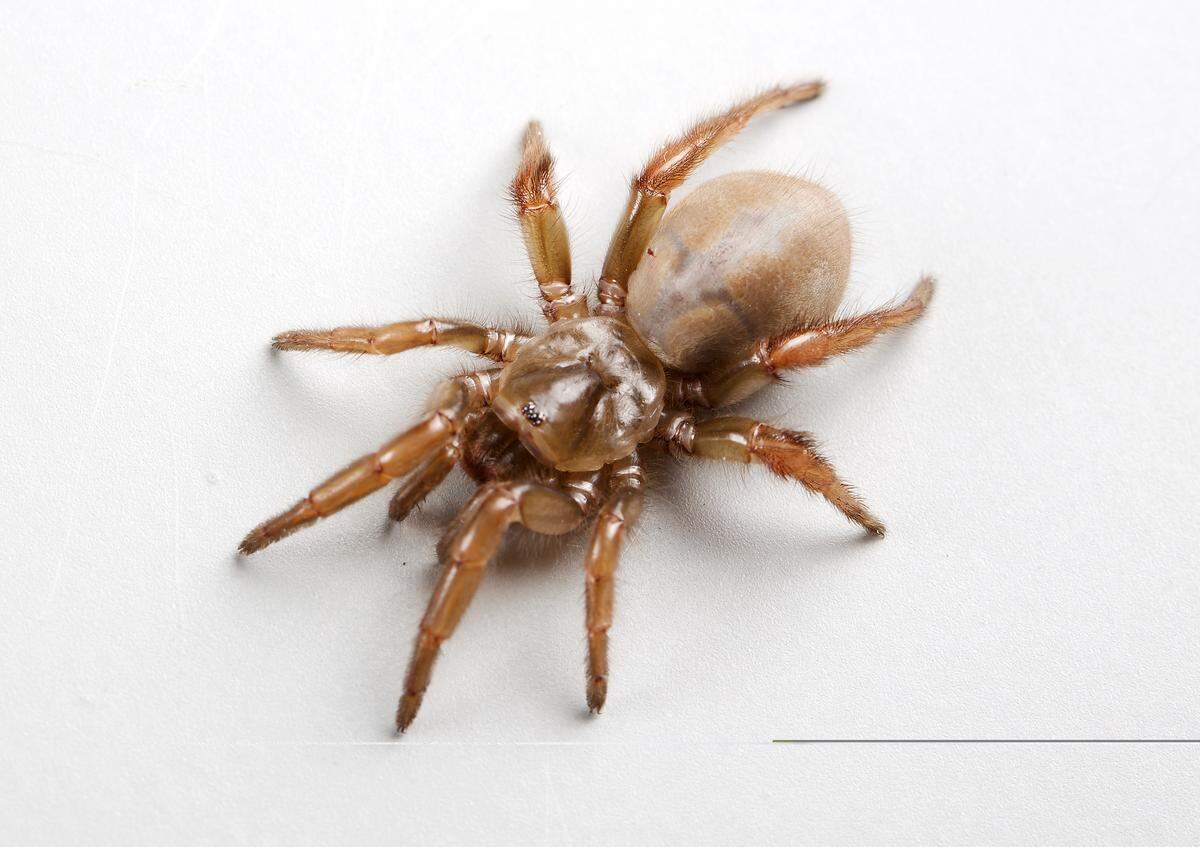
It was Ramirez’s early research that first raised questions about this unique coastal dweller.
In the late 1990s, she recalled visiting an academic colleague who introduced her to a young undergraduate student named Jason Bond. Bond, now a professor in the department of entomology and nematology at UC Davis. He is the senior author on the study.
She said they got to talking about spiders and she mentioned her project on Aptostichus simus, thinking it might be of interest to him.
Ramirez sampled this spider during an earlier research study in Southern California and published a paper on the findings in 1997. Ramirez’s early work in documenting Aptostichus simus was key to assisting scientists in establishing differences between these two almost identical species.
“There are now four known species of trapdoor spiders in California that live exclusively in coastal dune habitats,” Emma Jochim, a UC Davis doctoral student and corresponding author of the study, said in a press release. “The one we were looking at as part of this study (Aptostichus ramirezae) was the most widespread, ranging from Moss Landing near Monterey down to Baja California — which is a pretty wide range for a trapdoor spider, given that they don’t easily leave their burrows to disperse.”
Trapdoor spiders are related to tarantulas but are much smaller (Aptostichus ramirezae is about the size of a quarter) and live in underground burrows lined in silk, only emerging when vibrations on the surface alert them to prey. Because they do not leave their habitats to reproduce widely, scientists suspected that it was a cryptic species, meaning that they look identical but have genetic differences.
“Since it’s (Aptostichus simus) found on this huge range, they wondered if it was really the same species all that way,” said Ramirez. Through DNA analysis, the new spider was identified and is found in the northern coastal dune areas. “At some point when you go north along the coast, you kick into the range of this new species, which is the one they named after me,” she said.

Ramirez’s interest in spiders started at an early age. While classmates in elementary school brought small hamsters and toys to show and tell, she brought a spider.
As a graduate student at UC Santa Cruz, she first ventured into marine biology. But researching whales and dolphins was challenging, as studying them required a lot of funding and specialized equipment, she said.
She returned to arachnology and the biological sciences and has spent the last 30 years as a faculty member, previously at Loyola Marymount University. She has been dean of the College of Science at Stanislaus State for four years.
Her legacy as a spider expert is now secure, but Ramirez wants to ensure her impact goes beyond just a name.
In her early study of trapdoor spiders, she was concerned about the loss of habitat due to development. “I started working with coastal dune spiders in 1981, and between then and now, there are areas in Southern California that used to have coastal dune habitat where it’s been developed or destroyed,” she said. “Sand dunes being at risk is a worldwide issue, so that’s what I worry about for the future: Will all these critters still be around?”
The authors of the study have the same concerns. “If we don’t know how many species are in an area or understand the patterns of genetic diversity between populations, we don’t really know what areas would be most important for conservation efforts,” said Jochim.
The study was also authored by Hanna R. Briggs and James Starrett, both with UC Davis, with support through a grant from the National Science Foundation.
This story was originally published November 4, 2025 at 1:01 PM.