
In fall address, Stan State president talks budget concerns, reveals projects
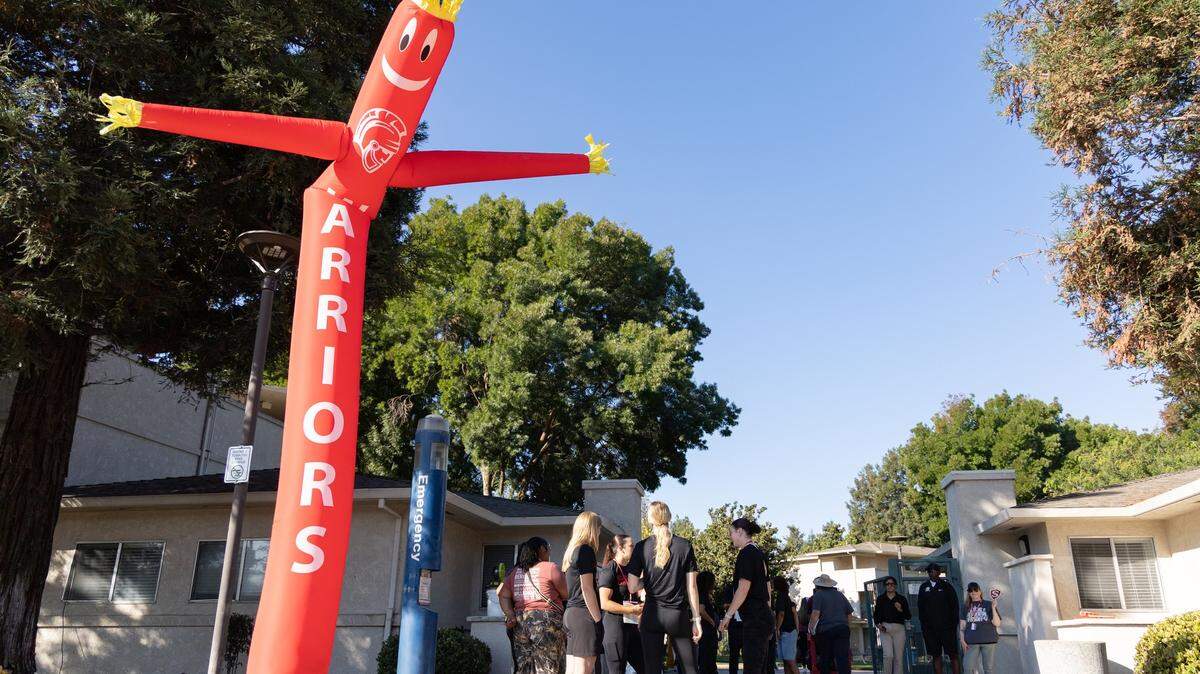
With the first day of instruction on Wednesday, Stanislaus State University President Britt Rios-Ellis delivered her fall welcome address to discuss faculty and student achievements, upcoming projects, and the state of higher education amid budget concerns.
Though education budget cuts are being made across the nation, Rios-Ellis said, the university made “considerable progress” with its $13.65 million deficit.
In spring 2025, the university had an upward graduation rate of 3,000 students. Rios-Ellis described the achievement as a reflection of “cariño,” or leading with love.
“Cariño is a powerful value, particularly for an HSI, or Hispanic-serving institution, because it is deeply felt and reinforced,” Rios-Ellis said. “ It represents one of the highest forms of emotional intelligence and it is truly a reflection of love and justice in action. Our students, our community, alumni, faculty and staff have cariño in spades.”
Following the Turlock university’s recent national recognitions, including a five-star ranking from Money.com and making it on the Princeton Review’s Best Colleges list, Rios-Ellis said the rankings reflect student outcomes and the future of the Central Valley.
“While national recognition is powerful, what matters most is how our collective work is responsive in addressing and enriching our campus community and beyond,” Rios-Ellis said.
Stan State is also pursuing the Seal of Excelencia, a national certification with a framework of serving Latinx students. The effort is what Rios-Ellis describes as “leaning into the university’s HSI status.”
The institution is now also an emerging Asian American, Native American, Pacific Islander-Serving Institution and received a five-year $1.2 million grant from the CSU to expand opportunities for Asian American, Native Hawaiian, Pacific Islander and Desi American students.
New housing will help support student families
To further address student needs, Rios-Ellis introduced a $31 million housing facility underway: Residential Life Village IV. It is to be completed in summer 2027 and will provide 120 student beds, three resident adviser units, collaborative study and lounge spaces, laundry facilities and a community kitchen on every floor. Construction will begin later this year.
Rios-Ellis described the project as a response to family needs, because 7% of students in the past academic year identified as parents. With the new housing facility and a child-development center, the university aims to support student parents and their families.
This school year, the university is opening a new academic building at its Stockton campus. The San Joaquin County satellite campus will also have a new public charter school to support collaboration between higher education and K-12 to expand educational opportunities.
“In the same way that this next year is filled with promise, purpose and possibility, we will also face what are seemingly insurmountable challenges,” Rios-Ellis said. “As we continue to witness institutions of higher education in California and throughout the nation face dilemmas that were unimaginable a year ago, please know that although our learning curve is sometimes steep within the dynamic environment we find ourselves, we will stand up for the noble cause of higher ed on all fronts.”
Currently, the CSU system is facing a deferred allocation of $144 million. For Stan State, this creates an additional $3.1 million deficit. Rios-Ellis announced that the university has reduced its deficit by at least $11 million, and once enrollment numbers for the academic year are confirmed, the university will provide further updates. As of now, the university sees a 3% increase in enrollment across fall and spring, with 5.6% more undergraduates this fall semester.
“With the pulse of possibility and the power of cariño, we will keep the ever more elusive American dream, or sueño Americano, alive and well at Stan State,” Rios-Ellis.
After the welcome address, the audience members could ask the president questions.
Chemistry Professor Koni Stone raised concerns over increased class sizes and its impact on instruction and feedback. Other professors expressed similar concerns, especially regarding the short notice about increased class sizes.
“Stanislaus State is justifiably proud of our well-earned reputation for providing instruction crafted for our students’ needs, meeting students where they are and empowering them to achieve academic excellence,” Stone said. “These class size increases present difficulties to achieving our mission.”
Rios-Ellis acknowledged the concern and added that the university wants to prioritize student enrollment in courses while maintaining the environment for them to succeed. She added that course caps increased by seven students at most.
“What was important for us as we were considering what to do is to think about how much we can raise the cap of a course without compromising creative writing, without jeopardizing high impact practices according to academic research,” Rios-Ellis said. “This is happening across the CSU and campuses across the country.”
This story was originally published August 20, 2025 at 12:31 PM.