Stanislaus kids have long visited Foothill Horizons near Sonora. It will be more fire-safe
Stanislaus County schoolchildren will find a more fire-safe landscape when they visit the Foothill Horizons nature camp.
This spot northeast of Sonora has grown too thick with brush and small trees beneath the native oak and pine canopy. Crews have been reducing them at an expected cost of $250,000 to $275,000, funded by Pacific Gas & Electric Co.
The camp has been owned and operated since 1977 by the Stanislaus County Office of Education, funded by school districts and student fundraisers. From August to May, it provides lessons in science, social studies and English language arts. It offers a non-academic camp in summer and can be rented for other events.
The project is on about 20 of the camp’s 143 acres, to be followed by another this year through the California Department of Forestry and Fire Protection.
The projects will ease the risk of flames spreading from the ground to the treetops, and provide space for firefighters to work. The American Forest Foundation is managing the PG&E project.
What exactly is biochar?
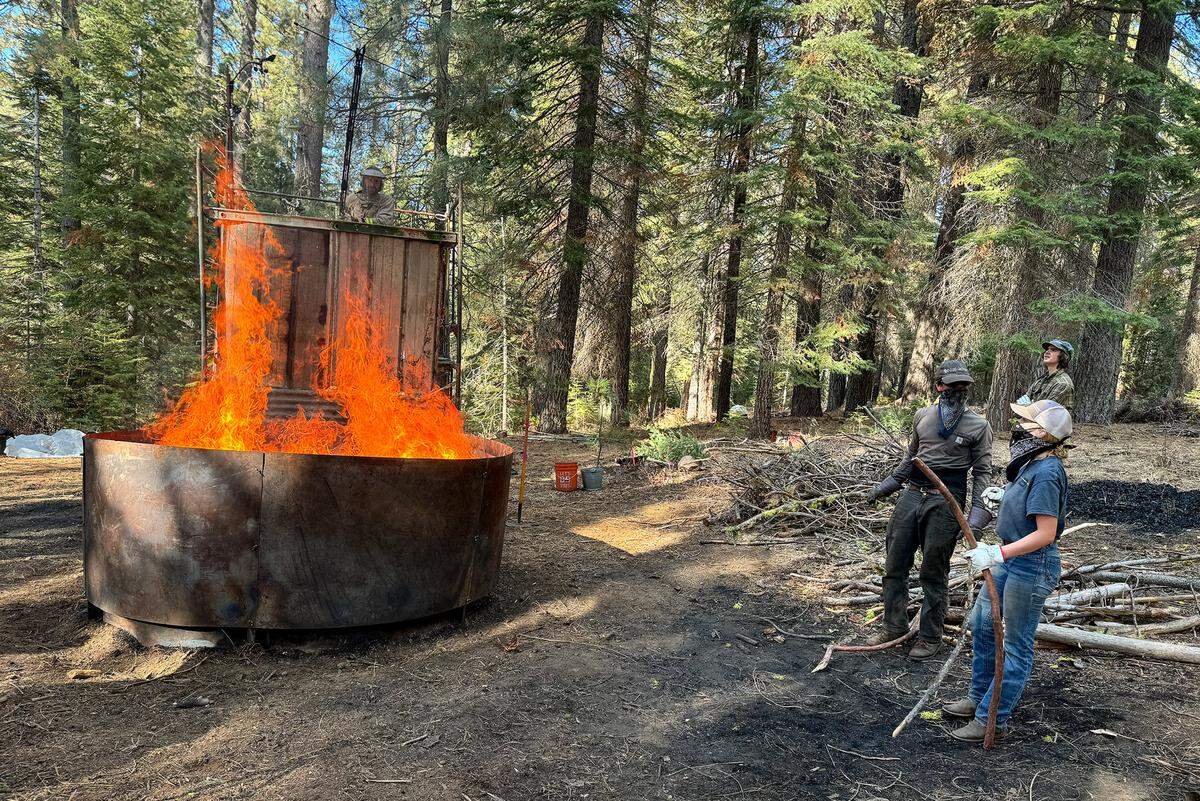
The project has an unusual twist: Some of the woody debris is burned on site in a kiln, with much less smoke than open burning. The kiln produces “biochar,” a charcoal-like substance that can be tilled into the soil. It fertilizes new growth while capturing carbon that could worsen climate change.
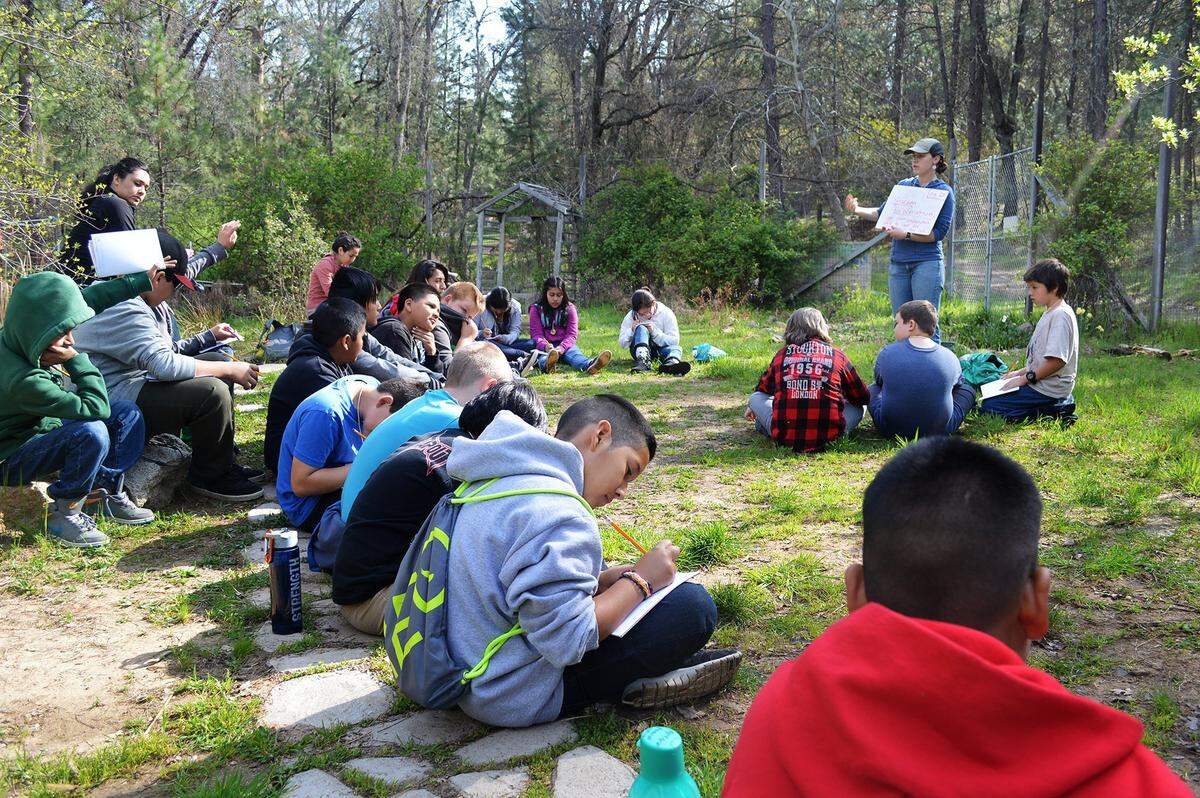
Foothill Horizons hosted a Jan. 23 demonstration of the kiln. That meant an extra science lesson for the students visiting from Magnolia Elementary School in Oakdale and Cardozo Middle School in Riverbank.
“The whole week,” said a camp Facebook post, “students learned about fuel reduction, overgrown forests, the science of biochar and got to witness adults working together to prevent massive forest fires and restore our forests to healthier conditions.”
Coalition hopes to protect half-million acres
Foothill Horizons is about four winding miles up Lyons-Bald Mountain Road from downtown Sonora. The homes are sparse but the wildfire fuels are not. This area is part of about 500,000 acres that could be protected from disaster if the funding comes through. The plans emerged from a coalition that includes local environmental and business groups.
Foothill Horizons is SCOE’s second camp in Tuolumne County. The first was Old Oak Ranch, which it rented starting in 1958 in an even more remote area northwest of Twain Harte. It is now owned by the Clovis Unified School District, near Fresno.
Foothill Horizons is using chainsaws and other hand tools, along with a masticator, a big wood-chewing machine. Grazing goats could help keep the regrowth in check.
Nutrients cycle back into soil
The biochar kiln was provided by Kelpie Wilson, an Oregon-based advocate for the method. She showed camp staff members how to use the device, which is about the size and shape of a backyard hot tub.
“The clean biochar burn method is practically smoke-free,” Wilson said in a SCOE news release. “Once the wood burn is complete, the resulting biochar serves as a superior soil amendment, improving water and nutrient retention.”
Foothill Horizons sits just a half-mile from Diestel Family Ranch, a turkey producer with its own soil-building efforts. Its latest line of birds is certified “regenerative” thanks to practices on the home pasture and by feed corn growers in the Midwest.
Biochar also is being made from almond shells at Corigin Solutions in Merced. It meshes with the Stanislaus 2030 goal of bioindustrial jobs in the Northern San Joaquin Valley.
This story was originally published February 2, 2025 at 6:00 AM.