Q&A with Modesto City Schools, which seeks voter OK of bond measure to renovate K-8 sites
Modesto City Schools will have a bond measure on the November ballot to repair and renovate elementary and middle schools. It is the fourth measure in six years, following the approval of Measures D and E in 2018 for K-8 facilities improvements and Measure L in 2022 for high schools.
The Modesto Bee sat down with Superintendent Sara Noguchi and Associate Superintendent Tim Zearley to ask about bond Measure X.
What led to the decision to have another bond measure?
Noguchi: So what led to the decision is there’s just incredible need in the district, for the elementary district. This just continues to be an incredible need. While Measures D and E were phenomenal support for our elementary school district, we have 26 school sites within the elementary districts and weren’t able to meet all the needs.
Zearley: We just did groundbreaking for our last three projects under Measures D and E and that would be John Muir Elementary, Orville Wright Elementary and Franklin Elementary. And that’s coming to the end. Those would be the last three that we can build and fund with Measures D and E.
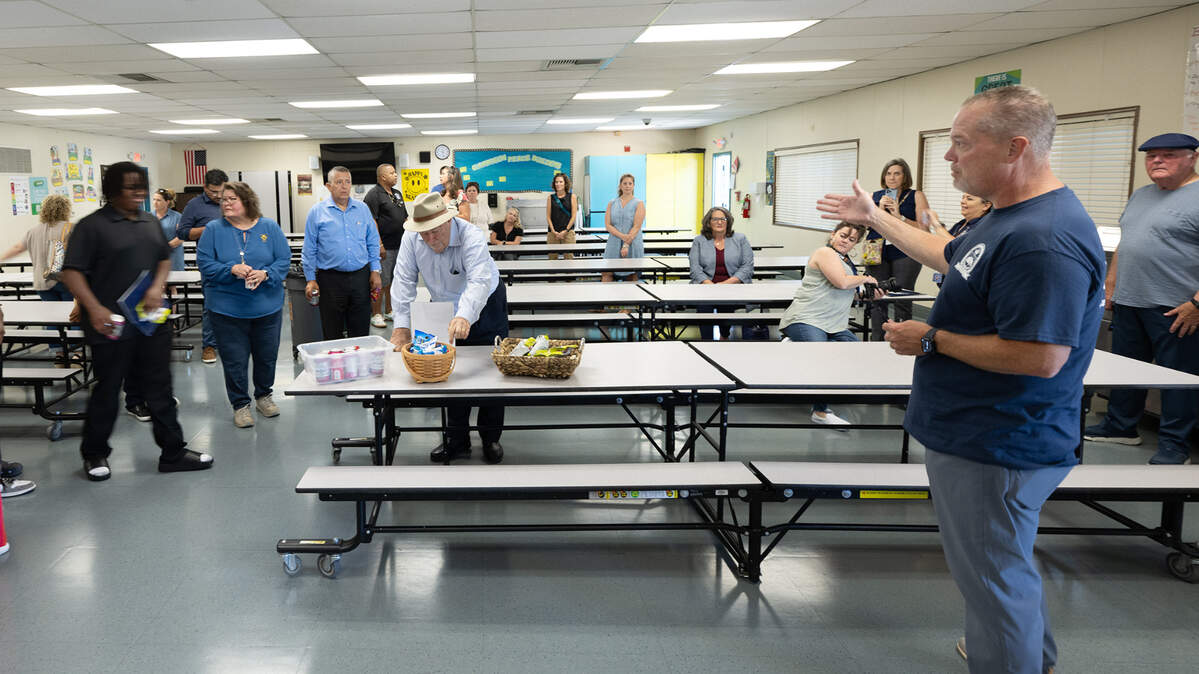
We’ve identified that the cafeterias at the elementary schools have become a very exciting part of the school day. The school culture cafeteria really makes the neighborhood school part of the community; to [not] just serve breakfast and lunch but for other activities that enhance the school culture.
We still have 12 schools that do not have modern cafeteria multipurpose rooms.
[The superintendents also said some schools have more than eight lunch periods to keep up with student demands for lunch.]
What will this bond measure specifically address?
Zearley: When we surveyed our voters, there was a positive response to the question of new cafeteria multipurpose rooms and because we have a number of schools that did not get new cafeteria out of Measures D and E, that will be our focus.
Another piece to that is there are still schools that need work on infrastructure such as plumbing and roofs. For instance the school right down the street, Marshall Elementary, needs some significant work in addition to the cafeteria multi-purpose room. So that is all so part of the language for the bond measure.
The language is multifaceted. It could cover any improvement project, up to and including a new school, which is not going to be part of this but we want to make sure we captured every possible scenario in the language that the voters approved.
Almost 65% survey responses said they would support an additional bond measure for cafeteria multi-purpose room use.
Why haven’t Measures D and E been enough to repair all elementary or middle schools identified to need repairs?
Zearley: Every 26 schools got something out of Measures D and E. Every school got something, but we sat down with the Board of Education shortly after it passed in 2018 and identified priority school sites, meaning they needed large infrastructure improvements for a number of areas : parking lot drop-off and pickup, single points of entry, cafeteria multipurpose rooms.
Nine priority school sites out of the 26 would get the majority of the funding for Measures D and E. I think the bond authorization at the time was $145 million. If we had divided that up over 26 school sites, it would not have gotten significant improvements.
When will you identify the schools that will get a majority of the funding if Measure X passes?
Zearley: If it does pass, we would do that in the spring. We’re going to recommend John Marshall Elementary and Martone Elementary.
We’ll go through a process with the board this spring where they identify the priority for the other schools.
If California Proposition 2 passes, on the same ballot, how will it affect Measure X?
[Proposition 2 would provide $10 billion to fix and renovate K-12 schools and community colleges across California. This will not add additional taxes to California residents. Districts would need to raise a local bond of their own and then apply to the State Facilities Program for a funding match on a sliding scale up to 65% for renovations and 55% for new construction.]
Zearley: Our local bond with Measures, D, E, L and possibly X will be our match. We have to have a match in order to seek reimbursement from the state for the projects we have completed so far.
[There is a list of approved but unfunded projects submitted by districts to the state, totaling about $3.4 billion, that would be funded by Proposition 2. Modesto City Schools has projects on that list.]
Zearley: Like our science classrooms, if it involves classrooms, it has to have approval from the California Department of Education. They have to approve if it meets the instructional needs, but our cafeterias are not part of that approval. They are just part of a normal approvals at the state levels.
What Prop. 2 will do is we can realistically expect about a 30% to 40% reimbursement for construction costs in a project.
I mean in full transparency, we have 12 schools that need a cafeteria. Our cafeterias, right now post-COVID, are running about $10 million. So that’s what we’re using for project cost for cafeterias. That’s $120 million. This particular Measure X is $85 million. So as you can see, we’re going to need some additional money to be able to complete all 12 cafeterias.
Noguchi: Prop. 2 does not increase state or local taxes. It’s actually the funds coming out of the general fund to pay the principal and interest. So approving Prop. 2 is not going to approve additional dollars that taxpayers will be paying.
Will there be another bond measure in 2026 or 2028?
Zearley: We consider it a bond program, which means there’s always a perpetual need. The amount that is needed far exceeds what we’re able to generate on local bond measures. Back in 2018, we had told the board and all of our presentations that there would need to be multiple bond programs to catch up.
But it really is at the appetite of the community what they would be willing to provide. For instance, Ceres Unified has a November bond election also, but they have one that will cover TK through 12th grade, all of their schools. We have to do two, so it looks to our community like we’re doing twice as many in order to cover our TK through 12th grade schools.
So it’s just a matter of constantly educating the community as to the why. Even with Measure L, which was $200 million, it’s not going to cover all of our high school identified needs. So at some point another, board and administration will have to determine if they want to do this again.
Noguchi: Well, the other piece to that all is it’s public education. It’s a shared responsibility. It’s not just local responsibility to ensure that we have high-quality facilities for students. We shared responsibility throughout the state of California. Many of the organizations are working to get propositions to pass, too. So we collectively come together to do the work that needs to happen with buildings over multiple years.
Zearley: And just to put in the timeline, 2001 was the last bond measure in Modesto City Schools for both the elementary and high school districts until 2018 for elementary and then 2022 for the high school district.
I would hate to think that this district waited 21 or 20 more years before they consider another high school bond measure. You just become further behind in that case.
If Measure X passes, when will construction potentially begin?
Zearley: As quickly as the summer of 2025.
[Zearley explained that all schools have master plans. This helps the district track conceptual plans in case of future funding, speeding up the process so construction can begin sooner.]
Anything to add?
Zearley: We want to be fully transparent. We want to be good stewards of the dollars and give back to our communities. And so just continue to thank our voters for their support and just show them that it’s going to go to facilities that will be utilized for the next 20 or 30 years.
Noguchi: So just economic prosperity for the community as a whole. It’s taking money from homeowners but it’s putting that right back into the community and building the community.
We couldn’t do what we’ve done if it wasn’t for the support of the voters and we feel that we have strong support moving forward going into November. We’re optimistic, but we also recognize there’s work to be done to ensure that we can continue to have the community’s confidence and I don’t take that lightly.
This story was originally published September 25, 2024 at 12:10 PM.