Modesto Junior College president reveals plans to elevate education. See what he said
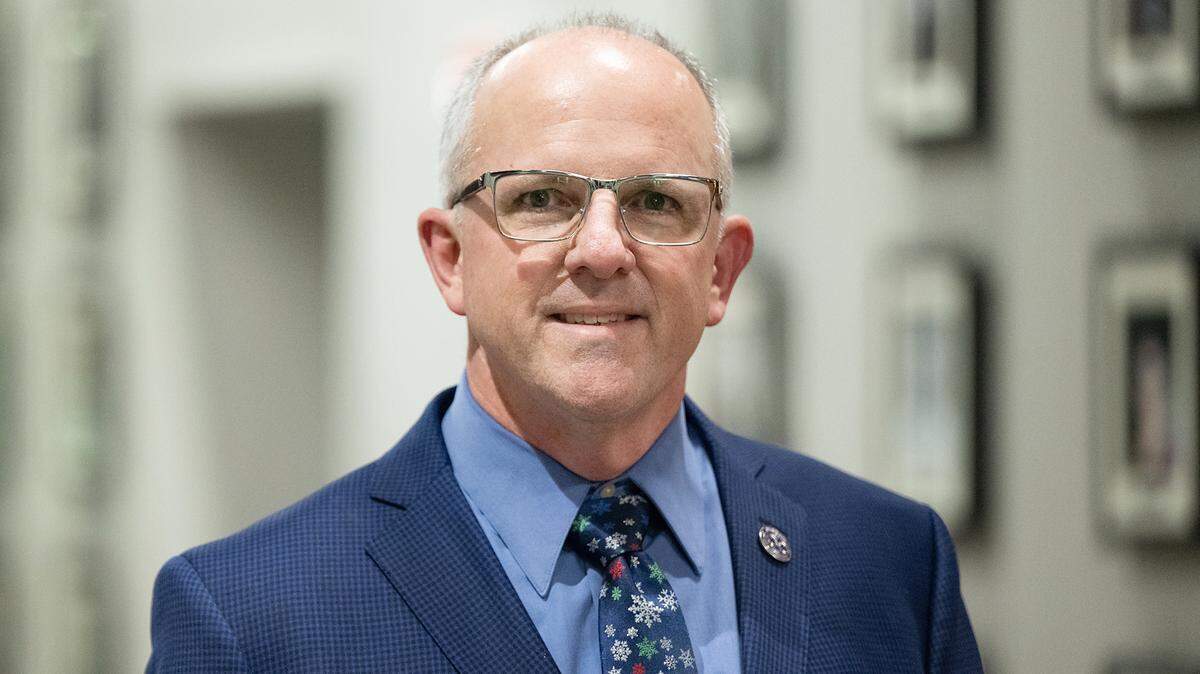
After completing his first year as Modesto Junior College’s 18th president in 23 years, Brian Sanders said his focus has been on restoring stability and promoting growth at the institution.
Sanders, who described his experience so far as “terrific,” said he’s committed to rebuilding relationships and ensuring that MJC plays a pivotal role in educating Modesto’s diverse population.
“We love our role in helping grow our own,” he said.
He said both he and the new Stanislaus State University president, Britt Rios-Ellis, saw that Modesto recently ranked as one of the least educated cities in the country.
His solution is to plant seeds early by bringing as many young people on campus as possible so they can visualize themselves as future college students and get the bug to return.
“It’s sort of our mutual need, mutual goal, to increase the college success rate in our area,” Sanders said. Enrollment in Modesto Junior College dropped in 2020, but has since begun to rise.
He cited the Great Valley Museum’s program that brings third-graders onto the MJC campus to see the planetarium.
Another way is through dual enrollment, a program that allows high school students to take college-level courses. Sanders acknowledged past criticism of the college’s limited dual enrollment offerings, but he’s proud of the strides made.
Dual enrollment skyrockets
Last school year, MJC offered 61 sections of dual enrollment classes with about 2,380 students. This fall, MJC is offering 85 sections, serving approximately 3,000 students across various high schools. Modesto City Schools has 1,615 students enrolled, while all other school districts have 1,466 students enrolled this fall.
MJC also is developing program maps that outline the classes students need to take to earn their associate degrees and transfer to four-year universities, such as Stan State and UC Merced.
While Sanders encourages students to explore the world, he also recognizes MJC’s vital role in building local capital by retaining students within the community.
He highlighted the region’s emerging industries, like bioindustrial manufacturing, as potential future job opportunities for MJC graduates. He said MJC already offers the necessary programs and training, such as for welding and industrial automation, to support these industries and contribute to Modesto’s economic growth.
“I’d rather have people start here at MJC, become a chemistry major and know that some of the chemical training that they’re going to get could help us convert leftover almond hulls into some sort of useful product for our community in our society,” Sanders said.
He also remains committed to sticking to the college’s strategic plan, which focuses on student success and closing equity gaps.
MJC’s commitment to success extends to supporting the diverse student population through various affinity groups and programs, Sanders said. The college hosts events like the Hispanic Education Conference in October and recently hired a dedicated staff member for its Native American students program.
He noted that in the past three years, there’s been a 5.5% increase in success rates for Black students and 6.5% for Hispanic students. Success rates are measured by how many students earn passing grades compared to the total number of students enrolled in a course during a semester or academic year.
In 2023-24, the course success equity gap with white students shrank by 40% for Black students, 56% for American Indian/Alaskan Native students and 45% for Hispanic students.
“While the gaps still exist, they are closing. Our efforts are working,” Sanders said.
Sanders said he has made it a personal goal to help create as many second-generation college students as possible, believing that by helping first-generation students succeed, they can inspire their children to pursue higher education.
“That hopefulness is something that’s new,” Sanders said.
This story was originally published August 28, 2024 at 6:00 AM.