Will voters support another tax to pay for high school improvements? Board weighs options
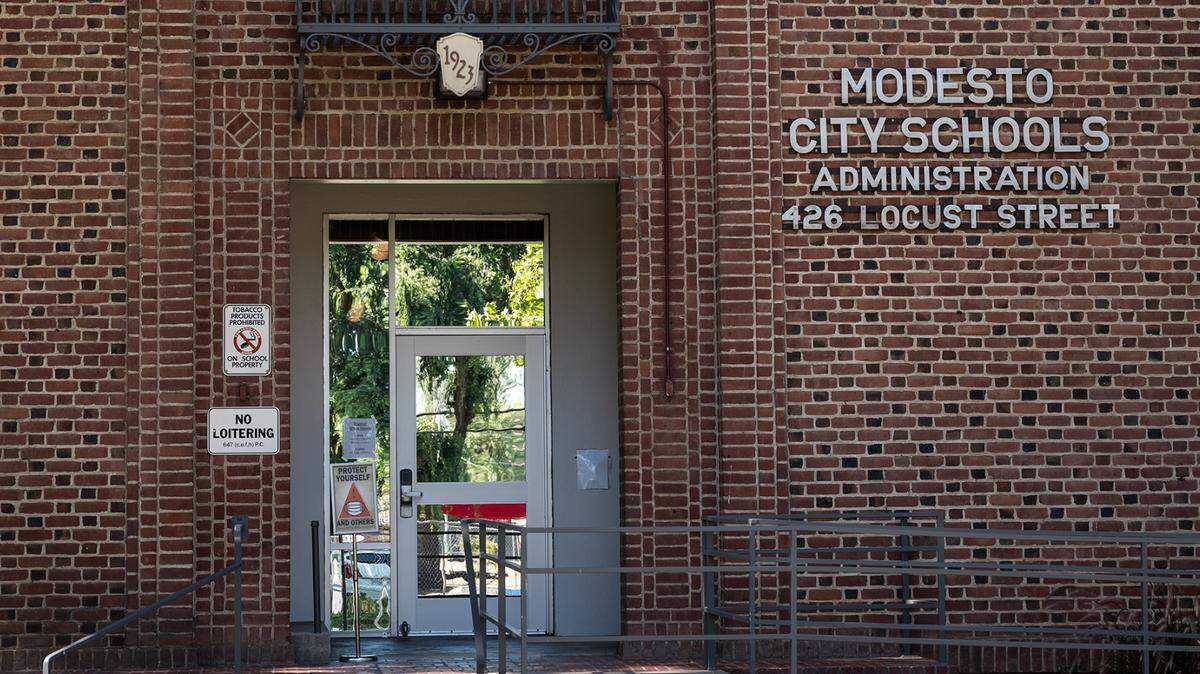
Modesto City Schools trustees on Monday night expressed support for putting a $198 million bond measure on the November ballot to pay for repairs, upgrades and other improvements at the district’s eight high schools.
But they acknowledged that in a time of extreme inflation, and on the same ballot that may ask voters to pass a 1% city of Modesto sales tax, winning approval will be hard.
The board heard a presentation on the bond measure from Tim Zearley, associate superintendent for business services.
District staff, student leadership and the board members all have identified high-priority spending needs that include classroom technology and CTE (career technical education) improvements, PE and athletic facilities, outdated and damaged facilities, improved accessibility and health and safety improvements, he said. The presentation did not identify any site-specific projects.
All high schools — even the newest, Gregori and Enochs — will receive improvements, Zearley said, but the money would not simply be divided evenly among them. “It’s very clear that Gregori High School does not have the same level of need as Modesto High School or Downey or some of our older facilities.”
Zearley pointed out that passing the bond measure would allow district dollars to go farther by letting Modesto City Schools leverage state funding for modernization-eligible projects. A potential 2022 state bond measure, if passed, would match local bond funds.
Zearley said the November ballot item would require 55% voter approval. The bond’s total cost over its 25-year life — including its interest costs — is estimated at $334 million.
The associate superintendent and, during their comments, board members noted that the huge dollar amount might alarm voters. So Zearley put the cost to households in easily relatable terms.
The bond cost would be about $29 annually for every $100,000 of a property’s assessed or taxable value. That value is based on the purchase price of the home, not its current market value, and refinancing done by a homeowner does not affect that, he said.
The owner of a home assessed at $300,000 would see a property tax increase of $87 a year, or $7.25 a month, according to Zearley’s presentation. A $500,000 home would see an increase of $145 a year, or $12.08 a month.
If the November measure were to pass, the first bond issuance would be in spring 2023, he said, and homeowners would see the property tax increase on their 2023-24 bill.
Board members shared their thoughts with Zearley and district staff after his presentation.
Trustee John Ervin III said the bond measure is an opportunity “as a community to bring equity to our high schools.” He said improving schools not only enhances the quality of education but the quality of neighborhoods.
Board vice president Chad Brown agreed. Looking at past school improvements, he said, “most of that money is being spent back in our community by local people who are working on those projects.” Additionally, he said, the value of homes in the vicinity of schools rises when improvements are made.
Board member Cindy Marks said she didn’t want to be the “big downer” in the room but had some issues to bring up.
First, she noted that the 75-word ballot label included in the draft resolution about the bond measure says nothing about school safety. She suggested it’s something the board may want to add.
Trying to pass the measure while inflation is so high also concerns her, Marks said. The tax might not seem like much when broken down monthly, but “it’s still a lot” to the district’s elderly population on fixed incomes, she said.
If a state bond measure remains a possibility for this fall’s ballot, and if a city of Modesto tax increase is likely, the chances of the district measure winning passage seems less likely, she said. “I want to see this bond pass ... I’m just concerned about the timing of it. I just feel like next year is a better year for it. ...”
Zearley responded that if the bond measure is not put on this November’s ballot, the district probably would aim for a 2024 vote. Putting it on a ballot next year, when there is no regularly scheduled election, would mean passage needs 66.7% voter support, not 55%.
As for inflation, he suggested that in terms of construction costs, conditions are more likely to be worse than better if the bond effort is pushed out two years.
The concerns over the economic climate were echoed by board president Adolfo Lopez and other trustees, but he said the funding to improve facilities is long overdue, especially for the older schools in most need.
Calling it a “worthy fight,” he said the district needs to get the measure out before voters to let them see its benefits. “All we can do is give it our best shot, right?”
Monday night’s presentation was informational only. The bond measure item will go back to the board for a vote at its June 20 meeting.
Monday’s meeting can be viewed on the MCS Board of Education channel on YouTube, at bit.ly/3tjCvX2.
This story was originally published June 7, 2022 at 12:20 PM.