Turlock school employees call for pay increases to compensate for pandemic demands
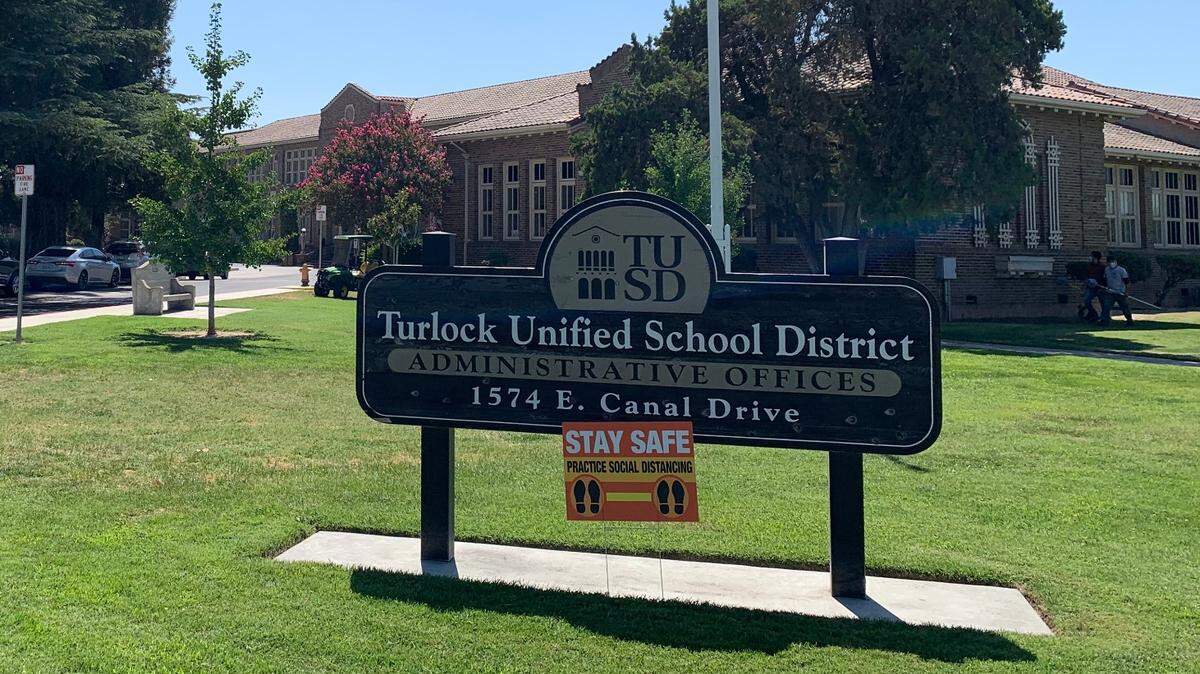
More than 120 school employees attended a Turlock Unified School District board meeting Tuesday evening, calling for higher wages to compensate for added demands since the COVID-19 pandemic began in March 2020.
Teachers and classified school staff addressed the board as they submitted initial bargaining proposals for 2021-22 reopener negotiations.
“We just want the board to keep in mind the extra cost that we’re going through, too,” said Cecilia Chaves, president of the Turlock Federation of Classified Employees. Classified positions include all education jobs that do not require a teaching credential.
In a statement provided to The Bee, TUSD spokeswoman Marie Russell said the district has been working closely with the Turlock Teachers Association through negotiations for several months.
“Our goal is to maintain highly competitive salaries for our educators while acknowledging the need for fiscal responsibility with taxpayer dollars,” Russell said in the statement. “Throughout this process, TUSD has been negotiating with the best interest of students and all staff in mind, and we remain hopeful an agreement will be reached soon.”
The most recent update posted to the district’s Human Resources page says the district and the TTA declared impasse on their salary negotiations March 31. The summary document said the district would file for mediation with the Public Employee Review Board, and the parties would begin mediation in three to five weeks.
The district had proposed 4.5% increases on top of the existing salary rate schedule, in addition to a one-time 3% raise.
The teachers association’s final offer was 7.5% ongoing increases on top of the existing salary rate schedule, plus a 2% one-time raise and .09% added to the stipend table, TTA President Meredith Pimentel said.
No COLA in district offer
The teachers association did not believe the district’s proposal would be supported in a vote because it does not include a cost-of-living adjustment, Pimentel said.
“TTA is hopeful that the district will come back to the table with a better on-going offer that reflects the current COLA before we begin mediation through the Impasse process,” Pimentel wrote in an email to The Bee.
The association hopes to work with the district on a better offer, she said at the meeting.
Turlock Junior High teacher Darren Webb said he probably attended fewer than 10 school board meetings throughout his 21 years in the district.
He said he doesn’t complain a lot, and neither do his colleagues. “But we’ve been through a rough two years,” he said during public comment. “All of us have.”
He said teachers want financial compensation for what they’ve been through.
Fifth-grade teacher Sibeli Enciso also spoke in public comment in support of the union bargaining team. “I am the voice of teachers across the district who are disappointed to hear we are at an impasse in negotiating our salaries,” she said.
A more equitable salary increase would compensate teachers who purchased new technology equipment to teach at home last year and teachers who sacrificed personal time to make distance learning work, she said. It would repay teachers for catching students up from pandemic learning loss while teaching grade-level content and for teaching social emotional learning without extensive training, Enciso said.
“Please know teachers are exhausted,” she said. “COVID and the pandemic has taken a toll on our well-being.”
Turlock Junior High English teacher Jill Harlan-Gran said she wrote her comments for the board three different times, then abandoned all of them. She said that after working in the district for 36 years, she was at a loss for words.
“We deserve the care and compassion that you want us to give to our students,” Harlan-Gran said.
Kids ‘wanted a place to cry’
She described the social setbacks she saw in her eighth-grade students when they returned to the classroom this school year: Students sat without interacting for months and repeatedly excused themselves to use the restroom because they felt so anxious to be at school, she said. Students asked to sit in her classroom at lunch just to cry.
“They didn’t want anybody to talk to,” Harlan-Gran said. “They just wanted a place to cry.”
Pimentel, a third-grade teacher at Brown Elementary, shared more with the board about how teachers and staff have provided instruction and support for students.
Since March 2020, she said, teachers have visited students at home to drop off materials and connected with students outside of their normal working hours to help them with academics and offer emotional support. They’ve converted lessons online, learned to use multiple digital platforms and provided math and reading interventions to close learning gaps. They’ve taught synchronously while in quarantine, supported students’ social and emotional needs, increased communication with parents and remained flexible with continued COVID-19 protocol changes.
In light of these challenges, the teachers association hopes the district will come back to the table with a better ongoing offer, Pimentel said.
Chaves, the TFCE president, asked the school board to keep in mind all that classified staff have experienced over the past two years. They’ve picked up work outside of their job descriptions to ensure the district could keep functioning, she said.
“It’s been a very stressful time,” Chaves said.
This story was originally published April 7, 2022 at 7:00 AM.