Inspiration center gives Stanislaus students hands-on exposure to career opportunities
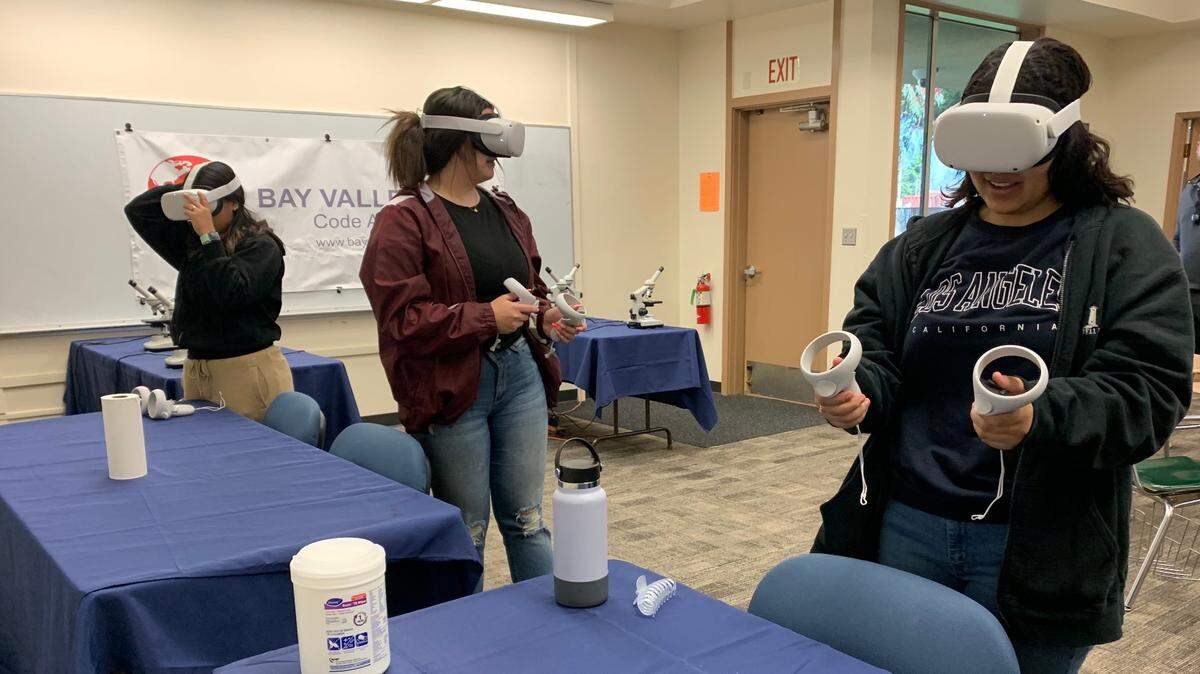
A new Stanislaus County program uses 3D printers, robotic arms, virtual reality headsets and other advanced technology to introduce students to opportunities in major local industries.
The Career Inspiration Center is run by the Stanislaus County Office of Education. Seventh- through 12th-grade students spend a day exploring careers in agriculture, manufacturing, technology or health. The goal is to expand students’ perception of local jobs and get them thinking about how to pursue careers they would enjoy.
“It just opens up their opportunities,” said Dallas Plaa, a career and technical education director at SCOE.
Plaa’s team launched the center in August through a $400,000 grant from California’s K-12 strong workforce program. A building at the Stanislaus Military Academy in Empire was renovated to house the program.
The Career Inspiration Center hosts 24 students per day from 9 a.m. to 2 p.m. Tuesdays through Thursdays. The Ceres, Denair, Hughson and Patterson school districts are sending students to the center in its inaugural year. Plaa said 700 students have attended so far.
Plaa said each career area is covered for about three months. During the technology pathway, students learn robotics, coding and video game design. For health, students practice CPR, first aid, anatomy and dentistry, using mannequins and real tools.
Plaa said manufacturing and agriculture were combined because of industry overlap. Students practice welding through a virtual reality headset, get veterinary technician training with pretend dogs and more.
The areas align to the county’s three major industries and technology is embedded throughout these areas, Plaa said.
When students attend, they receive a flyer that lists the number of job openings, median hourly earnings and median yearly earnings for various jobs within the industry they explored, in addition to entry-level education and work experience requirements.
Plaa said students are often surprised to see the salaries they would be able to make in jobs associated with fun activities during the program, noting it’s important for students from low socioeconomic backgrounds to learn that they can make a sizable salary doing something they enjoy.
“A lot of kids don’t have access or awareness to these industries,” Plaa said.
Agriculture and manufacturing day
Small groups of Ceres Unified School District students on Tuesday rotated through stations to learn about manufacturing and agriculture.
“It really provides students with a firsthand look at fields they might not have encountered,” Ceres Unified spokesperson Beth Parker Jimenez said.
Students wore 3D glasses to dissect a frog on a screen. They could use a stylus to drag the frog’s skin from its body, take out its eyes and rotate its parts.
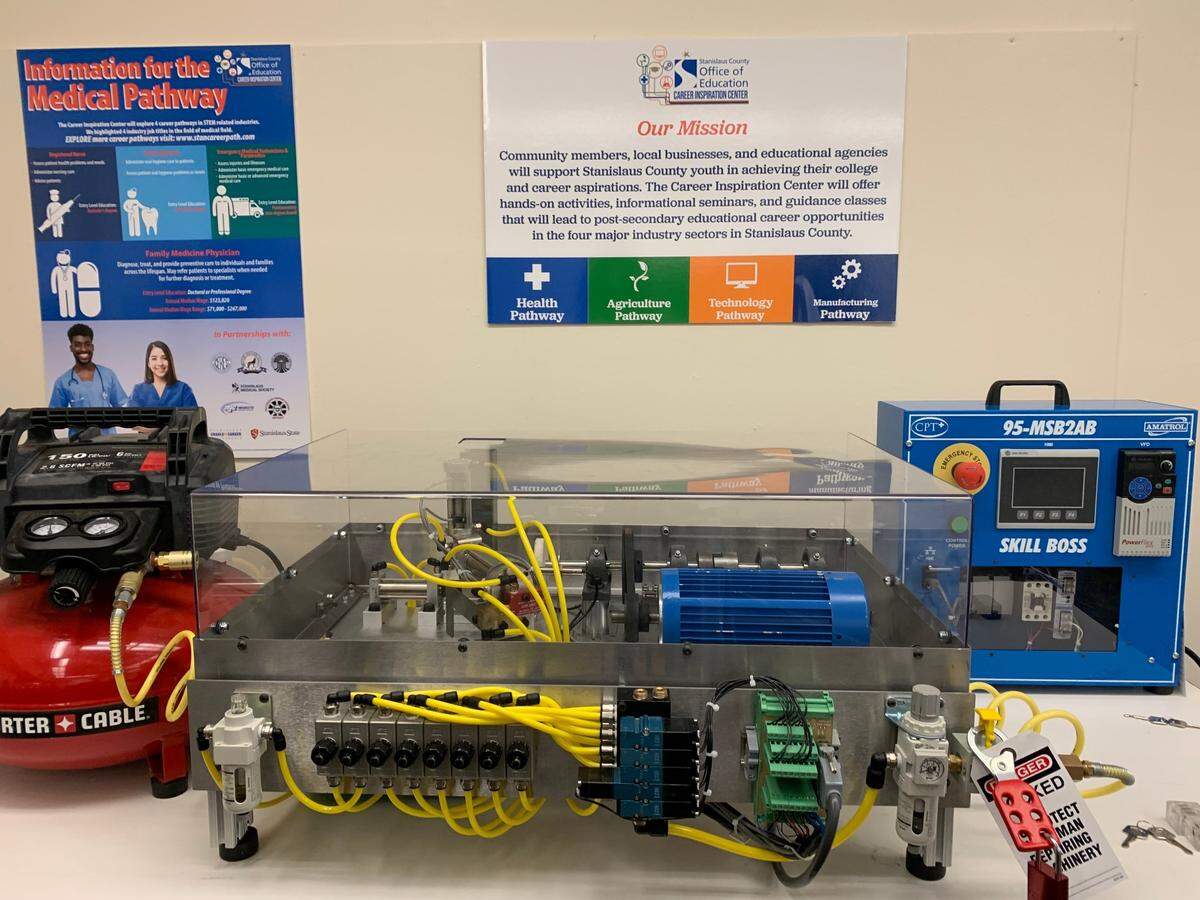
Students also practiced maintenance with wrenches on small engines. They used a Skill Boss machine, a training tool that simulates how manufacturing works in a condensed space.
In a different room, students donned Oculus VR headsets that placed them in a virtual welding workspace. They clicked buttons on remotes that acted like game controllers to perform various tasks.
Another group used design software Tinkercad to create nuts and bolts that then materialized through a 3D printer, showing students how technology is used in manufacturing. The center has 10 3D printers, said Rudy Escobar, a project coordinator for science, technology, engineering and math.
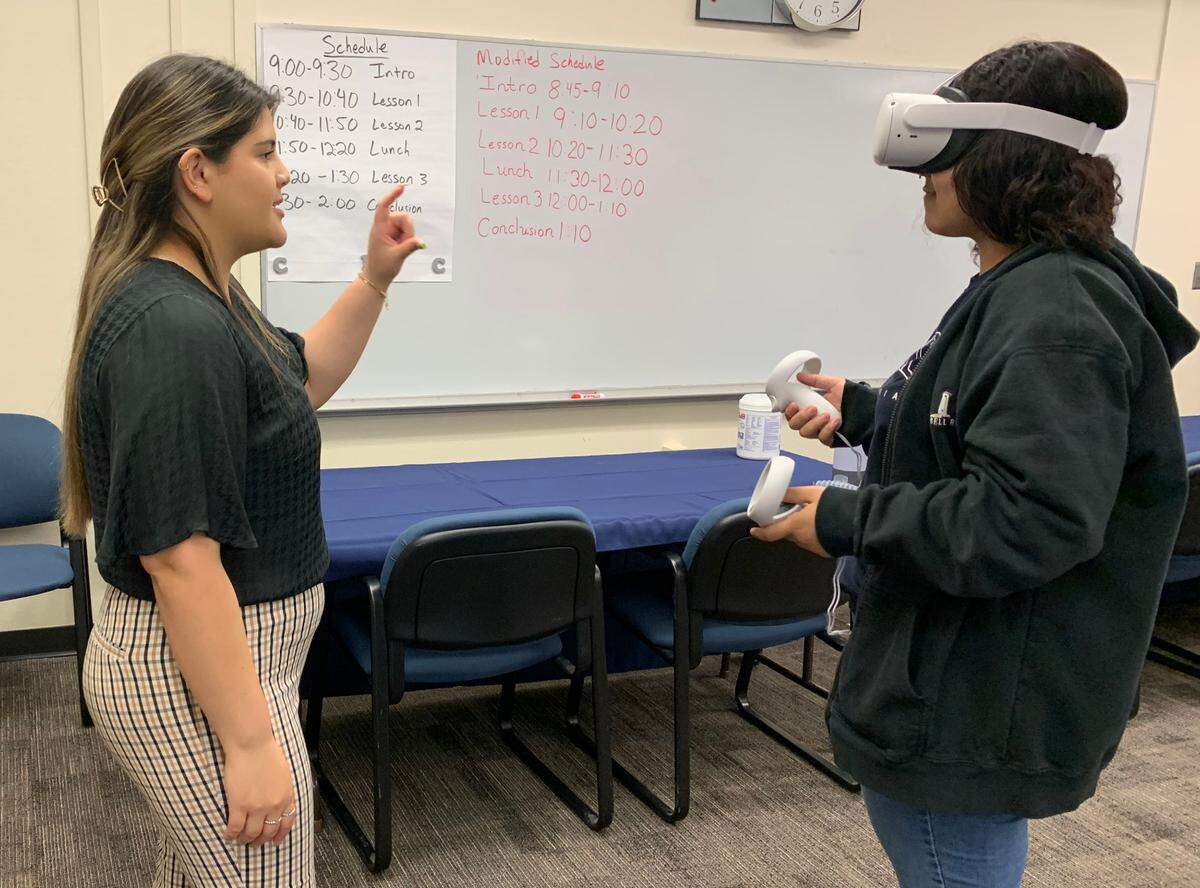
Facilitator Abby Solis said she sees students come in with an idea of what they’re interested in, then leave excited about something else entirely. “It opens doors to career pathways that they maybe never thought of before,” said Solis, who is pursuing a credential from Stanislaus State to teach English.
She said the students also appreciate the activities they can apply to their own lives. Students were intrigued by the chance to practice CPR during the health day, for example.
“The kids really enjoy the hands-on experiences,” Solis said.
Ceres High School junior Jaylin Jackson said the program presents a “more fun way to learn about stuff that you’re not really learning about in school.”
She added, “I’ve never seen a lot of the stuff that’s here.”
Fellow Ceres High junior Adrian Enriquez said the technology used through the program is an efficient way to learn new skills. “I didn’t know half of this stuff existed.”
Enhances school district’s CTE classes
Smaller districts, which tend to have more limited career and technical education pathways, sometimes send students to multiple pathways, Plaa said. Larger districts invite students to sign up for days that interest them.
Though Ceres Unified offers similar pathways at its own high schools, the Career Inspiration Center enhances these classes because students can work with different equipment, said Marcel Jackson, youth adviser for Ceres High School’s Manufacturing, Production, and Green Technology Academy.
Another youth adviser, Kyle Cerny, who oversees career and technical education at Central Valley High School in Ceres, said the county’s program particularly benefits freshmen and sophomores who haven’t yet had hands-on experience at their high schools. Juniors and seniors in career technical education programs typically get regular hands-on practice, Cerny said.
Plaa said the program also benefits seventh- and eighth-graders by giving them a feel for various industries to inform their future class selections.
Plans to grow
Plaa said 10 school districts already have signed up to send students next year. He said he hopes to sign on even more so the program can expand to five days a week. The state grant covers costs for this year and next, but after that, the program will become a contracted service.
“We’re just excited to keep the program growing,” Plaa said.
County education office spokeswoman Judy Boring said exposure to local career opportunities could help convince students to stay in Stanislaus County after high school. “We lose talent,” she said.
Plaa said they’re planning a weeklong summer boot camp in June, open to all Stanislaus County high school students. Students can choose one of 10 industries to dive into throughout the week.
The Career Inspiration Center partners with Modesto Junior College and California State University, Stanislaus, in addition to business partners such as E.&J. Gallo Winery, Bay Valley Tech, Opportunity Stanislaus and the Stanislaus Medical Society.
MJC provides lessons and connections to their programs, Plaa said. Stanislaus State students can gain paid work experience to lead sessions. Three to four university students typically facilitate each day, supplemented by videos with field experts.