Modesto City Schools shares progress on equity goals in first of two public forums
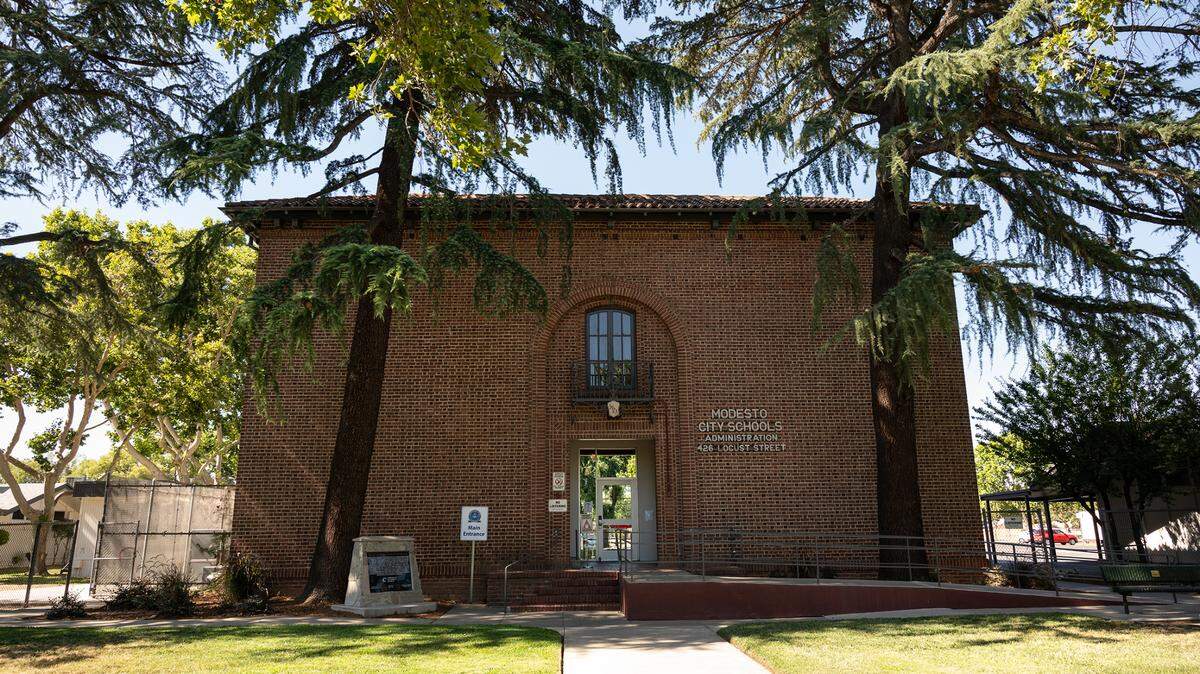
In the first of two public forums this school year, leaders from Modesto City Schools shared progress and sought feedback on their work to make schools more equitable.
The virtual forum Thursday evening was led by Associate Superintendent for Student Support Services Mark Herbst and Equity and Intervention Specialist Fallon Ferris. Twenty-nine people watched, including seven district staff and a Modesto Bee reporter. The second forum will be in May.
Herbst said the district’s approach to equity includes educational access issues related to race, ethnicity, gender, language and disability. While equality in education means that students are treated the same, equity means students are given the support they need to receive a quality education given their circumstances and learning styles.
Equity is “something that we are committed to long term,” Herbst said.
The district created an equity and racial justice framework last year, along with an equity and racial justice task force that recommended six equity goals that trustees approved in the spring.
The forum was designed to share work on those six actions.
District officials also report on equity goals at designated board meetings in person and streamed on YouTube on Monday nights every three weeks. People should check the board’s agenda, posted the Friday before each meeting, to see when presentations on equity goals are scheduled.
The Bee broke down information from Thursday’s forum by each goal.
Increasing teacher diversity
The district’s Human Resources department restructured its hiring process to eliminate biases and expand recruitment to more diverse communities in the Bay Area, Herbst said. This is part of a five-year process to diversify teachers, he said.
Herbst said a review of the district’s teaching force last year indicated it’s predominantly white. Though consistent across California, he said, “when you look at a community as diverse as Modesto, you might expect to see diversity that’s a little bit closer in line with the students that we serve.”
State data from the 2019-20 school year shows Latino students accounted for 58.8% of the district’s high school student population and 69% of the elementary school student population.
Research shows students benefit academically and behaviorally from having teachers who share their race. The district will still hire the most qualified candidates, Herbst clarified.
Analyze teacher placement
This goal aims to avoid placing new hires in classes of students with the greatest needs. The district has negotiated with the Modesto Teachers Association to move up the hiring timeline to compete for more qualified candidates, Herbst said. Recruitment for the next school year started in November.
Associate Superintendent of Human Resources Mike Henderson is tentatively slated to present to the school board on teaching hiring and teacher placement on Feb. 7, Herbst said.
Analyze course offerings
After this goal was adopted, California ordered districts to offer ethnic studies courses by 2025. Modesto school officials then pivoted from considering whether to add an ethnic studies class itself to determining its content.
A district task force is charged with deciding the class length — a year or semester — and the ethnicities to highlight, Herbst said. The purpose is to teach the contributions, history and struggles of ethnic groups that have been historically marginalized, he said.
Ethnic studies differs from critical race theory, which examines systemic racism in American institutions.
Analyze grading policy
This fall marked the start of a three-year process to expand equitable grading practices. A task force is meeting for workshops throughout the school year, and the 66 teachers involved are trying different strategies.
Equitable grading is not designed to lower expectations. The goal is to drill into academic standards and provide opportunities for students to succeed via extra review and remediation, Herbst said.
“It’s really to build long-term capacity and increase effective instruction within a classroom,” Herbst said.
Education expert Douglas Reeves is guiding the district’s work. A presentation to the school board is tentatively scheduled for Feb. 7.
Improve communication with parents of color
A new parent ambassador program aims to share information, answer parents’ questions and connect parents to resources, program leader Madie Herrera said.
“We are very confident that the new program will expand Modesto City Schools’ parent outreach,” Herrera said.
The district has hired a lead coordinator and 11 of 14 parent ambassadors, Herrera said. The final three ambassadors should be hired by the end of next week, she said.
District officials are also collaborating with Parents Leading Change, a board-recognized parents group with a mission to ensure racial and fiscal equity, leader Jocelyn Cooper said.
Training for teachers and staff this year has focused on customer service, Herbst said.
Communications chief Krista Noonan will update the school board on May 16.
Equity audits
District leaders are analyzing enrollment data by ethnicity for Advanced Placement courses, Gifted and Talented Education and Career and Technical Education, in addition to disparate disciplinary rates.
They plan to collect the data by the end of winter break, present it alongside recommendations to the school board in May and take action the following school year.
This story was originally published December 12, 2021 at 5:00 AM.