Stanislaus State leaders share details on now-virtual start to fall semester
California State University, Stanislaus, postponed most in-person classes to provide more time for students, faculty and staff to receive their mandatory COVID-19 vaccine as the delta variant causes an increase in local cases.
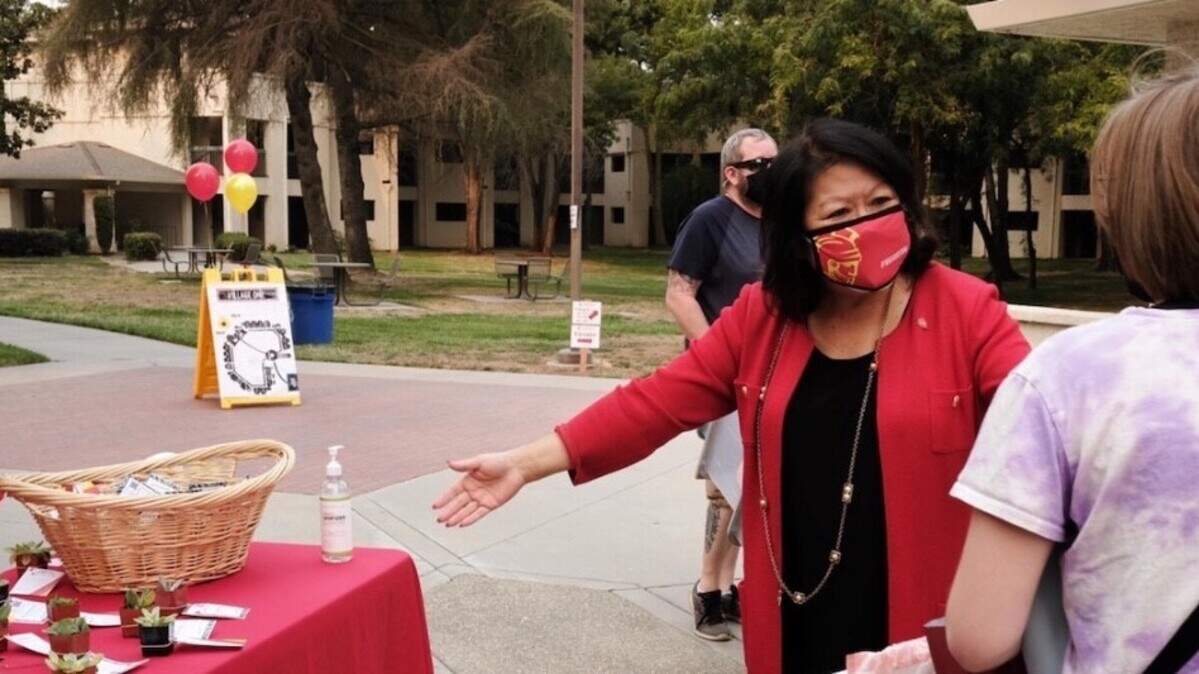
In a welcoming address Thursday, President Ellen Junn and other university leaders shared this and other details for the now-virtual start of the fall semester. Junn said over 500 people requested to watch the Zoom webinar.
Here are four key takeaways from the address.
Delayed in-person classes will provide more time for vaccinations
Junn announced Aug. 15 that all in-person classes would be delayed until Oct. 1.
“Many of us were optimistic that we were finally turning a corner on this pandemic, but unfortunately, it isn’t over,” she said Thursday.
The CSU requires proof of vaccination for students, staff and faculty attending any of its 23 campuses. People who request an exemption for medical or religious reasons must test weekly. Free testing is available on campus.
In a university survey, 70% of Stanislaus State staff and administrators reported they were vaccinated, spokeswoman Rosalee Rush said.
University officials do not have information yet on the vaccination rate for students.
“Our (reporting) system has only been live for a short time,” Vice President for Student Affairs Christine Erickson said via Zoom Q&A. The portal to show proof of vaccination has been live since at least Aug. 4, according to campus communications. The deadline to upload a vaccine record is Sept. 30 for all CSU campuses.
Junn urged students, staff and faculty to upload their proof of vaccination as soon as possible. Stanislaus State will provide a pop-up vaccine clinic soon, she said.
Junn said university officials “remain excited and committed” to bringing students back to campus.
“Protecting the health and safety of our students, faculty, staff, and reducing the spread of coronavirus remains our priority,” she said.
Some campus spaces, classes to open while most classes remain virtual
Deans, department chairs and faculty are working to identify courses that will operate in person even as the campuswide return is postponed, Provost Rich Ogle said.
“Some courses that were scheduled to be face-to-face are going to remain in face-to-face format because there is an important pedagogical or accreditation reason,” Ogle said.
Most of these courses have been selected, he said. Faculty will reach out to students to let them know if their class will begin the semester in person.
University officials are working on a plan to give students access to study spaces on campus so they can transition from in-person classes to online classes without risking being late or absent, Ogle said.
Library services will remain virtual, Ogle said.
What happens if a student refuses to wear a mask
Masks are required inside campus buildings. When classes are operating in person, Ogle said, student ambassadors throughout school buildings will provide masks and remind people they’re required. Masks will also be available in and around all classrooms.
A group of faculty members created guidance to go in all syllabi outlining steps to take if a student refuses to wear a mask in class.
Students first will be reminded and offered an extra if they don’t have one. Disciplinary actions include asking students to remove themselves from the classroom and dismissing the class if the situation escalates, Ogle said.
Ogle encouraged students concerned about wearing masks to contact their academic advisers to switch their schedule to online courses.
Enrollment drops from 2020
As of Aug. 15, 10,123 students were enrolled for the fall semester. This is a 6.4% drop from 2020, according to numbers presented during the address.
Stan State’s satellite campus in Stockton will serve 982 students this fall, a 6.5% decrease from the previous year. Just 35 students are taking classes exclusively at the Stockton campus, compared to 62 in fall 2020.
Stan State will offer 2,520 course sections this fall, Junn said. As of mid-July, about 42% of the courses were scheduled to be on campus.
This story was originally published August 20, 2021 at 12:30 PM.