To get English learners in core classes, Modesto City Schools reworks Language Institute
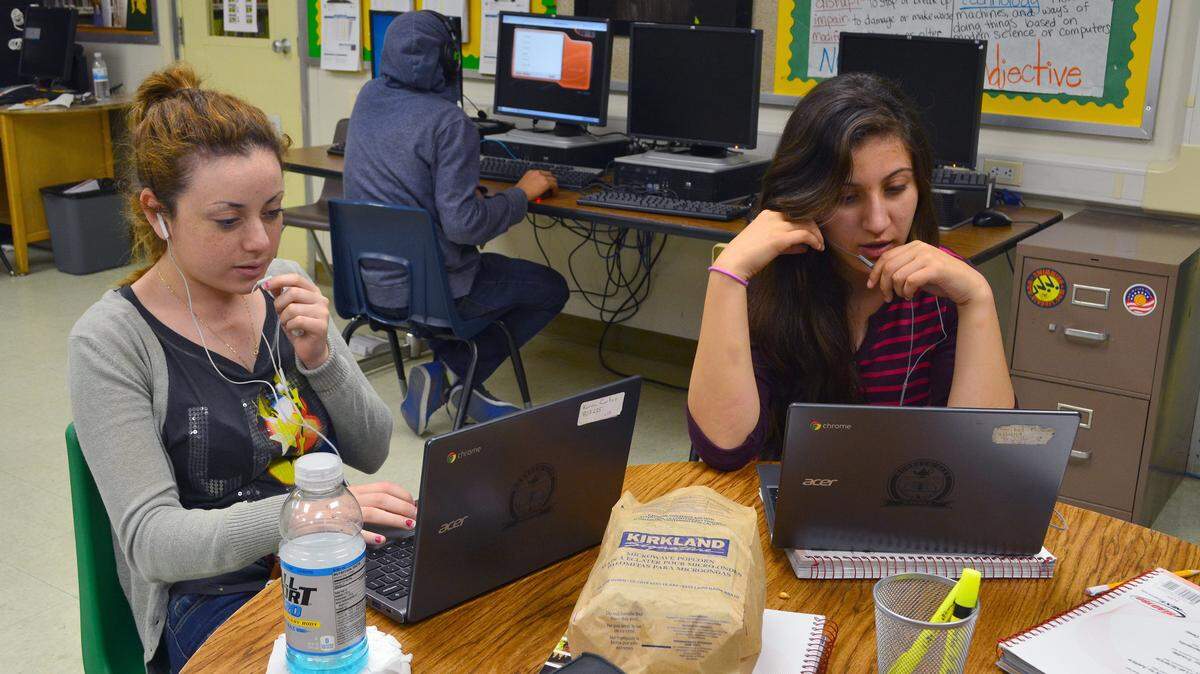
In one response to a state audit that found Modesto City Schools out of compliance with rules regarding millions of dollars in federal program funding it receives, the district is restructuring its Language Institute at Davis High and Roosevelt Junior High.
The action is being taken because one finding was that not all English learners had access to core content classes such as math, social science, science, physical education, history and English language arts, Superintendent Sara Noguchi said Tuesday.
Letters were sent out Monday to the families of Language Institute (LI) students at Davis High School and Roosevelt Junior High explaining the impact of the changes. One change is in the definition of a “newcomer” student. Now, a student in a U.S. school for less than 12 months will qualify for the LI Newcomer Program.
Previously, a student could attend the Language Institute for many years, the superintendent said. “So that’s substantively going to change the structure of that program. ... All young learners need to have access to core content, and (auditors) found that wasn’t the case.”
The Modesto City Schools online page about the Language Institute says its enrollment represents more than 30 countries and 16 languages.
Of 13,000 students the district monitors, Noguchi said, 7,000 are currently designated as English learners, while 6,000 have been redesignated, meaning they have met the threshold for showing they no longer need to be in classrooms designated for English learners. But “we still have to monitor and ensure that we support them so that they don’t slip back into being an English learner,” she said.
Students no longer in the Newcomer Program will be in the Language Institute’s Expanding and Bridging programs. Those programs include grade-level core content classes with language support built in.
Teacher says she’s devastated
LI teacher Lindsey Bird told The Bee in an email Wednesday that she is devastated by the changes. “We saw the writing on the wall over a year ago, which is why we submitted the charter school petition, she said, referring to an effort to create New Colossus Academy, a Modesto charter school to specialize in educating refugee and immigrant students and asylum seekers. The Stanislaus County Board of Education rejected the petition in August.
“At that time, it became abundantly clear that rather than hear the needs of the newcomers and celebrate the successes of students past, a few on the MCS board were more interested in dismantling the program.”
The district is using the audit findings as a “smokescreen” to convince the public the changes were mandated, Bird said. She and a colleague called “as far up the ladder” as they could in the California Department of Education and were told the “local education agency,” meaning the school district, “has full autonomy and authority to establish a newcomer program” as it deems necessary for its unique population, the teacher said.
Regarding some students being in LI for many years, as the superintendent said, Bird responded that one state requirement for a newcomer program is clearly defined entry and exit criteria, “which we never had in writing, although we begged for years.”
She also said participation in a newcomer program can’t be mandated — families can always opt out. “We always followed this philosophy,” she said. “Many families opted out from the beginning or midway through their student’s LI journey.”
The letters to families of students in the Expanding and Bridging programs offer the options to remain at Davis or Roosevelt and take core classes there, or to return to their home schools. Either way, additional language support services will be provided.
The letters include a link to a digital form that each family is asked to fill out: student’s name, grade, home school and whether the family wants the child to go to that home school or Davis or Roosevelt.
“We need to build a master schedule,” Noguchi said of the importance of knowing how many students will continue being bused from throughout the district to Davis and Roosevelt vs. how many will go to their home schools. “The purpose of the letter was really driven to understand the needs of Davis in the master scheduling, but also sharing with parents the knowledge that in this program, you could go to your neighborhood school because they’re going to be in core classes and they will be provided support just like at Davis. ... They’re not going to get different services at Davis than they would at, let’s say, Johansen.”
Will this mean a staffing change at schools?
When a new school year begins, the district routinely “levels up” staffing based on enrollment, the superintendent said. “Let’s say many children decide to go to their home school, which I really don’t anticipate,” she said. “I anticipate kids are going to go to the schools that they’ve been going to because that’s where their friends are and that’s what they’re used to. So I don’t anticipate a large shift.
“However, if there is a shift and we have additional language learners in the Expanding and the Bridging programs at Beyer, or Johansen, for example, we would have to shift some of the support for language services over to those schools. So in translation and other support services for language, we would ensure that they had that at their home school.”
Other wraparound support services — extended day, bilingual paraprofessionals, refugee services and more — still will continue, Noguchi assured.
The superintendent also addressed another finding of the federal program review: the lack of professional development and experience teachers throughout the district have with all English language learners. Noguchi, who has been superintendent since July 2018, said she observed that lack while researching Modesto City Schools as she considered whether to apply for the job.
So as of this school year, the district has an English-learner department, she said. And in the coming school year, training and professional development of all MCS teachers will have a focus on English learners.
“It really is a districtwide need,” Noguchi said, because teachers are working with those 13,000 English learners every day.
The coronavirus school closure has put distance learning at the forefront, the superintendent said, but close behind is working on how to “provide teachers and staff training in strategies that are successful with the different levels of English learners, not only in their writing, but also in their speech.”
This story was originally published April 29, 2020 at 9:32 AM.