Court documents show arguments from both sides over Scott Peterson’s bid for new trial
Before a judge decides whether Scott Peterson’s murder conviction should be overturned on the grounds of juror misconduct, each side will have one last chance to present its case during oral arguments in three weeks.
Both have filed written briefs that detail what they say proves their case.
Peterson’s attorneys argue that juror Richelle Nice was biased against Peterson long before hearing any of the evidence about the disappearance and murders of his wife, Laci, and their unborn son, Conner.
They said evidence of her bias includes a personal history of experiencing violence and threats when she was pregnant; omitting that personal history from a jury questionnaire, which otherwise might have resulted in her dismissal; and her failure to follow the trial judge’s instructions to approach deliberations with an open mind and make a decision only after discussing the evidence with the other jurors.
Peterson’s defense team pointed to testimony that Nice walked into the deliberation room and immediately announced that Peterson “should . . . pay for killing the ‘Little Man.’” It was a nickname she had used for Conner that Peterson’s attorneys say is evidence of bias.
The defense alleges that her omission on the jury questionnaire about being the victim of a crime while pregnant and party in a lawsuit was intentional.
“Ms. Nice’s undisclosed history precluded her from being an “impartial judge of the facts as ... the law requires,” the brief reads.
The defense also points to evidence that she three times declined invitations to be dismissed as a juror by declaring a financial hardship despite suffering a “extremely precarious financial situation.”
“Plainly, Ms. Nice was extremely eager to serve,” the brief says.
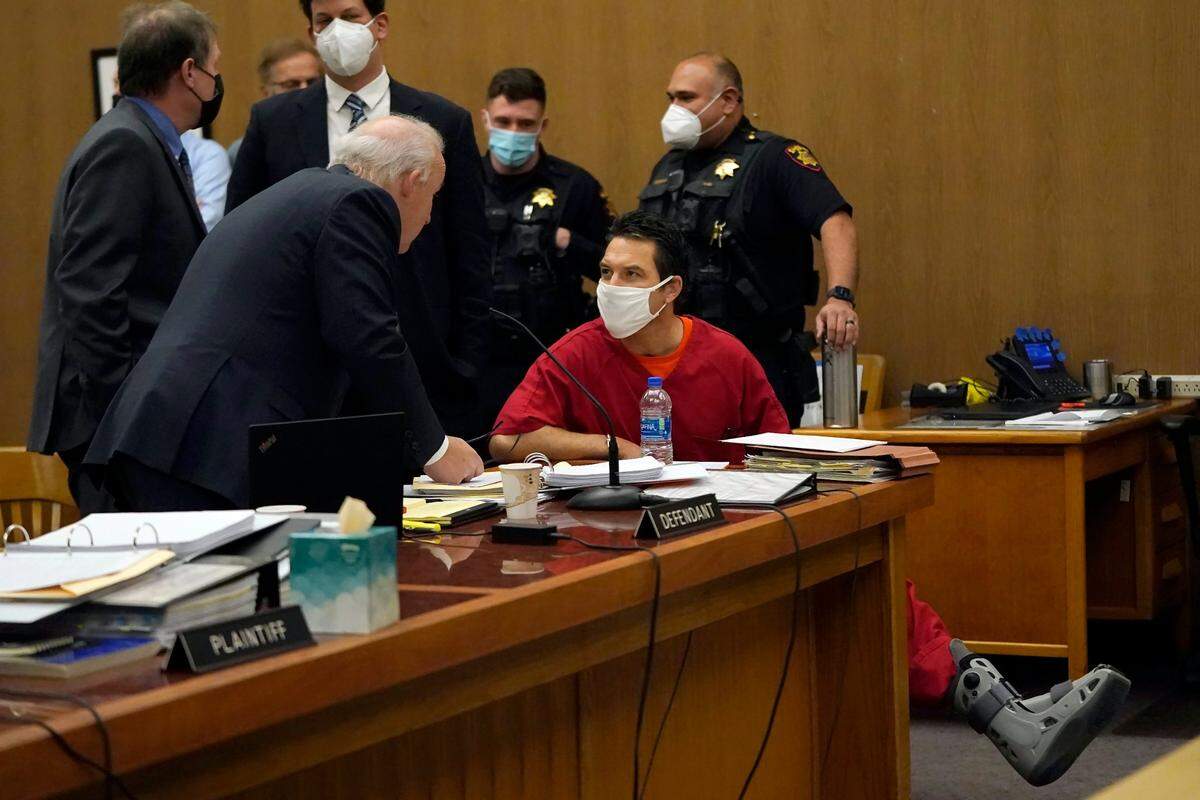
The briefs come after an evidentiary hearing in March, which included two days of testimony from Nice, as well as testimony from another juror on Peterson’s jury panel, Nice’s former attorney and a police records clerk.
‘Believable and sincere’
Nice was questioned on the stand about an incident in which she was threatened by her boyfriend’s ex-girlfriend while she was pregnant and another time when that boyfriend was arrested for domestic violence after a fight that she testified was “probably” about him cheating on her. Peterson had been having an affair at the time of the murders.
Nice testified, “When I filled out that questionnaire — honestly and truly — nothing of this crossed my mind.”
She said she didn’t know the restraining order she got against her boyfriend’s ex-girlfriend was a type of lawsuit and didn’t consider a lawsuit she later filed against the ex-girlfriend for lost wages because she ultimately dropped it.
In the incident with her boyfriend, Nice testified she was the aggressor and she hit him, not the other way around.
While she is listed in two police reports as a victim, Nice said she’s never considered herself one.
The Stanislaus County District Attorney’s Office, which prosecuted the case and is the respondent to the juror misconduct claim that came out of Peterson’s petition for habeas corpus, said no evidence of bias or intentional omission of information was presented at the evidentiary hearing.
The prosecution said Nice was a credible witness who denied every accusation and was believable and sincere.
“Her explanations were in line with her character and utterly reasonable. She was unshakable in her belief that she had done nothing wrong ... the past had just never crossed her mind,” the brief says. “It was Petitioner’s obligation to prove his claims and not merely engage in character assassination of Ms. Nice.”
Prosecutors point to Nice’s testimony that, “Before the trial, I didn’t have any anger or resentment towards Scott at all. After the trial, it was a bit different because I sat through the entire trial and listened to the evidence.”
They said Nice had no recollection of referring to Conner as ‘Little Man’ in the deliberation room and had to be reminded that she used the nickname on other occasions.
Nice testified that the experience of being a juror “absolutely” changed her. Prosecutors pointed to times during her testimony in the evidentiary hearing that she became emotional and tearful recalling the aftermath of the trial, including writing letters to Peterson on death row at the suggestion of her therapist.
Burden of proof
The prosecutors say in their brief that Peterson has the burden to prove bias and that California Supreme Court cases “hold that inadvertent or unintentional mistakes do not amount to misconduct.”
“Case law is replete with examples of jurors who have failed to recall far more serious victimization than Ms. Nice is even accused of, and those courts found insufficient justification to overturn valid conviction,” the prosecutors wrote.
One of the cases they cited involved a juror who failed to disclose that he had been stabbed 15 times as a juvenile, suffering serious injuries for which he still had scars. He answered that he’d never been the victim of a crime and specifically that he’d never been assaulted.
Similar to Nice, that juror testified during an evidentiary hearing that he did not disclose the information “because I just never thought about it, to be honest with you.”
The judge in that case concluded that the juror did not intentionally fail to disclose the stabbing incident, saying he appeared to be credible and did not appear to have anything to hide.
Peterson’s attorneys also gave examples of California cases in which there was a presumption of prejudice by a juror, including one juror who failed to disclose she was the victim of child abuse and another who failed to say she was the victim of domestic violence.
They said the Supreme Court has recognized both that “jurors are sometimes unaware of their own biases, or are reluctant to admit to having biases,” and that “an unintentional nondisclosure may mask actual bias.”
Where the Peterson case will fall in the history of juror misconduct claims will be determined by Judge Anne-Christine Massullo within 90 days of the oral arguments, which are scheduled for June 29.
This story was originally published June 8, 2022 at 7:00 AM.