
Verdicts produce a lot of uncertainty in Modesto murder trial, legal experts say
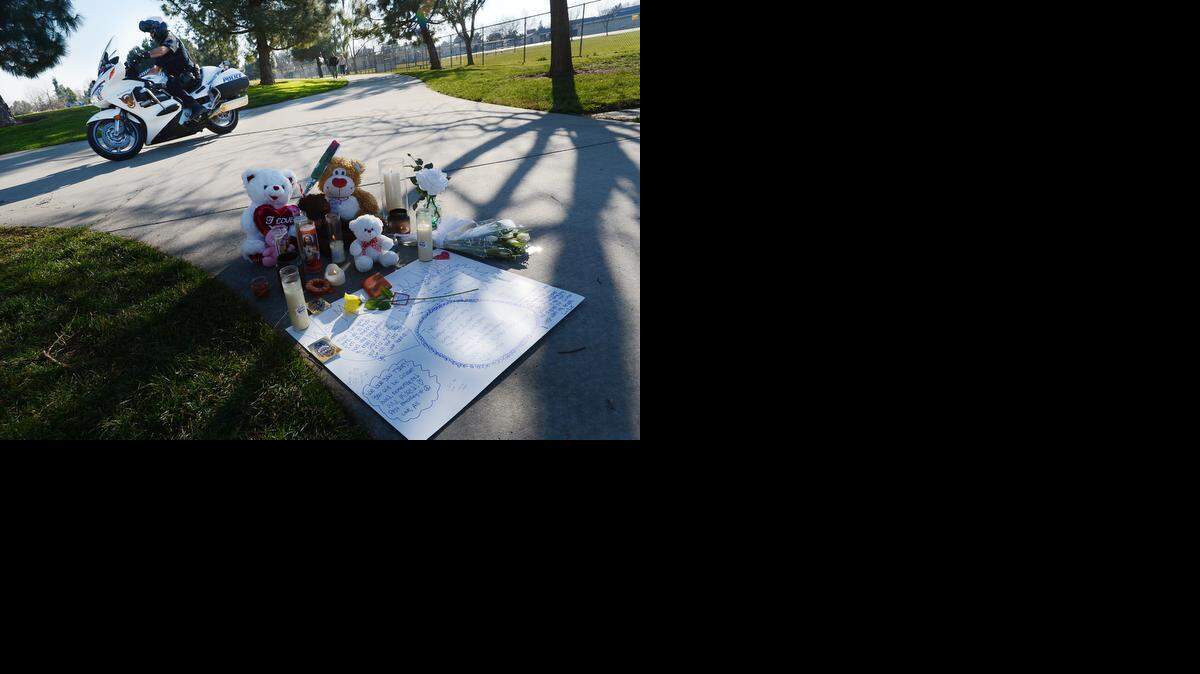
A lot of uncertainty was produced Thursday when a jury returned with what appear to be conflicting verdicts in a trial for three defendants accused of murder in the death of Tylor Crippen. The 18-year-old man was stabbed to death at a Modesto park during a botched robbery last year.
Some legal experts say the jury either compromised or just didn’t understand the “felony murder rule,” under which any death that occurs during the commission of a felony is murder, and all participants in that felony or attempted felony can be charged with and convicted of murder. Conversely, for a defendant to be found guilty of the murder, he must be found guilty of the felony that led to it.
The jury found Jacob Segura and Juan Garcia guilty of murder during an attempted robbery, but the jurors also found them not guilty of attempting to rob Crippen and his girlfriend, Brittany Waldo.
“It does sound confused,” Michael Vitiello said about the jury’s verdicts. He is a professor specializing in criminal cases at the University of the Pacific’s McGeorge School of Law in Sacramento.
The verdict for the other defendant, Taylor Koplen, did not appear ambiguous. The jury of six women and six men found him guilty of murder, robbery and two counts of attempted robbery.
Prosecutors say Koplen stabbed Crippen during the failed strong-arm robbery about 8:30 p.m. Jan. 29, 2013, at Creekwood Park near Johansen High School in east Modesto. They argued that Segura and Garcia joined Koplen in that attempted robbery, so they are just as responsible for Crippen’s death.
It will be up to the court to decide which verdicts will stand for Segura and Garcia, who each face life in prison.
The prosecution will argue that the jury’s verdict was consistent with the law and that the murder convictions for all three defendants should stand.
The defense attorneys will argue that the defendants were acquitted of attempted robbery charges, so there’s no way they can be convicted of the murder that followed.
Lengthy court battle likely
Other legal experts agree that a lengthy court battle will follow, and this murder case is far from over.
The law school professor says the jury process in criminal law can sometimes produce confusing results, and understanding why jurors come up with these decisions is difficult because deliberations are held behind closed doors.
“You have to guess what went on in that chamber,” Vitiello said.
Attorneys on both sides are allowed to approach jurors after a verdict and ask them how they made their decision and what they thought about the evidence presented during trial. Jurors can speak to whomever they want after a trial, but it’s up to them to decide if they want to talk.
There was confusion Thursday when Stanislaus Superior Court Judge Dawna Reeves informed the jury that its verdicts appeared inconsistent with the law. She asked the jurors if they needed more time to discuss it, so they returned to the jury deliberation room.
The jurors later submitted the verdicts a second time, so the judge asked the jury foreman whether they were sure they had enough time to deliberate. The jury foreman stayed silent for several seconds, and it appeared he didn’t know how to answer. It was then clear to the judge the jurors needed more time, so the jury again returned to the deliberations room.
Later Thursday afternoon, the jurors entered the courtroom a third time. The judge told them she was prepared to accept their verdicts, so she asked the jury foreman if the jury was ready to proceed with the announcement. Again, the jury foreman took some time before responding. He looked at some jurors sitting in the row behind, and he appeared to be looking for their assurances that they were ready to proceed.
The jury’s verdicts didn’t change. As the jurors exited the courtroom, one was fighting back tears as she walked past the families of the victim and the defendants sitting in the audience.
Compromise and confusion
Vitiello said juries often produce verdicts that are compromises. When jurors can’t agree, he said, they seek a verdict they can all be satisfied with.
“That was the only way they can get a verdict,” Vitiello suggested. “The other possibility is that the jury simply didn’t understand the instructions.”
He said there are some times when the legal concepts in criminal cases are too complicated for juries to comprehend.
The jurors in the Crippen trial spent about an hour listening to the judge instruct them on the law. That was followed by two days of closing arguments, when the attorneys summarized the evidence and testimony and further explained the legal concepts involved.
The jury then spent five days deliberating, before continuing deliberations for a few hours Thursday afternoon.
Deputy Public Defender Greg Spiering said sometimes juries can have trouble grasping the legal concepts. “Things get confused,” he said.
Spiering doesn’t expect the court will uphold the murder convictions against Segura and Garcia. He said you cannot convict a defendant using the murder felony rule when the jury has said the defendant didn’t commit that felony.
The courts could grant the defense a new trial for Segura and Garcia, but Spiering said they won’t be able to prosecute them again on the attempted robbery charges. You can’t prosecute defendants on a charge they’ve already been acquitted of.
Spiering said the District Attorney’s Office could prosecute Segura and Garcia on a charge of murder again under an allegation they helped Koplen kill Crippen. He said maybe a plea deal could be reached before a second trial.
The prosecution argued that Crippen’s bloodied nose is indication he was punched in the face by Segura or Garcia as he was being stabbed. Investigators found traces of Crippen’s blood on Koplen’s hand and Garcia’s shoe, but his blood was not found on Segura.
Continuous course of crime
The jury did convict Segura and Garcia of robbing Alex Salazar. He was attacked by the three defendants at Creekwood Park, according to prosecutors, and the defendants took Salazar’s cellphone and pocketknife. Police later found Salazar’s phone at Koplen’s home.
Several minutes after the Salazar confrontation, Koplen used Salazar’s knife to stab Crippen at the same park, the prosecution has said.
Crippen’s girlfriend testified that the knife-wielding man, believed to be Koplen, was the only one of the three suspects who demanded her belongings. The other two suspects chased her boyfriend into the park before the knife-wielding man joined the chase.
On Thursday as the jury continued deliberating, Deputy District Attorney Marlisa Ferreira told the judge it’s possible the jury used the robbery of Salazar as the basis for the murder conviction. She said it was all a continuous course of criminal conduct.
In her closing argument to the jury, the prosecutor said the defendants never retreated to safety after robbing Salazar. They stayed at the park and, minutes later, chased down Crippen.
The prosecution alleged the defendants committed the crimes for the benefit of or in association with the Norteño street gang. But the jury decided none of the defendants were acting on behalf of a gang.
Stephen Foley, a Modesto criminal defense attorney, said the defendant’s acquittal on the gang allegations show how weak the prosecution’s case was. “That’s their primary underlying premise of this whole thing,” Foley said about allegations the defendants were documented Norteño gang members committing crimes in a park controlled by the gang. “(The jury) didn’t buy it.”
Bruce Perry, another longtime Modesto criminal defense attorney, said there’s no way an inconsistent verdict would be upheld in this state 20 years ago. Under the felony murder rule, a murder conviction would be tossed out if it came with an acquittal of the felony that led to the death.
But he said recent court rulings have changed that, creating murkier legal precedence.
“It’s muddied the waters quite a bit,” Perry said. “Now, they allow juries to have some inconsistent verdicts.”
Martin Baker, Koplen’s court-appointed attorney, works for Perry’s law firm. The Crippen murder case can now head in a few directions, Perry said.
The court could decide to issue a directed verdict, meaning the judge would overturn the murder verdict against Segura and Garcia while upholding the attempted robbery acquittals. Or, the court could grant a request for a new trial. The case also could find its way into the state’s appellate courts.
Perry said it’s too early to try to predict how this case will end, but it’s clear the verdicts were inconclusive.
“I think the jury didn’t understand or they compromised, the only way they could get a unanimous verdict,” Perry said.
Bee staff writer Rosalio Ahumada can be reached at rahumada@modbee.com or (209) 578-2394. Follow him on Twitter @ModBeeCourts.
This story was originally published November 22, 2014 at 6:22 PM with the headline "Verdicts produce a lot of uncertainty in Modesto murder trial, legal experts say."