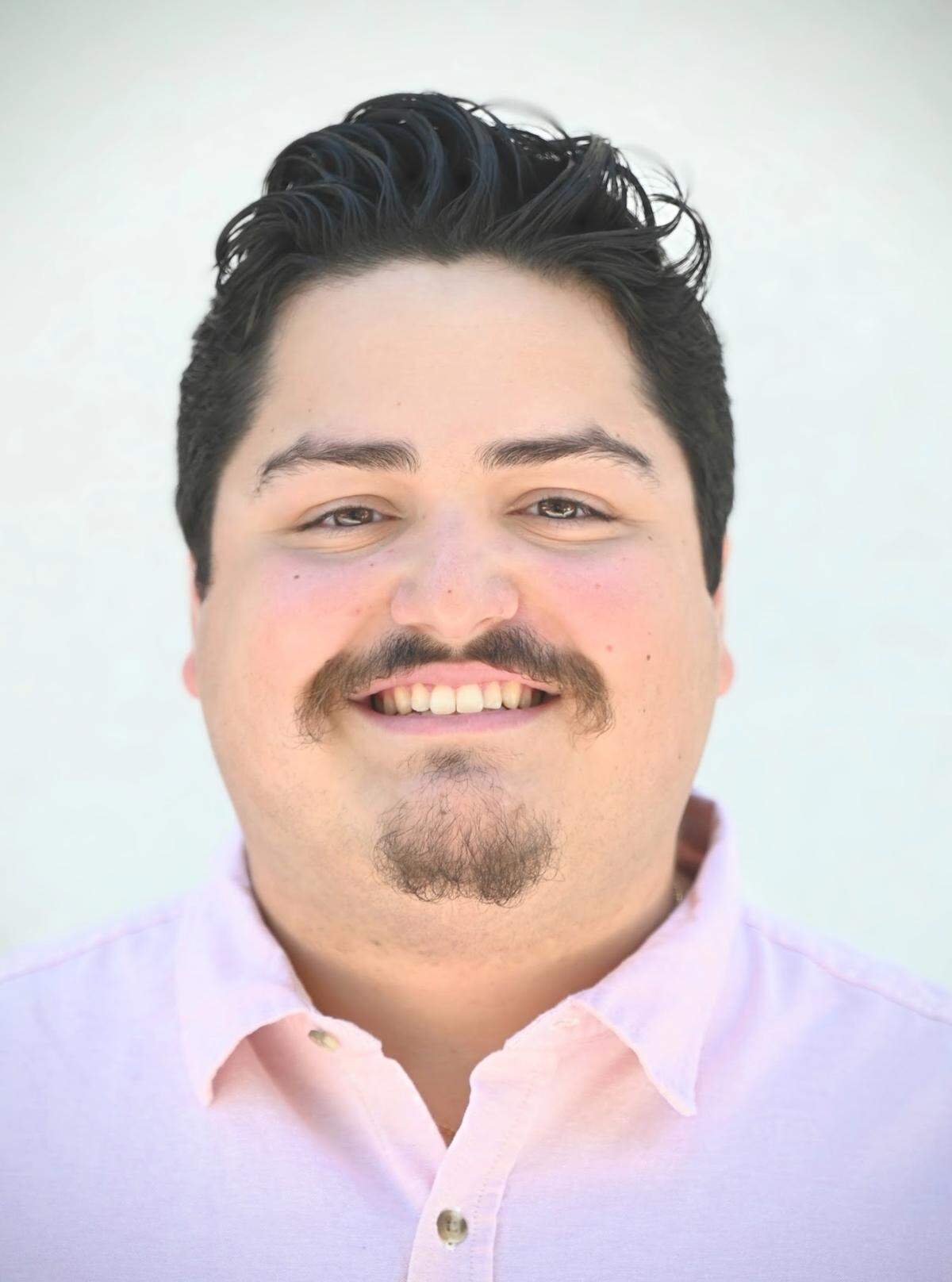
Judge orders Modesto man to stand trial in alleged serial sexual assault case

A Stanislaus County judge on Wednesday ordered a Modesto man to stand trial on most charges in a multiple-victim sexual assault case. Prosecutors presented testimony from alleged victims, sheriff’s deputies, detectives and California Department of Justice DNA experts during a daylong preliminary hearing.
Judge Jeff Mangar found sufficient evidence to hold Ivan Romo, 28, to answer on numerous felony counts, including allegations of rape by force or fear, forcible oral copulation and kidnapping for the purpose of rape, while declining to hold him on several other counts and enhancements.
Romo appeared in Department 3 of Stanislaus County Superior Court wearing a red-and-pink jail jumpsuit.
Victims and investigators describe alleged pattern
During the preliminary hearing, prosecutors presented testimony from women who described encounters in which they alleged Romo picked them up in his vehicle before driving them to secluded locations.
Stanislaus County sheriff’s deputies and investigators recounted statements from multiple alleged victims dating back to 2017 and 2018. Testimony included that a handgun was displayed during several encounters and that women were forced to engage in sexual acts after being driven away from public areas.
In one incident discussed during the hearing, an alleged victim testified she willingly entered the vehicle before the encounter escalated. In another, a woman described escaping when she feared she would be sexually assaulted.
Deputy District Attorney Sara Sousa said hearing directly from the women was among the most compelling parts of the proceeding.
“I think when the two victims came in and testified, that was pretty impactful,” she said. “I know it took them a lot of courage to come in and recall the events as they had experienced them…these incidents occurred nearly nine years ago.”
DNA evidence linked cases together, prosecutors say
A significant portion of Wednesday’s hearing focused on forensic evidence presented by California Department of Justice criminalists.
The experts testified they analyzed evidence collected during sexual assault examinations and developed male DNA profiles from multiple cases. Those profiles were entered into CODIS, the Combined DNA Index System, where they could be compared against known samples.
Investigators obtained a reference DNA sample from Romo pursuant to a search warrant, and DOJ criminalists testified that the profile matched DNA previously recovered from evidence associated with multiple victims. They also testified that the statistical probability of another unrelated individual sharing the same profile was extraordinarily small.
Sousa said the DNA evidence was particularly important because several women had difficulty identifying their alleged attacker years after the incidents.
“DNA is really a huge piece of the puzzle,” she said. “The women had a very hard time identifying the defendant as the assailant. In a lot of them, they were not able to identify him.”
She added that the investigation was handled through the Stanislaus County District Attorney’s Office cold case unit, which ultimately helped investigators identify Romo, locate him and extradite him back to California from Utah.
Judge dismisses several counts and enhancements
After hearing arguments from both sides, the judge found sufficient evidence to bind Romo over for trial on the majority of the charges alleged by prosecutors.
However, the court did not hold him to answer on Counts 1, 2, 7 and 15 and declined to sustain enhancements for great bodily injury tied to two separate counts.
Sousa said the rulings on the dismissed counts were not unexpected in light of the evidence presented.
With respect to Counts 1 and 2, Sousa said the alleged victim did not testify at the hearing and previously had been unable to identify Romo in a photo lineup.
“ID and jurisdiction are the two most important components when it comes to a preliminary hearing,” Sousa told The Bee. “Because she was unable to make an identification, I did not anticipate that there would be a holding order as to those charges.”
She said the robbery-related counts that were dismissed also reflected testimony that differed from what investigators initially understood, or failed to establish the necessary elements during the hearing.
Prosecutor says vulnerable victims deserve equal protection
Sousa also said she hopes the case challenges assumptions about victims involved in sex work.
“The public automatically just dismisses it like, ‘Well, you’re a sex worker, you’re homeless, you kind of set yourself up and put yourself in these situations to be victimized,’” she said. “But quite to the contrary, at the end of the day, regardless of what you do for work, race, color, creed, you are entitled to protection of the law.”
She added that, in the prosecution’s view, the evidence presented showed Romo targeted vulnerable women using a consistent method of operation.
“What was evident from today’s hearing was that the defendant clearly preyed on the most vulnerable victims,” Sousa said, alleging he repeatedly approached women late at night, displayed a firearm, drove them to remote locations and left them stranded afterward.
Defense says public has heard only one side
Defense attorney Rebecka Monez said she agreed with the judge’s decision to dismiss several allegations and enhancements, arguing that the evidence presented at the preliminary hearing did not support those claims.
“The judge did the right thing. He made the right holding order,” Monez said. “I was pleased that he followed and only held to answer on what the evidence supported, because the evidence didn’t support the felony charges that were dropped, dismissed, nor did it support the two GBI (great bodily injury) enhancements that were dismissed.”
Monez emphasized that the hearing reflected only the prosecution’s case and that the defense has not yet presented its evidence. “You haven’t heard the defense,” she said. “There’s always two sides to a story.”
She added that it is typical for defense attorneys not to call witnesses or present affirmative evidence during a preliminary hearing.
“At a preliminary hearing, you hear one side because traditionally, typically, the defense doesn’t put up witnesses or any defenses unless there’s some really extraordinary circumstance. Because most of the time, that’s saved for the trier of fact, which will be a jury in this case,” Monez said.
What comes next
At the conclusion of the hearing, the judge ordered Romo held to answer on the remaining charges and set the case for arraignment on the information in two weeks.
The preliminary hearing determined only whether sufficient evidence existed to move the case forward. It was not a trial, and Romo remains presumed innocent unless proven guilty beyond a reasonable doubt in court.