Judge presses Stanislaus County to help find placement for sexually violent predator
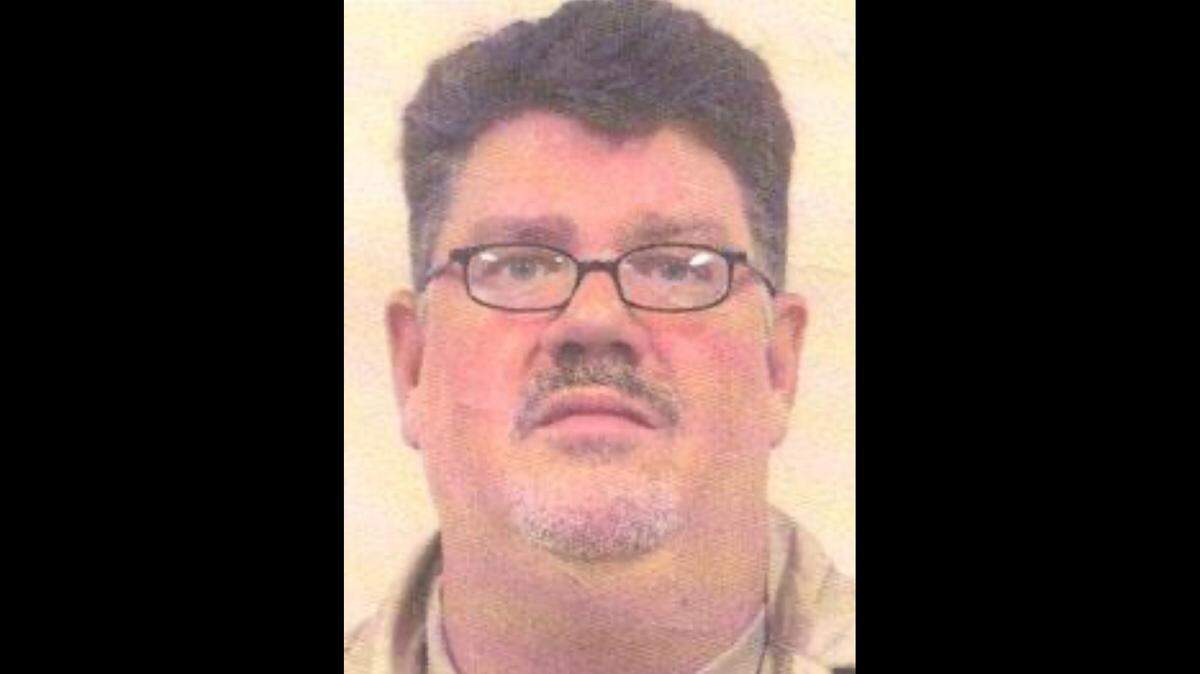
A Stanislaus County judge on Wednesday declined to release convicted child molester Timothy Roger Weathers into the community as a transient. Instead, she gave county officials, prosecutors and Liberty Healthcare more time to search for a lawful placement option before the case returns to court in late May.
During a hearing in Stanislaus County Superior Court, Judge Carrie M. Stephens said she is still not prepared to rule on Weathers’ motion for transient release. She made clear the county needs to take a more active role in helping identify possible locations where he could be housed safely and legally.
“I am not prepared at this point in time to release Mr. Weathers, and I’m not prepared, at this point in time, to rule on the motion,” Stephens said.
Weathers, 63, has been civilly committed as a sexually violent predator since 2000 after prior child-molestation convictions in San Diego and Stanislaus counties. Court records show he was convicted in San Diego County in 1986 of molesting a child and later was convicted in Stanislaus County of molesting two boys. In 1991, he was sentenced to 18 years in state prison. Court filings and prior testimony have also said Weathers admitted during treatment to molesting between 20 and 45 boys.
He has been recommended for conditional release but officials have struggled for years to find housing in Stanislaus County that complies with state law and supervision requirements.
Wednesday’s hearing focused on whether Weathers could be released on a transient basis, potentially in a hotel or motel room or in a recreational vehicle parked at an approved location. Stephens again rejected the idea of Weathers being released without housing.
“There’s just no way I would do that,” Stephens said of a tent or unsheltered release. “I don’t think anybody’s — including Mr. Weathers’ — interest would be protected. I just can’t see how that could possibly work.”
Instead, the judge said she wants more work done before making any decision, including additional efforts to identify hotels and motels that may be willing to accept a sexually violent predator and county-owned or public land where an RV could legally be placed without violating statutory restrictions.
Wednesday’s hearing brought Stanislaus County Counsel Jesus Mendoza into the discussion for the first time. Mendoza told the court that the county does not have an existing site available through a lease or contract where an RV could be placed. He added that any agreement involving county property would likely need approval from the Board of Supervisors.
“We’re not there yet,” Mendoza said. “There are a lot of roadblocks to that.”
Judge says she’ll write to county supervisors
Still, Stephens pushed back on the idea that the county could simply do nothing. “The option is he just gets released, and he gets followed around by somebody from Liberty Healthcare 24/7,” Stephens said. “And that is not in the county’s interest. That is not in our community’s interest.”
The judge said the issue is both a matter of due process and public safety, and she suggested county leaders should be more directly involved in trying to find a solution.
“I think it needs to really come to the attention of the board, and they need to roll their sleeves up and come up with a solution,” Stephens said.
She said she plans to write a letter to members of the Board of Supervisors explaining the situation and what role she believes the county should play. She said she would copy all parties on the letter and did not want any ex parte communication.
Defense attorney Martin Baker argued the case has dragged on far too long and said Weathers’ due process rights require that he be released after years of unsuccessful placement attempts. “He must be released in a different community,” he said. “It’s been more than reasonable time.”
Baker urged the court to impose a firm deadline, arguing that county agencies and Liberty Healthcare should be able to identify a lawful place for an RV or other temporary housing. He also said there are more hotels and motels in the county than those already contacted.
Stephens, however, said the issue is not as simple as releasing Weathers because of the time that has passed. She said state law requires the court to weigh both his constitutional rights and public safety, which she said remains the primary concern.
“It is a far more complicated discussion that needs to be had,” Stephens said.
Possible housing lead rejected by doctor
Chief Deputy District Attorney Wendell Emerson told the court that prosecutors are continuing to search for possible county properties and said his office may also have identified a housing lead resembling a sober-living environment that specifically houses sex offenders required to register under Penal Code 290.
But Dr. Robert Horon, appearing on behalf of Liberty Healthcare, said Weathers could not be placed in a board-and-care or transitional setting where families or other residents move in and out. He said clients who are sexually violent predator must generally be housed alone.
Horon also told the court there is one hotel that has not rejected the possibility of housing Weathers, though Liberty did not identify it publicly because prior publicity has led to community backlash when hotels are named in court.
He cautioned that hotel placements are inherently unstable because a hotel can decide at any time that it no longer wants the arrangement. “We’ve had successful hotel transient placements, at least temporary ones,” Horon said. “We’ve also had ones that went very badly.”
According to Horon, the hotel placements that have worked best typically included around-the-clock security.
Stephens directed Mendoza to provide Liberty Healthcare with a broader list of hotels and motels in the county. She also wants any possible housing-resource lists available through county agencies, such as the Community Services Agency and Behavioral Health and Recovery Services, even if those options ultimately prove unworkable.
The judge also ordered that any new placement leads identified by the District Attorney’s Office be promptly shared with Liberty Healthcare.
The case is scheduled to return to court at 1:30 p.m. May 29.
Weathers’ case stems in part from the collapse of an earlier plan to place him at a rural property outside Turlock, where another sexually violent predator, Kevin Gray, was proposed to live in the main residence while Weathers would stay in a separate converted unit. That plan fell apart after county officials determined the secondary unit intended for Weathers was not properly permitted.
For now, Stephens said she is trying to give all parties more time to explore remaining options before deciding whether transient release is legally and practically possible.