Tracy man sentenced to more than 7 years in federal prison for murder-for-hire plot
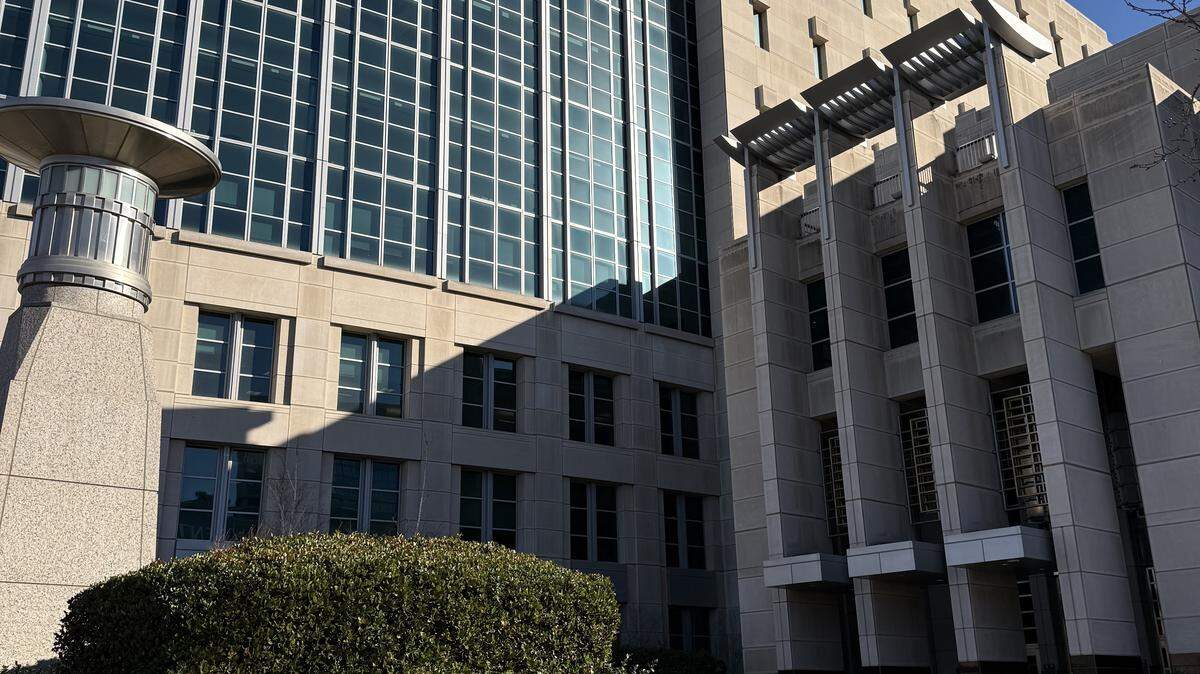
A Tracy man was sentenced Thursday to seven and a half years in federal prison for his role in a murder-for-hire plot involving a fake hitman, after a judge said the seriousness of the crime outweighed arguments that the defendant played only a limited role.
Federal prosecutors said Shaminderjit Singh Sandhu, 51, joined a 2023 conspiracy in which three men sought to hire a contract killer to assault one victim and kill another. The men met multiple times in Manteca with someone they believed was a hitman, but who was actually a confidential informant working with the FBI, authorities said.
The plot was disrupted before anyone was harmed, and the defendants were arrested in March 2023.
Sandhu was sentenced to 90 months in federal prison by U.S. District Judge Daniel J. Calabretta after pleading guilty to conspiracy to use interstate commerce facilities in the commission of murder for hire.
Calabretta said he reviewed the presentence investigation report and sentencing memoranda from both sides, including a victim impact statement, before resolving disputes over how the federal sentencing guidelines should apply.
Judge rejected “minor participant” argument
A central issue at the hearing was whether Sandhu qualified for a reduced sentence as a “minor participant.” Prosecutors objected to a section of the presentence report that treated Sandhu as having a lesser role, and Calabretta ultimately sided with the government.
The judge said he was conflicted because Sandhu joined the conspiracy late — roughly 11 days before his arrest — and was involved for a relatively short period. But Calabretta said Sandhu’s conduct went beyond what could fairly be described as minor.
Calabretta pointed to evidence that Sandhu provided the intended victim’s home address and legal name, discussed destroying evidence, and talked about disposing of the body in Mexico.
“Those are horrific statements,” Calabretta said.
Federal prosecutor Adrian Kinsella argued Sandhu understood the scope of the conspiracy and participated in planning how the crime would be carried out and concealed.
Defense attorney Erick Guzman urged the court to view Sandhu’s actions in comparison with those of his co-defendants, arguing that much of the planning occurred before Sandhu became involved and that the conspiracy could have proceeded without him.
Calabretta said the sentencing guidelines require courts to consider a defendant’s understanding of the criminal scheme and participation in planning. He sustained the government’s objection and calculated Sandhu’s advisory guideline range at 151 to 188 months, though the statutory maximum for the offense is 120 months.
The judge also rejected a defense request for an additional reduction under a “zero-point offender” provision, saying it did not apply in a murder-for-hire case involving credible threats of violence.
Sentence lower than requested by prosecutors
Prosecutors recommended the statutory maximum sentence of 120 months, while the defense asked for 36 months.
Calabretta said Sandhu was less culpable than co-defendant Jagbinder Singh Boparai, who was previously sentenced to nine years in federal prison, and said he could not envision a scenario in which Sandhu received a longer sentence. The judge also considered Sandhu’s lack of criminal history.
At the same time, Calabretta said fear or personal conflict did not justify attempting to hire someone to kill another person.
“In our society, we don’t take things into our own hands,” Calabretta said. “We don’t hire someone to kill somebody.”
Calabretta said Sandhu had access to law enforcement and legal counsel but chose to participate in the plot instead.
Sandhu apologized, asked for leniency
Sandhu addressed the court and apologized to the judge, prosecutors, law enforcement, the victim and his family. He described his actions as a serious mistake and asked for compassion, saying he had reflected during his incarceration and taken steps toward rehabilitation.
Sandhu said he had worked while jailed, attended classes and participated in cognitive behavioral therapy and reentry programs. He also asked the court to consider the impact his incarceration has had on his wife and two daughters, saying he missed years of milestones and family life.
“I take full responsibility for my actions,” Sandhu said.
Defense reaction
Outside the courtroom, Sandhu’s attorneys said they were relieved the court imposed a sentence below the statutory maximum while acknowledging the gravity of the offense.
Attorney Jai Gohel said the judge credited arguments that Sandhu acted out of fear, but said murder-for-hire cases are inherently difficult to mitigate. “The conduct and the aim are so great that it’s hard to overlook that,” Gohel said.
Guzman said the earlier sentencing of Boparai effectively set a ceiling for Sandhu’s punishment. “As a matter of logic, our client would have to receive a lesser sentence because his conduct was relatively lesser,” Guzman said, adding that he had hoped for a wider gap between the two sentences. “The sentence we requested would have been more than enough to ensure Mr. Sandhu never offended again.”
The prosecutors for the U.S. Attorney’s Office were not immediately available for comment following the sentencing.