Why do Modesto police solve some kinds of crimes at a higher rate than others? See state data
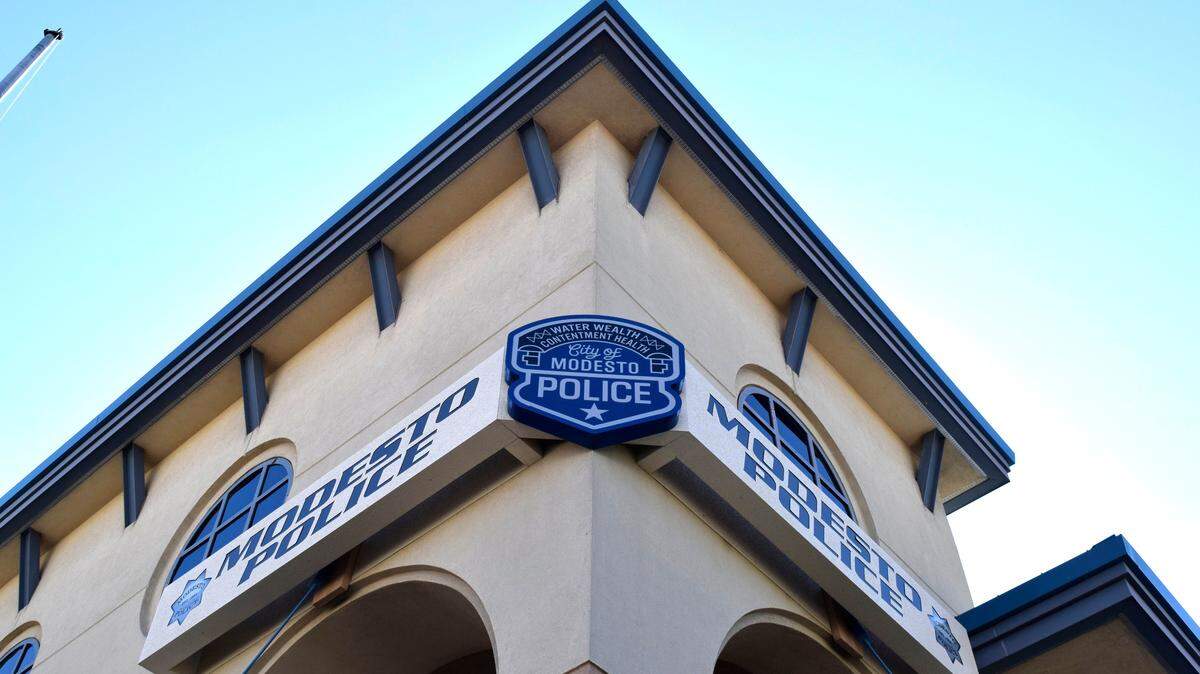
When it comes to homicides and assaults, the Modesto Police Department solves nearly seven in 10 cases. Property crimes, however, see far fewer resolutions, according to data from the California Department of Justice.
In 2023, for homicides and aggravated assaults, the clearance rate for MPD was 66%. For rape, it was 46%, which is higher than in cities including Sacramento, Stockton and Fresno. Robberies were solved at a rate of 47.3%.
Clearance rates are calculated by dividing the number of cases cleared in a given year by the number of reported crimes that year.
A crime is considered cleared when a person is arrested and charged. A case can also be “cleared by exceptional means,” such as when a suspect dies before they can be arrested. The crimes solved don’t necessarily need to have occurred in that year, so clearance rates can sometimes exceed 100%.
However, when it comes to property crimes such as vehicle and larceny thefts, the solve rates for MPD are much lower, at about 10%. Burglaries are at 12%. Besides vehicle theft, these rates are higher than in Sacramento, Stockton and Fresno.
Burglary is defined as the unlawful entry of a structure to commit a felony or a theft, while a robbery is defined by the taking or attempting to take anything of value from the care, custody or control of a person by force or threat of force or violence and/or by putting the victim in fear.
Besides burglaries and larceny thefts, all of MPD’s rates are above the national average.
The DOJ Criminal Justice Statistics Center gathers statewide crime and clearance data from law enforcement agencies as part of the FBI’s Uniform Crime Reporting Program. This includes the number of reported offenses, clearances and details on certain crimes, as well as the value of stolen and recovered property.
Magnus Lofstrom, a researcher at the Public Policy Institute of California, wrote in a 2023 report that clearance rates are “a key measure of police efficacy” and have an impact on community trust in law enforcement.
“While the pandemic undoubtedly presented challenges to making arrests and solving crimes, the arguably low clearance rates may be contributing factors to Californians increasingly expressing concerns about crime and law enforcement’s ability to control crime,” Lofstrom wrote.
When looking at the total crimes committed in the past 10 years, property crimes such as vehicle theft and burglaries have gone down dramatically, by 51%.
Compared to 2013, property crimes in Modesto decreased by 51.4% in 2023. Violent crimes also have gone down by 21%, from 2014 to 2023. It’s worth noting that a new definition of rape was implemented by the state DOJ in 2014, leading to an increase in reported rapes since then.
So if there are fewer property crimes being committed, why is the clearance rate still low?
What role may Proposition 47 have played?
The passage of Proposition 47 in 2014, which reclassified many drug and property offenses as misdemeanors, likely contributed to the decrease in property crime solve rates, according to Lofstrom.
Larceny, driven by a rise in car break-ins, increased in California after the proposition, while arrest rates for property crimes dropped. Since car break-ins are difficult to solve and made up a growing portion of larcenies from 2014 to 2020, this likely played a role in the decline of larceny clearance rates.
Additionally, stricter arrest criteria for misdemeanors, which often require an officer to witness the crime, may have further reduced larceny arrests.
Modesto Police Chief Brandon Gillespie said in a statement that investments in technology, including license plate readers, camera systems, the Real Time Crime Center and the department’s airplane, have significantly enhanced the efficiency of officers and detectives, enabling them to solve cases more effectively.
“The dedicated men and women of the Modesto Police Department, supported by a collaborative and engaged community, are the driving force behind our continued success in reducing crime rates year after year,” he stated.
He highlighted that over the past five years, the department has maintained an 87% homicide clearance rate, which increased to 90% over the last three years, and successfully made arrests in three cold case homicides during that period.
“These achievements reflect our unwavering commitment to crime victims and the safety of our community,” he added.
Sebastian Sclofsky, a criminal justice professor at Stanislaus State University, said violent crimes are solved at higher rates because they typically are prioritized over property crimes. He said that for property crimes, many individuals turn to insurance claims for resolution rather than expecting the police to solve the cases.
Violent crimes, by contrast, are often easier to solve because they typically involve more evidence to follow, such as motives, witness accounts as well as heightened pressure. Unless a large-scale string of robberies occurs in an affluent area, property crimes typically draw less attention from both the public and law enforcement.
“There’s not much public damage being done here that the police have a serious interest in solving,” Sclofsky said about property crimes.
He also said that increased policing, advanced technology and greater investments rarely impact overall crime rates. Instead, social policies related to healthcare, welfare, community investment and education play a more significant role in reducing crime.
While a lower case volume theoretically could result in higher clearance rates due to reduced workload, police departments often gain more recognition and prestige for solving violent crimes than for addressing property crimes, which influences their focus, he added.