Stanislaus County team develops a Homeboy Industries-inspired support plan for ex-inmates
.jpg "A planning session was held recently for the Homeboy Industries-inspired program for Stanislaus County.")
Planners will soon release recommendations for a Homeboy Industries-inspired program in Stanislaus County to support people coming out of the criminal justice system.
For six months, men and women with prior records sat at tables — and broke bread — with officials from the district attorney’s office, probation and other county departments and nonprofit groups to design a program creating a community of support, opportunity and hope for people released from incarceration.
The planners say the program won’t be a copy of Father Gregory Boyle’s highly lauded Homeboy Industries working with ex-gang members and former prison inmates in the Boyle Heights area of Los Angeles but will be tailored to the area and its needs.
Boyle’s uplifting talks in Modesto in 2016 paved the way for creating comprehensive and compassionate support in Stanislaus County for people leaving jail or prison. A planning group has been meeting since September and is close to releasing recommendations.
“We are building something that is appropriate for where we live,” said Kate Trompetter, lead consultant for the planning process.
Key members of the planning team have included 14 people with criminal records who talked about what they needed from a rehabilitation program. They expressed the need for support from other people with the same background and experience, things like peer navigation services, employment opportunities, and mental health and emotional support.
“These are all things that Homeboy Industries is doing well,” Trompetter said. The planning team also borrowed ideas from other programs inspired by Boyle’s work.
Founded in 1988, Boyle’s Homeboy Industries is regarded as a transformational program producing a sense of belonging for former gang members. Participants are employed in businesses operated by former gang members and benefit from services ranging from case management to substance use counseling, community kinship and tattoo removal.
When the program was created 35 years ago, door-kicking police suppression and mass incarceration were the main strategies for dealing with gang violence in Los Angeles. Boyle, a Jesuit priest who pastored Dolores Mission Church from 1986 to 1992, has taken a radically different approach, saying that “gang violence is about a lethal absence of hope.”
Ruben Imperial, county assistant executive officer, who went with a group to visit Homeboy Industries early this month, said he was impressed by the people providing the services. The case managers, counselors and other staff members were people with criminal pasts who turned their lives around.
“It makes a difference in terms of engaging the population and those folks saying ‘yes’ to getting help,” Imperial said.
The prospective Stanislaus program won’t be nearly as large as its model in Southern California.
Homeboy Industries grew into the largest gang intervention and rehabilitation program in the world, with a $30 million annual budget, hundreds of staff members and an 18-month employment and reentry program serving 400 men and women.
It has support from foundations, major corporations, private donors and the public sector. A huge one-time gift pushed total revenue for Homeboy Industries to $59.1 million in 2021, which is larger than annual budgets of six of the nine cities in Stanislaus County.
In a typical year, the program receives 33% of its revenue from individual donors, 31% from foundations and corporations, 20% from its business enterprises, 9% from government and 7% from other sources, according to annual reports.
“The difference definitely would be size,” Imperial said. The local startup program is expected to get funding from the county’s Community Corrections Partnership. Imperial said philanthropy could be explored as another source of funding.
Gang intervention could be part of the local effort, but it’s currently shaping up as rehabilitation assistance for former inmates.
Trompetter’s consulting firm, Connect For, was approved for a $150,000 contract with the county last year to research whether a program modeled after Homeboy Industries could be viable here. Trompetter said the planning team believes it has outlined a program that will work.
The recommendations will be submitted to the Community Corrections Partnership in a month or so.
%20(2).jpg "DSC03361 (1) (2).jpg")
Working with a smile
Sammy Provencio was one of the people with the lived experienced needed to help design the program for Stanislaus County. The 47-year-old Modesto native was in and out of prisons for 30 years due to convictions for armed robbery, assault with a deadly weapon and domestic violence during the “three strikes” era, he said.
During the visit to Homeboy Industries, Provencio saw ex-gang members working with a smile and former prison inmates who found acceptance from others.
“Some people coming out of incarceration don’t have a network of support,” Provencio said. “They need a community that accepts them. A lot of us struggle with rejection and not being accepted.”
Provencio said people leaving incarceration will need to continue with rehabilitation services such as group counseling and anger management, how to deal with stress and pressure, and learning coping skills. It helps them to build self-awareness and recognize traumas or emotions that may cause them to use drugs again.
He said there are a lot of strengths in the design team’s plan.
“I am grateful that our community is looking at different ways to rehabilitate people,” Provencio said. “Everything that was done in the past has not been working.”
Who’s on the planning team?
Beside the county representatives, the planning team also has included representatives from Project Resolve, Love Stanislaus County, Sierra Vista Child & Family Services, Legacy Alliance Outreach and Debrief.
Imperial said the social enterprise aspect of Homeboy Industries is on the minds of those developing the Stanislaus program, as Boyle’s program gives jobs to participants right away.
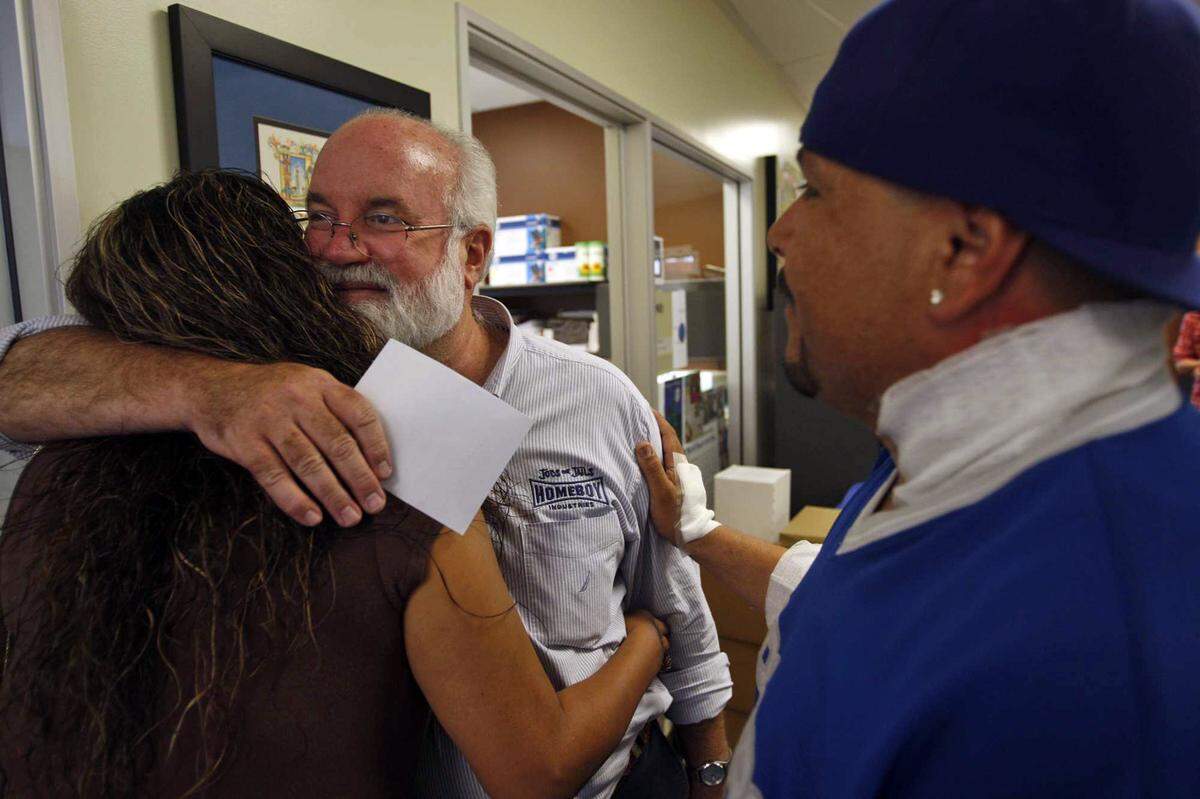
Boyle’s organization started with a bakery operated by ex-gang members and also has the Homegirl Cafe, catering, a silkscreen shop, a diner at Los Angeles City Hall, a store selling T-shirts and tote bags, a grocery and an online food market.
“There are other programs inspired by Homeboy Industries that have done employment opportunities differently,” Imperial said.
He said he hasn’t seen recommendations on who would run the Stanislaus program. Employers in the community would be needed to work with the local program, Imperial added.
Trompetter said after the Community Corrections Partnership executive committee reviews the recommendations and considers funding options, the plan will move on to the county Board of Supervisors.
This story was originally published February 22, 2023 at 10:41 AM.