After two break-ins, Modesto’s Cambodian temple is building its own defense
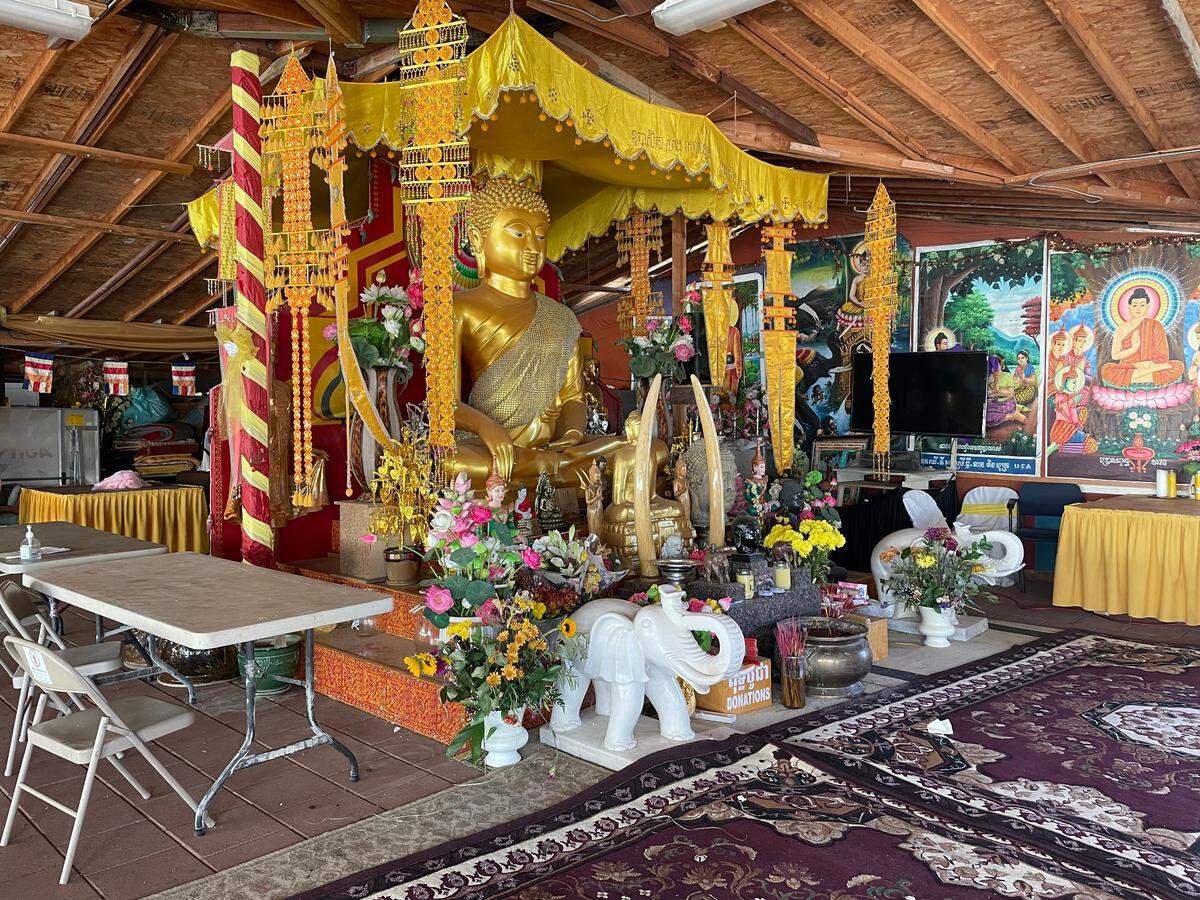
Inside the temples of the Modesto Cambodian Buddhist Society, monks meditate in incense-filled air. But lately, crime has interrupted their peace.
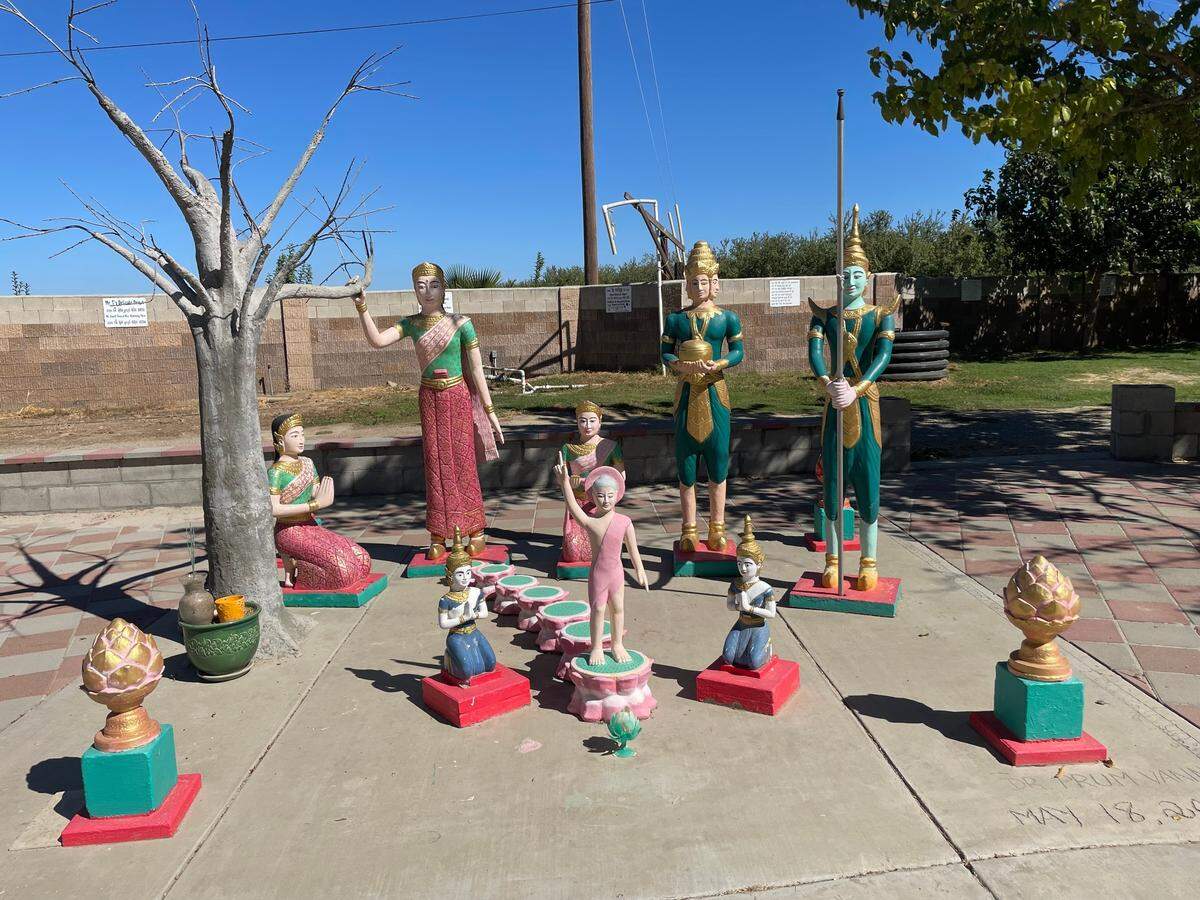
One Monday in June, monk Ve Prum was meditating at a temple when he heard a commotion. It was dark, but in the distance, he saw two men grabbing the heavy Buddha statues in the courtyard in an attempt to push them over.
When he called out to them, the men didn’t waver, so Prum, wearing his traditional orange robe and sandals, grabbed a length of rebar and chased after them. The trespassers fled and no one was hurt.
“I’m used to it. I’m not afraid,” Prum said in Khmer through an interpreter.
A few months earlier, someone slipped into a temple, stole the donation box and threw the bowl used for offerings into a nearby canal. In response, monks and administrators put new lights around the courtyard.
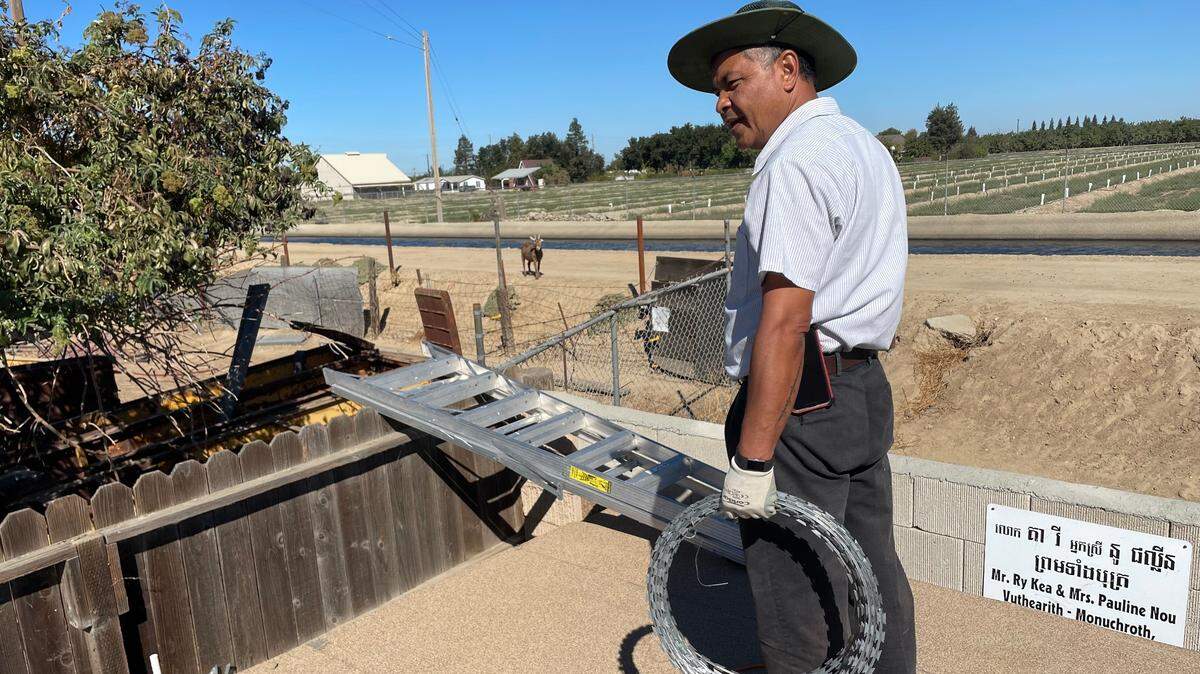
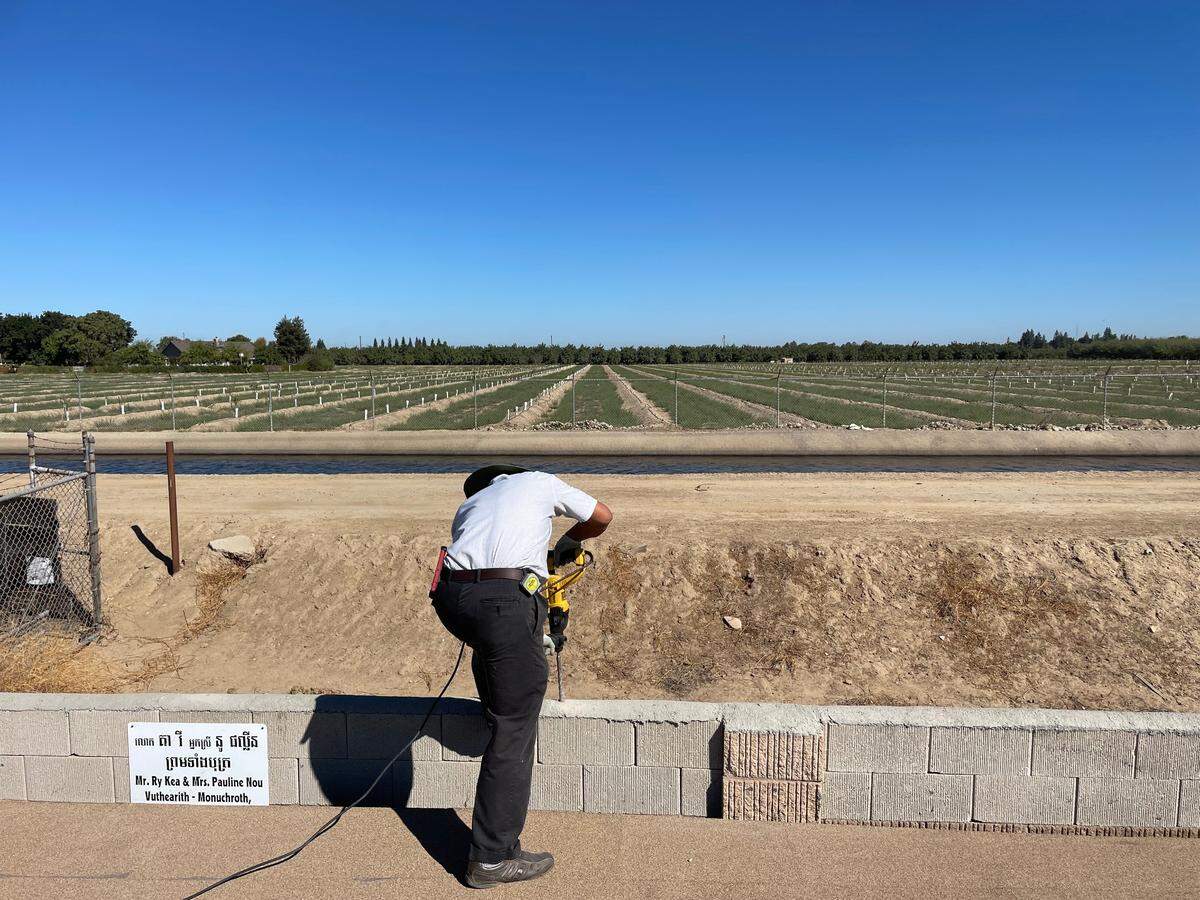
Now, after the second break-in this year, former Buddhist Society president and current board member Ry Kea is building a razor wire fence around the religious complex on Grimes Avenue.
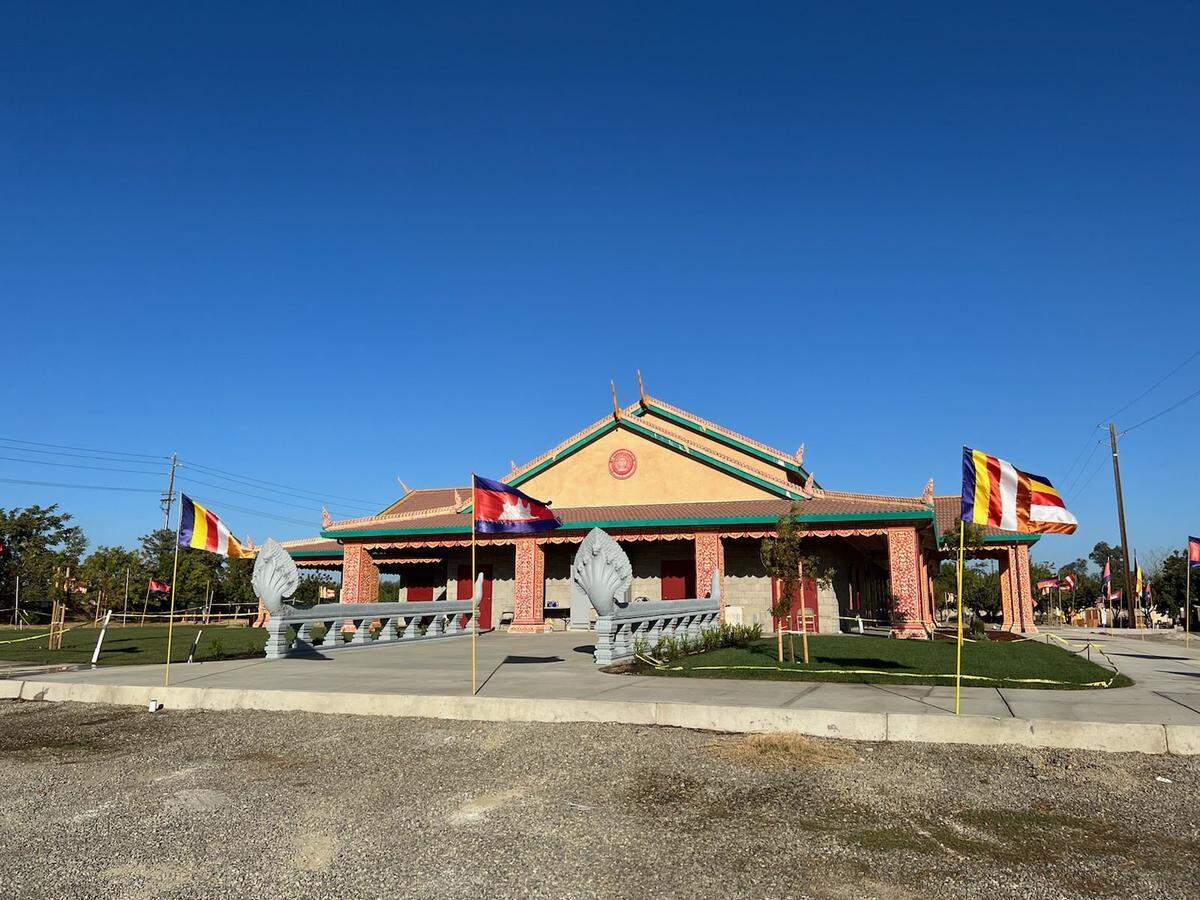
The new fence comes as the community nears the realization of a decade-long dream to build a new temple at the complex. Unlike the current temples, which are portable buildings, the new temple has ornate designs on the exterior, a concrete foundation and efficient air-conditioning systems.
It’s a delicate balance: welcoming new faces into the new and larger building while protecting the space from those who want to steal from it or desecrate it.
‘Don’t want to be a bother’
Kea is standing on the roof of one of the old trailers-turned-temples, drilling holes into concrete where the razor wire will go. He is doing the project in phases and is laying a fence only on a portion of the total 700-foot perimeter. He estimates this section will cost about $3,000. That doesn’t include all the time he has spent on it over the past few weeks, standing in the sun, climbing the roofs and walls of the temple complex.
“The labor is free,” he said with a laugh.
But that self-sacrificing attitude has its drawbacks. No one reported the first break-in this year to the Stanislaus County Sheriff’s Office. When the second break-in happened in June, Kea called the personal cell phone of Deputy January Siphan, who is Cambodian, to report the crime.
The officer was off-duty, however, and instructed Kea to report the crime through official channels. Kea never followed up.
“We don’t want to create any problem,” Kea said.
Lt. Tom Letras, a Sheriff’s Office spokesman, said he sees that approach often among members of the Asian American and Pacific Islander community.
“It’s our AAPI community in general,” he said, “they feel like they don’t want to be a bother to law enforcement.“ His message was clear: “If something happens, let us know. It’s not to say we would have been able to solve this crime, but at least we’d have a record of it on file.”
That record could inform whether the break-ins are part of a pattern or constitute the basis of a hate crime. Now, Kea regrets not filing a police report.
Below Kea and away from the fence, monks mill about while men with shovels, landscaping tools and construction equipment put the final touches on the new temple.
Four dragons guard the entrances, each marked with engravings that mimic the ancient temples of Angkor Wat. The stone comes from Cambodia and is so heavy that it required teams of movers to transport.
“The dragon symbolizes the power of the temple, to guard or to scare away the evil spirits,” Kea said.
The temple is still waiting to install pavement for the parking lot and needs a hookup for the fire sprinkler before the building can officially open, but administrators such as Kea already are buzzing about the ribbon-cutting and other upcoming events, including Cambodian New Year in April.
He wants to see hundreds of people at each event, and he is sure he’ll invite the Sheriff’s Office to each one, too.
This story was originally published October 5, 2022 at 5:00 AM.