
Second murder trial ends the same way for Turlock man in deadly stabbing over woman
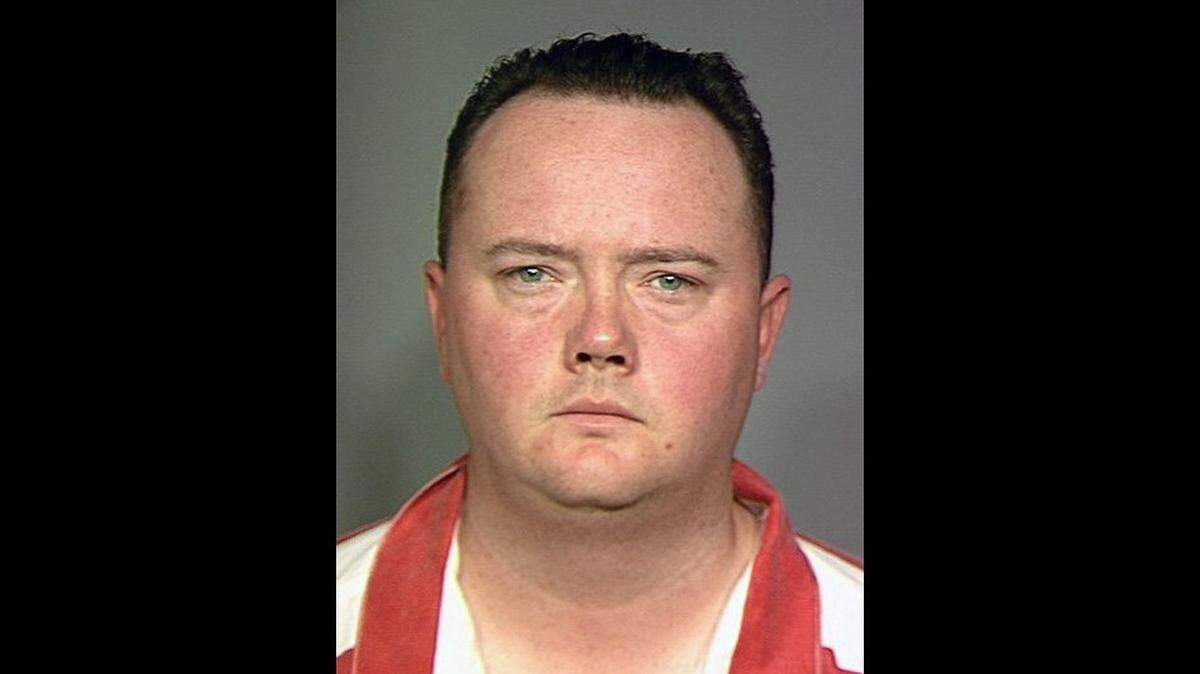
Darren Jack Merenda in February 2015 was serving a prison sentence of 25 years to life for a deadly stabbing in Turlock, when a state appellate court overturned his conviction, citing “prosecutorial error.” The court said he deserved a new trial in Stanislaus County.
Merenda’s second trial ended the same way his first one did eight years ago. On Monday afternoon, a jury found Merenda guilty of first-degree murder in the stabbing of 34-year-old Hughson resident Donald Deane Futch. The attack was the result of a dispute over a woman.
Donna Butcher, Futch’s mother, said she was worried that Merenda’s second trial might have a different outcome. It weighed heavily on her as she sat in court throughout the second trial.
“You never know what a jury is going to do,” she said in a phone interview with The Modesto Bee on Wednesday.
Butcher said she felt some sense of relief when she heard the jury’s verdict announced in court earlier this week. But her outlook isn’t any different from the first time Merenda was convicted in October 2011.
“It doesn’t change the fact that my son is still gone, and that (Merenda) is going to spend the rest of his life in prison,” Butcher said.
The stabbing occurred Sept. 12, 2009, when the two men agreed to meet in an alley behind a Colorado Avenue apartment complex in Turlock to discuss their dispute.
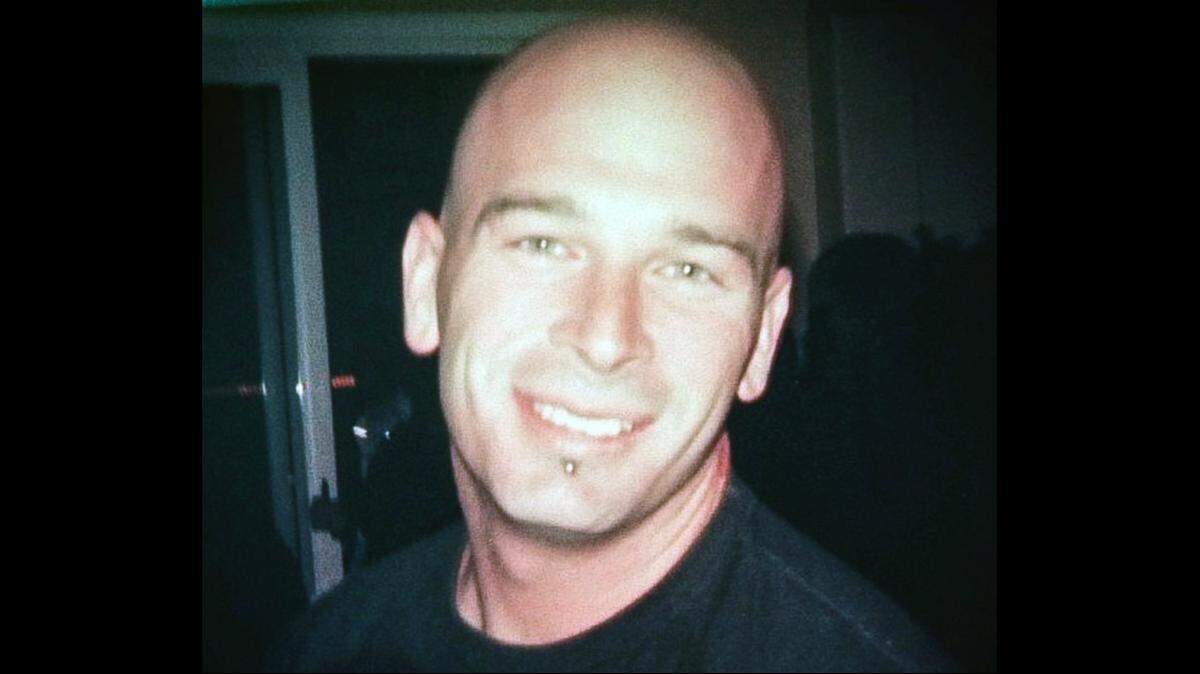
Merenda had been living at the apartment complex, where he and his neighbor, Brooke Barker, became friends. Merenda and Barker dated from May to June 2009. Barker broke off her relationship with Merenda and began dating Futch in July 2009.
On the night of the stabbing, Merenda saw Barker and Futch at a Turlock bar. Merenda then sent Barker two text messages, but she didn’t respond. Barker handed her cell phone to Futch for him to read the messages, according to Chief Deputy District Attorney Annette Rees.
The two men then sent taunting text messages to each other before meeting in the alley. Rees has said in court that Futch was unarmed, but Merenda had hidden a 10-inch, double-blade dagger under his shirt.
Futch was stabbed 11 times and pronounced dead at the scene. A forensic medical examiner testified in the first trial that one of the stab wounds in Futch’s chest was 13 inches deep.
Prison in Lassen County
Merenda’s first sentencing hearing was on Aug. 10, 2012. A month later, he was transferred to the High Desert State Prison in Susanville in Lassen County.
On Feb. 23, 2015, the California’s Fifth District Court of Appeal reversed the jury’s verdict in Merenda’s first trial. The appellate court said Merenda deserved a new trial because he was deprived of his right to have a defense attorney of his choice, according to the appellate court’s written opinion.
The appellate court determined that the prosecutor, Rees, failed to provide the trial judge all information about a key witness who was served with a subpoena to testify. Merenda’s request to delay the trial to hire a new attorney was denied because of the witness’s availability, but the witness never showed up to testify.
Two weeks before his 2011 trial was scheduled to start, Merenda informed the court that he had hired a defense attorney to replace Deputy Public Defender Saul Garcia, who was appointed by the court to represent him.
Merenda told the judge that his family had gathered enough money to hire Kirk McAllister, who wanted to delay the trial to get up to speed on the case.
Rees argued against the delay, telling the judge that Peter De La Cruz, a “critical prosecution witness,” was serving in the Army in Afghanistan, according to the appellate court’s review of the case.
Rees told the judge that De La Cruz, Merenda’s friend and roommate, had spoken to Merenda before and after the stabbing, and his testimony could help prove that the stabbing was premeditated. The prosecutor told the judge that her office had been in contact with the Army, and she confirmed that De La Cruz would testify in the trial.
Stanislaus Superior Court Judge Dawna Reeves denied the motion to delay the trial, because Garcia was ready for trial. The judge also said delaying the trial would put the prosecution at a disadvantage due to “unusual witness availability issues,” according to court documents.
But De La Cruz never showed up to testify in Merenda’s first trial. The Army would not force De La Cruz to travel for the trial without a federal subpoena.
Trial judge misled
The appellate court determined that Rees “inadvertently misled the court,” which resulted in Reeves denying the defense motion to delay the first trial. Rees failed to tell the judge that the Army did not recognize a state subpoena for De La Cruz.
This week, Rees said she did not agree with the appellate court’s opinion and its decision to reverse Merenda’s first conviction, “but I must respect the decision and abide by it.” She said it was De La Cruz who failed to inform her that he was available to return to Stanislaus County after Sept. 29, 2011, and he could have testified in the first trial.
De La Cruz, who is still in the Army, flew in from Germany and testified for the defense in Merenda’s second trial, according to Rees.
The prosecutor said the jury in the second trial started its deliberations Thursday afternoon and continued Friday. The jurors deliberated for about two hours Monday before reaching a verdict.
“I am very grateful to the jury for carefully listening to the evidence, fairly judging the credibility of the witnesses, and deliberating for many hours to reach a verdict in this case,” Rees said Tuesday.
The prosecutor said Futch “died a violent and senseless death,” and his family returned to court time and again to make sure he received justice.
Butcher sat in the courtroom every day of the second trial with Futch’s daughter, Taylor Casqueira. Butcher said she wasn’t strong enough emotionally to sit in court for Merenda’s first trial.
She says she didn’t even learn the defendant’s name until the second trial started. When Butcher spoke in court at Merenda’s 2012 sentencing hearing, she didn’t look in the defendant’s direction.
“I didn’t want his name or his face to take over the thoughts of my son,” Butcher said.
Modesto business
Futch, who was known to his family as “Donny,” had four children: Taylor, Elias Futch, Justice Futch and Pat Lafebre. He had moved his family to Hughson to open a Modesto branch of Bay Power, which supplies circuit breakers and other equipment to the electrical industry.
Butcher founded the business, previously known as Bay Breakers, in 1992 in San Jose. It was Futch’s idea to expand the business to the Central Valley in 2000. Butcher said her son, Donny, chose the building for the Modesto branch on Kearney Avenue.
His mother moved from San Jose to Hughson to care for her son’s children during the first trial. She’s remained in Stanislaus County, and she plans on attending Merenda’s second sentencing hearing on May 28.
Futch’s family and friends will be given a chance to speak in court before Superior Court Judge Rick Distaso sentences Merenda. Rees said Merenda again faces a maximum sentence of 25 years to life in prison.
Merenda remains in custody at the Stanislaus County Jail, where he awaits sentencing. The prosecutor said Merenda’s sentence will include time he’s already spent in jail and in prison over the past 10 years.
This story was originally published April 26, 2019 at 9:50 AM.