
Testimony ends in mental competency hearing for man accused in deputy’s killing
Testimony in a mental competency hearing ended Friday with a psychiatrist saying David Machado is eager to begin his legal fight against allegations that he killed Stanislaus County Sheriff’s Deputy Dennis Wallace.
Gabrielle Paladino, a forensic psychiatrist, treated Machado in late 2017 at Atascadero State Hospital in San Luis Obispo County. She testified Friday that he’s responded well to treatment and is ready to resume his case.
“He was very motivated; wanted to get back to court and give his best to this case,” Paladino said about Machado.
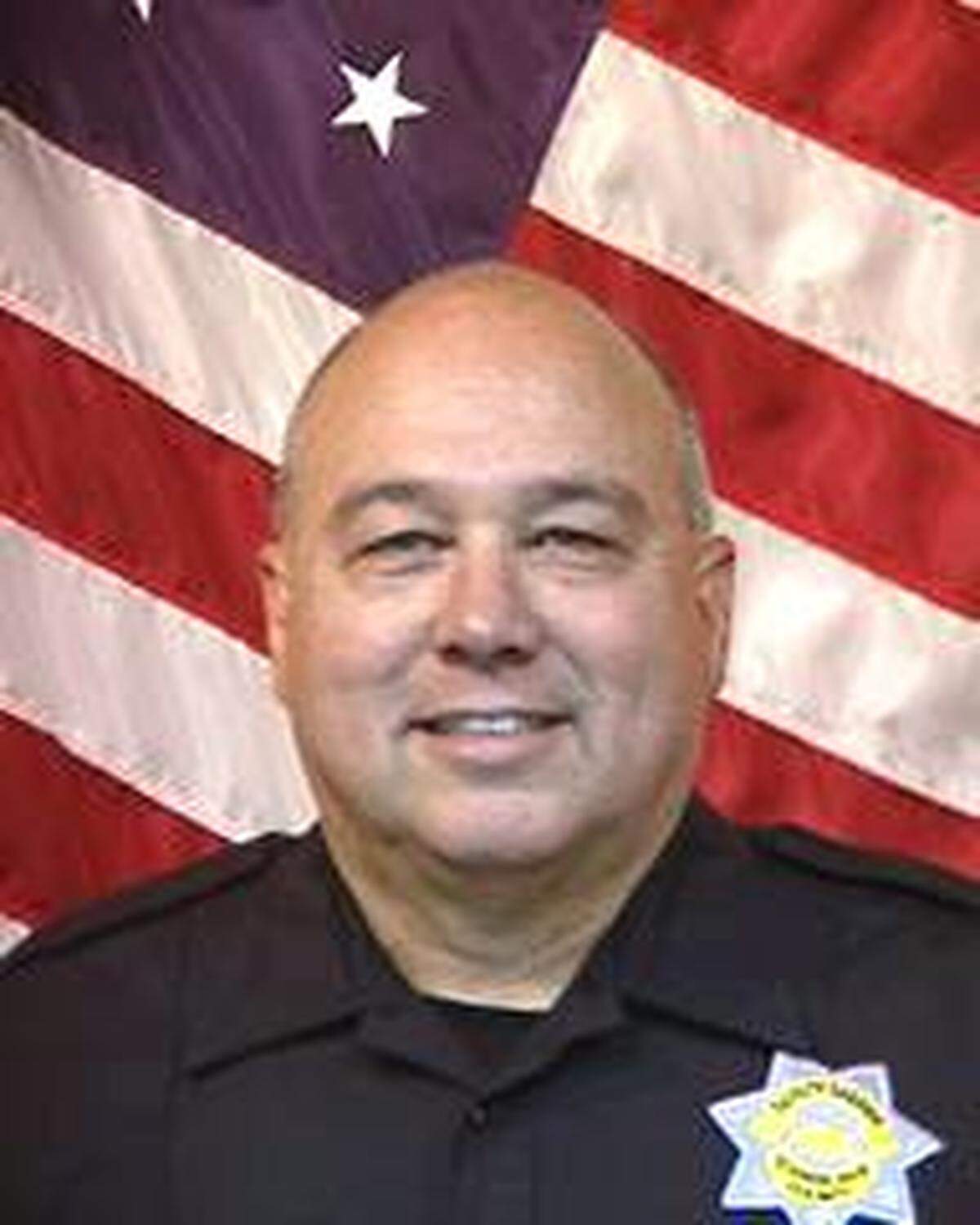
Machado, 40, is charged with murder in Wallace’s death. The deputy was fatally shot shortly before 8:30 a.m. Nov. 13, 2016, after he spotted a stolen van at the Fox Grove Fishing Access near Hughson.
Another doctor who interviewed Machado has testified that the defendant was unwilling to discuss facts and aspects of his criminal case with his attorneys based on a delusional belief that some mechanism outside the judicial system was out to get him, Deputy Public Defender Marlon Simon told the judge Friday.
Stanislaus Superior Court Judge Thomas Zeff has to determine whether Machado is mentally fit to face criminal charges in Wallace’s death. Machado must be able to understand the court proceedings and help in his own legal defense. Until that happens, Machado’s murder case must remain suspended.
Zeff scheduled Machado to return to court Feb. 5, when Simon and Deputy District Attorney John R. Mayne can present their arguments in court. The judge said he anticipates issuing a ruling that same day.
The criminal case against Machado has remained suspended for nearly two years since Zeff determined the defendant needed treatment to restore his mental competency.
Machado has been diagnosed with delusional disorder. During cross-examination Paladino said that delusional disorders can manifest themselves differently in each person. She said Machado’s disorder would best be described as the “grandiose type”with “persecutorial” elements.
The psychiatrist said grandiose type of delusional disorder can often produce “profound issues with trust.”
Paladino testified that antipsychotic medication appeared to have improved Machado’s condition. At one point, he refused to continue taking the medication while in custody at the jail. She said Machado told her the medication made him excessively tired, and he didn’t like pills.
She switched Machado to injected medication that had a lasting effect for 90 days that didn’t make him feel tired. Paladino told the judge that she and Machado agreed he has an important case to deal with and he needed all the energy he could get.
The psychiatrist testified that she doesn’t believe Machado’s delusional disorder will interfere with his ability to help his attorneys as they form his legal defense. She spoke with Machado for about 20 hours during his treatment at Atascadero, and she never heard him speak about any of his delusions.
“If the delusions are there, he has them well-controlled,” Paladino said on the witness stand.
Machado had a lengthy “laundry list” of specific delusions he has exhibited in the past, according to previous testimony. Paladino said his delusion about inventing the “Star Wars” movie trilogy doesn’t have a lot to do with his criminal case.
During cross-examination, Paladino said Machado’s treatment at the hospital was conducted in a therapeutic environment with some freedom of movement for Machado within the facility and daily interaction with hospital staff. She also said the hospital is a high-security facility surrounded by fencing and barbed wire to make sure the patients don’t leave.
Paladino testified that a person’s outlook could change once transferred from the hospital to a confined setting in jail while awaiting prosecution on serious criminal charges. She agreed with the defense attorney that type of change of settings could worsen someone’s symptoms.
Machado remains in custody at the Stanislaus County Jail. Machado has pleaded not guilty to charges of murder, first-degree robbery, carjacking and being a felon in possession of a gun. He entered his plea on Nov. 15, 2016, two days after Wallace was gunned down.
Machado’s murder charge comes with a special-circumstance allegation that makes the case eligible for the death penalty, but prosecutors have not informed the court whether they will seek it.