
MID ponders fairness of water, power pricing
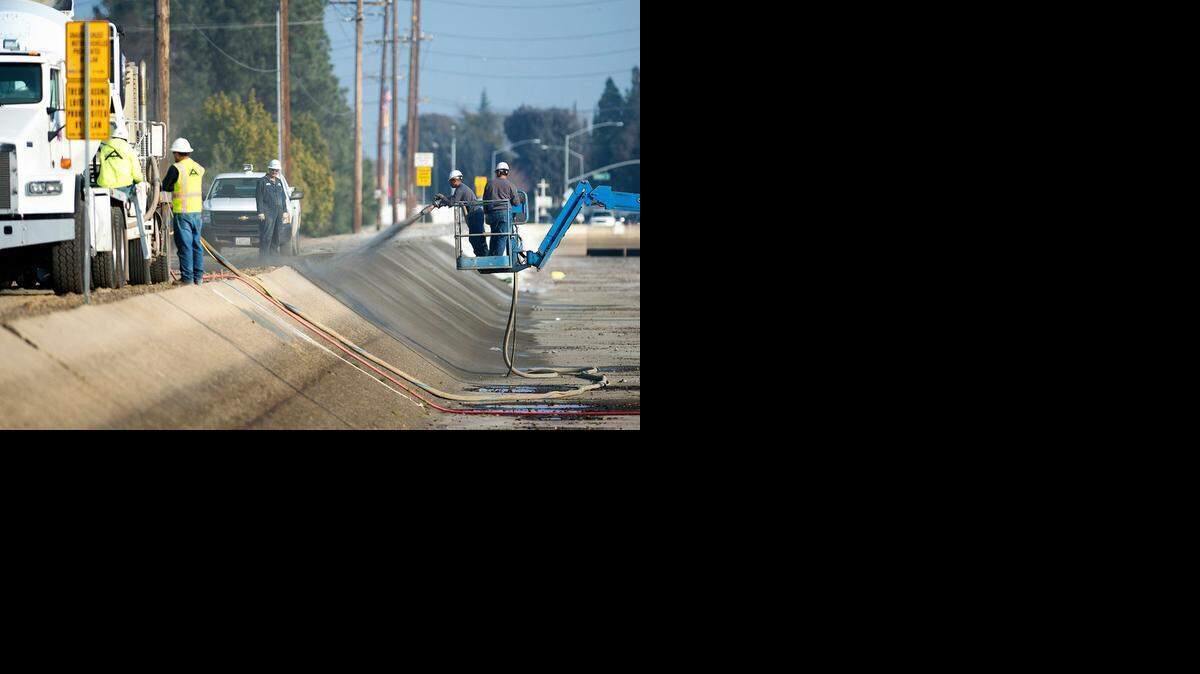
Making things more fair for electricity customers is a tall order because the Modesto Irrigation District always has combined its water and power bookkeeping, an MID board majority said at Tuesday’s landmark workshop.
The idea of separating accounting for MID’s two core services after 92 years of mixing them seems “just about impossible,” board member Jake Wenger said. The board’s John Mensinger and Larry Byrd agreed, though all said the days of farmers getting water at rock-bottom prices are numbered.
In other words, the board expects to begin reversing historic subsidies that benefit farmers at the expense of electricity customers, but they’re not convinced the gap can be closed because it all depends on how services are valued. They left hard and fast decisions for another time.
For the first time since MID began selling retail electricity in 1923, staff members on Tuesday took a stab at setting some of those values for the sake of discussion. If not for MID, staff members said:
▪ Homes and businesses would pay about $80 million more each year for electricity. That represents what Pacific Gas & Electricity Co. might charge above MID prices, a report said.
▪ Farmers would pay $4 million more each year. That’s what it might cost to pump groundwater, estimated at $50 per acre-foot, rather than buying mountain snowmelt flowing via the Tuolumne River and canals to MID farms, the report said. By comparison, if the board soon approves a rate hike set in motion two weeks ago, irrigators will pay $13 per acre-foot.
▪ Modesto City Hall would pay $10 million more per year for storm drains and tap water. Modesto pays nothing for MID canals to carry rainwater from city streets to rivers, a benefit estimated at $4 million per year for 30 years, and would spend $6 million more a year pumping groundwater to replace treated surface water that’s now bought from MID.
Some board members want to explore charging City Hall for storm drain service, but predicted that the city would simply pass the cost to customers in higher utility bills.
MID has acknowledged for at least two decades that, on the whole, farmers are getting a much better deal than power customers. Figures provided by the district reveal that MID expects this year to collect $15 million less from farmers than it spends to deliver their water, while electricity customers have been paying about $44 million a year more than it costs MID to deliver it. The extra power revenue subsidizes the water side and also covers equipment costs and debt obligations, and builds a savings account.
“In the old days, everyone was happy because electric rates were very attractive, so it was a win-win for everyone,” Mensinger said. That has changed as power rates have risen dramatically in recent years.
“I don’t know what the true water price (should be) – much higher than it is now,” Mensinger added. “I see very little negative outcome to raising irrigation rates somewhat. ... I’m going to keep fighting for a rise in irrigation rates. But I don’t know if we’ll ever get to cost of service,” or charging what it costs to deliver water, he said.
That large of a leap “would be a mistake,” said board member Paul Campbell, predicting that farmers would find less expensive sources. Board member Nick Blom was absent.
The board two weeks ago set in motion a water rate hike and will cast a final vote in a few weeks. If approved, the district would collect about 40 percent more revenue, although most farmers would pay the same as last season, when the board imposed a costly surcharge to combat drought.
“We’re willing to pay what it costs for water, but everything needs to be put into the equation,” said Modesto farmer Aaron Miller.
As he has before, Byrd hinted at seeking a more modest rate hike when it’s time to vote, and mentioned 5 percent rather than 40 percent. The board could opt for a lower cap than the 40 percent cited two weeks ago, but seeking more than that would be illegal under state law.
The board members in December put off considering a rise in electricity prices, saying they might take it up after weighing water rates.
The board is scheduled to revisit the cost-of-service philosophy at a Feb. 10 workshop. But the idea of moving toward more equality for electricity customers by separating the district’s water and power accounting got little traction Tuesday, even from Mensinger.
“It’s all connected,” he said. “Water and electricity work together. It’s been a good partnership.”
Byrd said, “If we adopt (any) policy, we lose the flexibility we have had for 92 years.”
Ripon attorney Stacy Henderson suggested looking at ways to cut costs.
“We’re going to get this all ironed out,” said Byrd, the board chairman, thanking people for input and promising transparency. “We don’t have a hidden agenda. We want to put it all out there.”
The Feb. 10 board meeting and workshop begin at 9 a.m. in the chamber at 1231 11th St., Modesto.
Bee staff writer Garth Stapley can be reached at gstapley@modbee.com or (209) 578-2390.
This story was originally published January 27, 2015 at 4:48 PM with the headline "MID ponders fairness of water, power pricing."