
Farm Beat: Blackbird effort gets new help
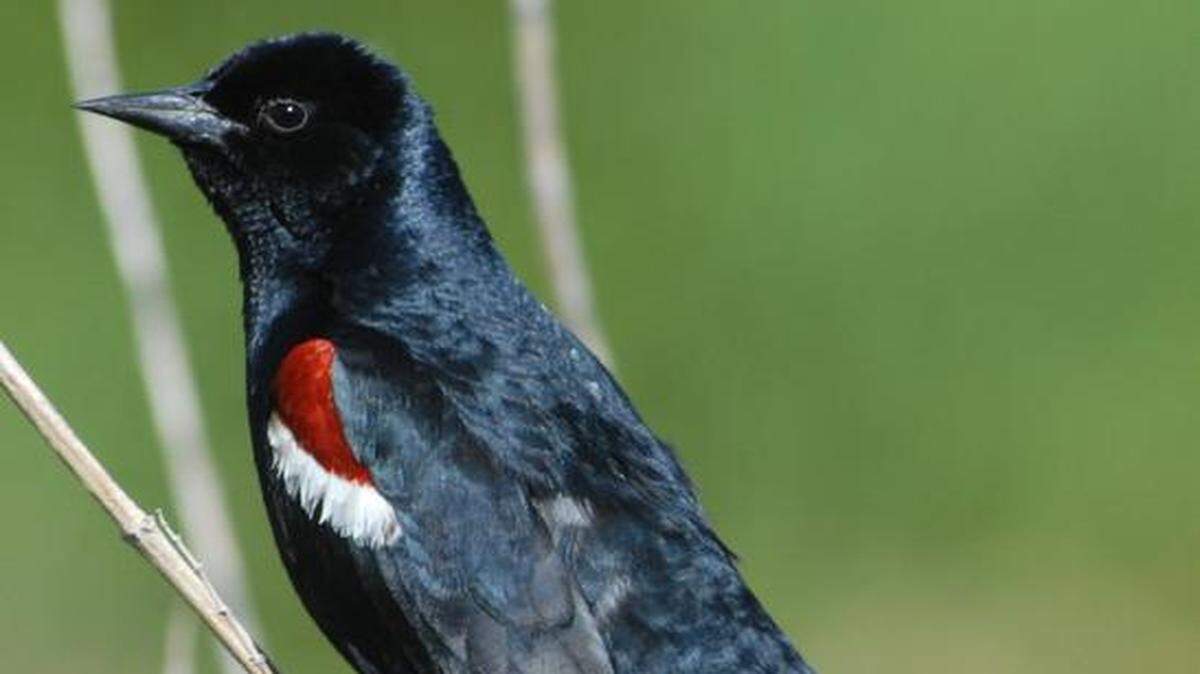
The tricolored blackbird, which has struggled to survive in the remnants of Central Valley wetlands, got a $1.1 million boost this week.
The Natural Resources Conservation Service, part of the U.S. Department of Agriculture, awarded the grant to a partnership that includes Modesto-based Western United Dairymen. Part of the money will go to expanding a program where dairy farmers are paid to delay harvesting feed crops where the birds are nesting.
“We are excited and energized by this new opportunity to both protect a sensitive species, native to California, and increase sustainability for California’s dairy industry,” said Carlos Suarez, state conservationist for the NRCS, in a news release.
The birds numbered in the millions before most of the Valley’s wetlands were converted to farms, cities and other uses. The population was estimated at 394,000 in 2008 and just 145,000 last year. The species is not to be confused with the redwing blackbird, which is still numerous.
With native vegetation lacking, tricolored blackbirds have taken to nesting in certain feed crops that mature in spring. They do so in large concentrations that can be wiped out by harvesting machines. Hence the payments, which compensate farmers for reduced feed quality resulting from the delay.
Money also will go to planting nearby wetlands with native vegetation that attracts the birds, to reduce the reliance on farmers over the long term.
“Because these birds are going to continue nesting on dairy farms for the foreseeable future, partnering with the farmers to protect them is critical,” said Brigid McCormack, executive director of Audubon California, another partner. “This project also takes the vital step of creating habitat safely off of farms for the birds.”
The grant was one of more than 100, totaling $372 million, that were announced for the Regional Conservation Partnership Program.
ELSEWHERE ON THE FARM BEAT: A campaign called Stanislaus Grown, which showcases farm products from this county, will hold a breakfast meeting Monday for interested business people.
The East Stanislaus Resource Conservation District, which started the campaign last year, is seeking ideas from growers, retail buyers, restaurateurs and others. The morning will feature presentations on success stories, including a produce stand, a pick-your-own farm and an online service linking farmers to school cafeterias.
The event will be from 8:30 to 11 a.m. in Harvest Hall at the Stanislaus County Agricultural Center, 3800 Cornucopia Way, off Crows Landing Road west of Ceres. There is no charge, but participants should RSVP by Saturday afternoon to stangrown@gmail.com or (209) 491-9320, ext. 139.
▪ The California Agricultural Leadership Program is seeking applicants for its 46th class.
The 17-month program is for emerging leaders in farming, ranching and related fields. They will take part in monthly seminars at several academic institutions in the state, a 10-day trip within the United States and a 15-day international trip.
Initial applications to the California Agricultural Leadership Foundation are due May 4. More information is at www.agleaders.org.
Got an idea for the Farm Beat? Contact John Holland at jholland@modbee.com or (209) 578-2385.
This story was originally published January 23, 2015 at 4:50 PM with the headline "Farm Beat: Blackbird effort gets new help."