
Farm Beat: Beekeepers have to watch for thieves
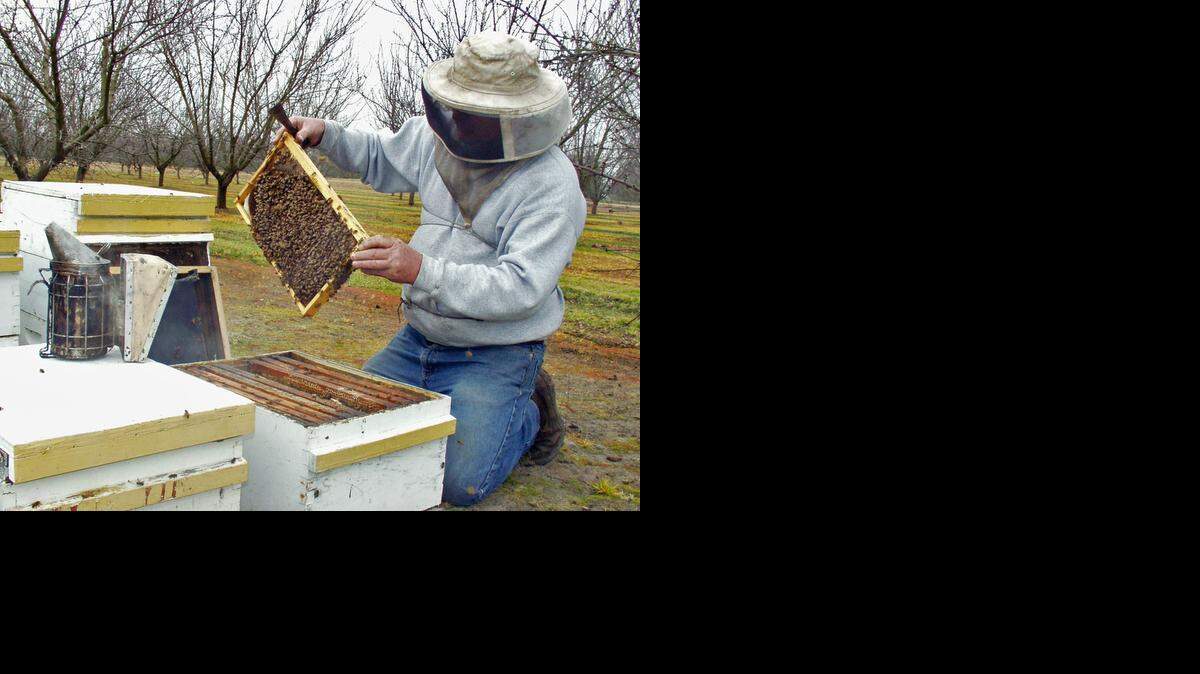
Orin Johnson said he got a call about 2:30 a.m. last Saturday about bees he had placed on the West Side in advance of the almond bloom.
Someone tried to steal colonies from Del Puerto Canyon, southwest of Patterson, the Hughson-area beekeeper said. Nine of the wooden boxes had been placed in a van before the theft was interrupted by a security guard from the Diablo Grande Golf & Country Club, he said.
Pedro Magallon Villafan of Newman faces a felony charge of grand theft in the case, according to Stanislaus Superior Court records. He has been released on bail.
Johnson said the van could have driven off with as many as 60 colonies if the theft had not been discovered by the guard, who detained the suspect and called the Sheriff’s Department.
The numbers are a tiny part of the region’s pollinating bee supply, but a theft would mean the loss of pollination rental fees, which he said are running up to $300 per colony with almond growers.
“This is our livestock,” said Johnson, a former president of the California State Beekeepers Association. “We don’t see it being any different than cattle theft.”
The risk of stings does not seem to deter thieves. Beekeepers also deal with the fact that their colonies are spread across wide areas that are hard for sheriff’s deputies to patrol. Johnson said growers need to know their bee suppliers and to watch for people and vehicles that should not be around the boxes.
Bees help produce almonds, one of the top farm products in the Northern San Joaquin Valley, by carrying pollen to flowers that eventually become nuts.
California almonds are the largest single use of pollinating bees from around the nation. Roughly 1.5 million colonies work the orchards from mid-February to early March before going on to other crops.
“This right now is the start of bee theft season,” Johnson said.
ELSEWHERE ON THE FARM BEAT:
“We have over 80,000 farms in our state, and as chair of the Agriculture Committee, I am committed to finding solutions to ensure that we remain the breadbasket of the nation,” Galgiani said in a news release.
The rest of the Senate committee has not been announced. Last session, three of the five members represented parts of Stanislaus: Galgiani and Republicans Anthony Cannella and Tom Berryhill.
Another Stockton-based Democrat, Susan Talamantes Eggman, had chaired the Assembly Agriculture Committee in 2013-14. That job went to Henry Perea, D-Fresno, in the new session. Eggman remains on the committee and is its sole member from the North Valley.
▪ A Jan. 29 event near Modesto will provide an update on regulations for people who sell and transport fertilizer, pesticides and related materials.
The Western Plant Health Association, an industry group based in Sacramento, will hold its Retailer Environmental Compliance Seminar from 8:45 a.m. to 4 p.m. in Harvest Hall at the Stanislaus County Agricultural Center, 3800 Cornucopia Way, off Crows Landing Road.
The cost is $110 by Friday, $130 after that and $135 on site. More information is at www.healthyplants.org.
Got an idea for the Farm Beat? Contact John Holland at jholland@modbee.com or (209) 578-2385.
This story was originally published January 9, 2015 at 1:48 PM with the headline "Farm Beat: Beekeepers have to watch for thieves."