
Electricity rate hike mulled by Modesto Irrigation District
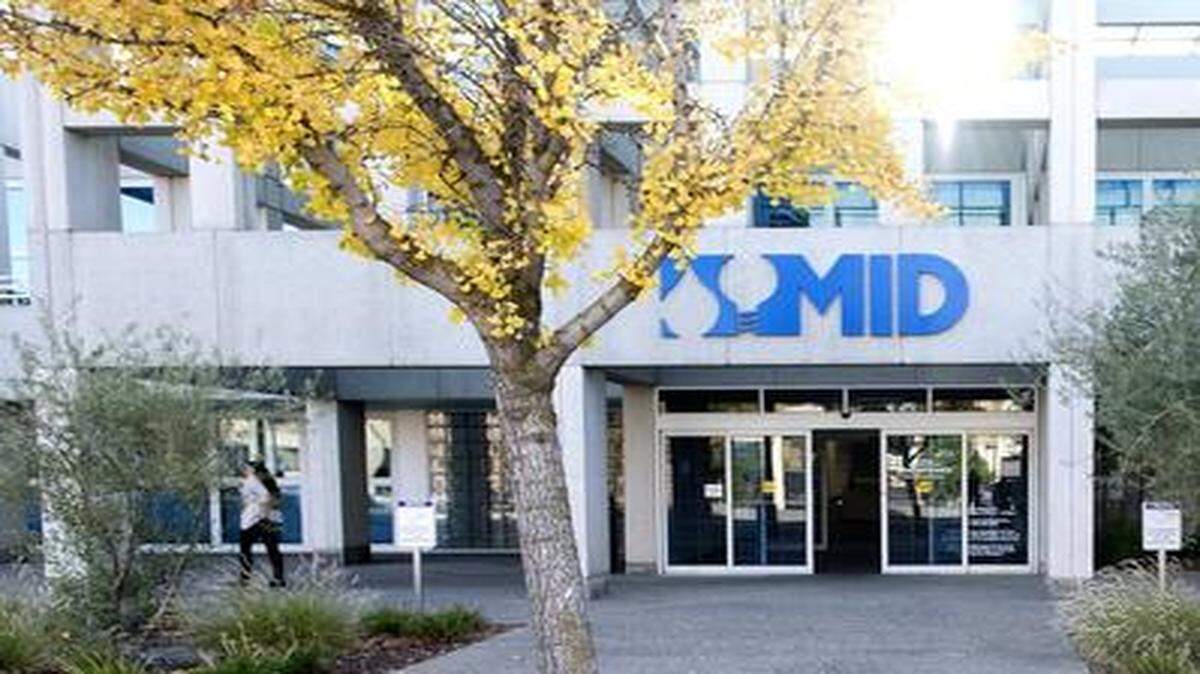
In nine days, the Modesto Irrigation District board will consider charging more for electricity used by virtually everyone in Modesto and several neighboring communities.
People are accustomed to periodic rate hikes. What might be new is a growing awareness that MID’s 115,000 power customers have subsidized the utility’s signature service – irrigation water – by several million dollars each year.
A mounting number of critics, including former agency and utility managers, is asking if it’s fair for families and businesses to continue carrying a burden for 3,100 farmers.
Several have said they intend to protest the proposed rate increase at a Nov. 25 public hearing. Most, however, suspect it’s a fool’s errand for a simple reason: No matter how unfair the subsidy may seem, the power to change it lies with an elected board that continues to be controlled by farmers.
“It’s a conflict of interest,” said Steve Mohasci, who worked for an investor-owned utility in Iowa and is one of the latest to take up the cause. “The three farmers on that (five-member) board are making decisions that add value to their own land.”
The board historically has not considered raising electric and water rates in tandem, and this time is no different. An audience member at Thursday’s “customer meeting” asked why the two aren’t handled together, given the emerging dispute over one service subsidizing the other.
Jimi Netniss, the district’s budget and rates administrator, said the board will talk about irrigation prices early next year. He noted that the board raised irrigation rates 10 percent in April. He acknowledged that another water-price boost would affect overall revenue, but he directed the discussion back to his rationale for seeking a power rate hike.
The main reason: to cover a $12 million deficit in the 2015 budget, approved Oct. 28. Netniss blamed much of the gap on rising costs to transport the natural gas turning MID turbines, which produce 25 percent of the district’s nonrenewable energy.
The district next year must float a $37 million bond for capital improvements, Netniss added; that’s in addition to paying $68 million for previous debt. MID also continues to seek a 50-year license for Don Pedro Reservoir, which captures mountain snowmelt, the district’s main source of summer irrigation via the Tuolumne River.
MID could bridge the entire gap by charging more for electricity, Netniss said, leaving critics wondering what the board’s incentive would be to raise irrigation rates.
The $12 million, Netniss said, would come equally from three customer categories: $4 million each from residential customers (there are 95,197), commercial accounts such as stores (12,425) and industrial users (159) like canneries. If approved by the board, the proposal amounts to a combined 3.5 percent increase and would take effect Jan. 1.
The increase would raise the average family’s monthly power bill $5 or $6, to about $158.
Netniss noted that MID has not sought higher electricity bills in the past two years, while in that time, rates charged by the Turlock Irrigation District, the Sacramento Municipal Utility District and Pacific Gas and Electric Co. have gone up, respectively, 8 percent, 2.5 percent and 6.9 percent.
He also told industrial customers that a 3.5 percent rate hike won’t be enough, advising them to count on paying a total of 5 percent over today’s bills by 2019.
The proposal ignores questions about MID’s electricity-irrigation imbalance.
‘Voodoo accounting’
Establishing the value of the subsidy is difficult.
Part of the subsidy can be quantified because MID in 1995 began quietly folding a surcharge into its rate formula without it showing up in customers’ power bills. District staff calls it a “falling water” charge, reasoning that the district would have to buy power on the open market if not for water turning turbines at Don Pedro Reservoir.
“Interesting concept – charging electric customers to use an asset they actually own,” Mohasci said. He called the district’s logic “voodoo accounting.”
Don Pedro provides about 8 percent of MID power after an average winter; this year, it was closer to 4 percent. The rest comes from burning natural gas and coal, windmills in California, Oregon and Washington and a solar farm on McHenry Avenue.
Before this irrigation season, MID had collected $96 million with this surcharge; 2014 figures are not available, district spokeswoman Melissa Williams said. Because the yearly average for the past decade was $6.1 million, it’s a good bet that the total now tops $100 million.
But that’s not all.
Farmers’ irrigation rates historically have been kept so low that revenue hasn’t come close to covering MID’s costs for delivering water – even when the falling water charge is added. For example, the district in 2012 spent $14.5 million delivering water to farmers, who paid only $3.75 million for it. Electricity customers’ falling water charges that year came to $7.6 million, leaving an additional $3.15 million shortfall. How was that covered? More transfers from electricity revenue.
In other words, power customers in 2012 subsidized farmers with more than $10 million.
The district refused to provide correlating numbers for 2013 and 2014, or projections for 2015. Mohasci estimated the 2013 subsidy at $11.6 million; The Modesto Bee estimates the 2015 subsidy at $9.6 million.
Previous boards acknowledged that farmers should pay more of a fair share. Two decades ago, leaders set a goal for yearly irrigation increases of 10 percent. But political will faltered and farmers usually confronted more modest hikes while power rates continued surging skyward.
“We weren’t opposed” to yearly 10 percent bumps, said Wayne Zipser, president of the Stanislaus County Farm Bureau.
On the other hand, subsidy supporters say agriculture should get credit for various services that bring benefit to everyone but no money to MID. They include groundwater aquifers replenished by farm water seeping down, canal banks that accommodate power poles and canals accepting rainwater from Modesto streets.
“How you weigh that and put a price on it – it’s tough,” Zipser said.
Zipser said he prefers TID’s irrigation rate structure, which makes no attempt to justify electricity surcharges. Its board is scheduled to consider raising power rates Dec. 2; the average Turlock family would pay $131 a month.
In recent TID public discussions, “the question was asked three times, ‘Does this get us to a place where we’re not getting beaten up over ag subsidized by the power side?’” Zipser said. “They unequivocally said ‘yes.’”
Bee staff writer Garth Stapley can be reached at gstapley@modbee.com or (209) 578-2390.
PUBLIC HEARING
The Nov. 25 MID board meeting starts at 9 a.m. in the chamber at 1231 11th St., Modesto. People can make comments during the public hearing or send them to P.O. Box 4060, Modesto 95352. Other information should be available soon at www.mid.org.
This story was originally published November 15, 2014 at 8:00 PM with the headline "Electricity rate hike mulled by Modesto Irrigation District."