
State tracking water guzzlers
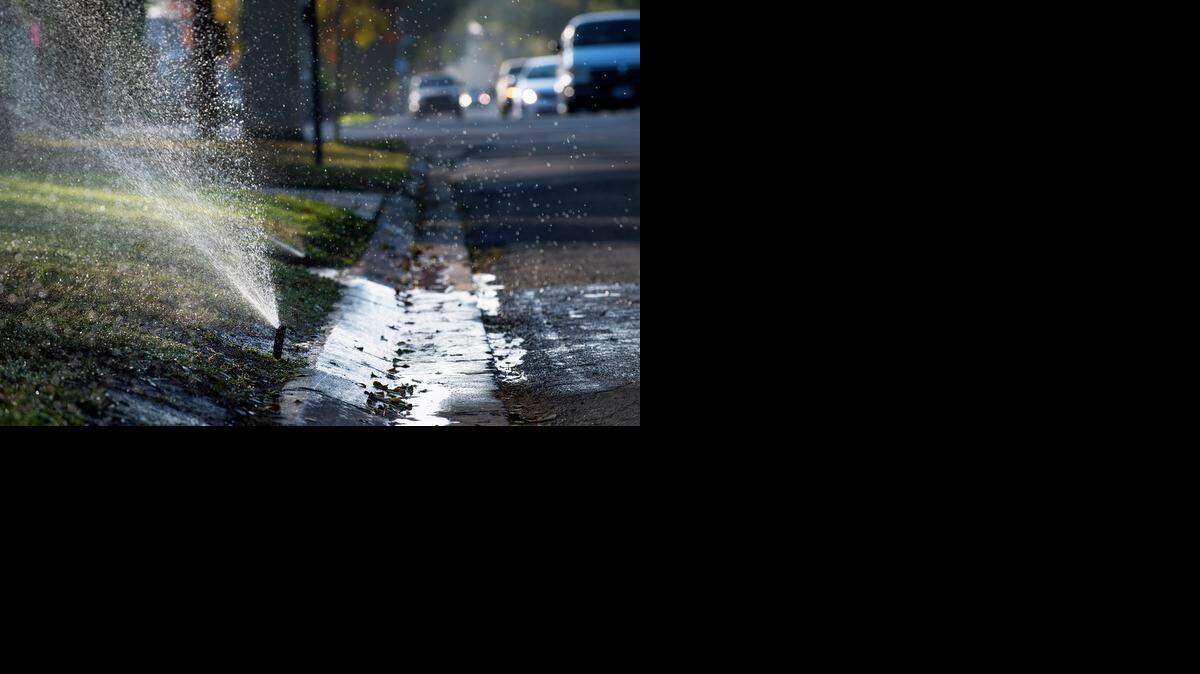
After three years of drought, it’s tough to believe anyone hasn’t heard how imperative it is to conserve water. Apparently, some folks simply aren’t listening.
Now we know where the water guzzlers live.
State water officials this week released city-by-city statistics showing how much water people use per day in different water districts.
The comparisons are proving a bit embarrassing for some Valley towns, where residents appear to be using more than twice as much water as those in neighboring cities.
Ceres comes out looking very good, and Ripon looks very bad. Ceres is confident the state’s numbers are right. Ripon is sure they are wrong.
“We really embraced water conservation several years ago when we installed water meters on all our homes,” explained Ceres City Manager Toby Wells, who is proud to see his community members consume the least amount of water in Stanislaus County.
On average, each Ceres resident used 147 gallons of water per day during September. That’s about a bathtub’s worth of water per day less than what was used by the typical Modesto resident, who consumed nearly 193 gallons.
To convince Ceres residents to conserve has required “a careful balance between carrot and stick,” Wells said. The city, for example, encourages people to save by offering cash rebates for buying water-efficient washing machines and low-flush toilets.
And it discourages waste by restricting outdoor watering on certain days and fining people who refuse to comply.
But it’s Ceres’ sophisticated water meters that Wells credits with making the biggest difference because they enable residents to “log onto the Web and see their real-time water use.” Those radio-connected meters also send out warnings when they detect leaks or perhaps a hose that inadvertently has been left running.
“We’ve come a long, long way since putting them in,” Wells said of the meters, which were installed about four years ago. Water usage peaked in Ceres in 2007 at an average of 220 gallons per person per day. The city expects this year’s annual average will be 40 percent less than that.
Like every Northern San Joaquin Valley community, Ceres depends on groundwater to meet its residents’ needs.
“Everybody’s got to do their part to conserve,” Wells said. “It’s all our water.”
Mandatory form left incomplete
Ripon officials said they thought they were doing pretty good with water conservation, until they saw how they compared with other Valley towns.
The State Water Resources Control Board calculated Ripon’s September water use at 388 gallons per person per day. The state based its calculations on data supplied by each California water district.
Ted Johnston, Ripon’s public works director, said his city didn’t completely fill out the state’s mandatory water-use form, which led to incorrect data calculations. He said some of the city’s water is used by industries and parks, not just by Ripon’s residents.
So Ripon’s water consumption isn’t as bad as it looks on the state’s chart, but Johnston couldn’t say what the correct figure should be.
Unlike Ceres, half of Ripon’s residents have water meters. For those without meters, there’s no way to prod water guzzlers to conserve by charging them more. Johnston said the rest of his city should get meters “probably in the next two years.”
Johnston said another reason Ripon residents may be using more water is that “we have a little larger lots than most communities.”
Prison cells not reported
California’s biggest water users – residents of San Diego County’s Solana Beach – also live on big lots. They consumed 584 gallons per person per day.
Max Gomberg, who works for the state water board, described Solana Beach as a “very fancy gated community.”
Big fancy lots aren’t to blame for Atwater’s sky-high water usage rates. Blame small prison cells instead.
Brian Shaw, Atwater’s water manager, said he failed to tell the state his city also supplies water to the 1,500 prisoners at the nearby federal penitentiary. And his city didn’t correctly report its industrial water usage.
“We’re going to have to make sure we put the numbers in the right spots,” Shaw said. Making those corrections, he said, should bring Atwater’s per-person-per-day water use down to 197 gallons, rather than the originally reported 375 gallons.
Oakdale also thinks its figures were wrong. Rather than using 248 gallons per day, Oakdale thinks 197 gallons is correct. City Manager Bryan Whitemyer said his city’s non-residential water uses were not calculated properly.
“This is a new form, and we’ve had challenges getting the data,” Whitemyer said. He said the state is pushing cities to gather better data on water usage. “We’ve heard that loud and clear, but we’re still catching up.”
Modesto’s water-use calculations do match the state’s figures. Modesto also provides water to residents of Empire, Grayson, Salida, Del Rio, Waterford, Hickman, parts of Ceres and parts of Turlock. Residents in those communities used an average of 193 gallons per day each.
“The overwhelming majority of people have done a great job conserving,” said Larry Parlin, Modesto’s director of utilities. He said monitoring water use is vital, and every drop should be tracked during this drought.
“What are the water-use numbers from agriculture? Oh, wait, we don’t have those,” Parlin quipped. He knows Stanislaus County farmers currently aren’t required to tell anyone how much groundwater they’re pumping, but he said it would help if they did.
Well problems
Several of the region’s cities are having serious water problems because of drastically falling groundwater levels and declining water quality.
Livingston has three wells going dry.
“There’s been a 40-foot drop in our water table,” Livingston City Manager Jose Ramirez said. Because of that, his city’s wells have started pumping up water that’s too sandy to drink.
That’s forcing Livingston to flush out its wells, which requires lots of water. As a result, the city’s water use this fall went up, despite its residents’ conservation efforts.
“We’ve been scrambling to meet water demands,” Ramirez assured.
The city of Merced also is having well problems.
“We’ve seen groundwater levels dropping about 1 foot a year, and a couple of our wells have been dropping 2 feet a year,” Merced City Manager John Bramble said.
Some of Merced’s wells are 800 feet deep, Bramble said, and the city needs to drill a new one to maintain its water supply.
It drilled an exploratory well this summer in south Merced but found too much arsenic in that water. It plans to drill another well soon in north Merced.
The state calculated Merced residents used nearly 280 gallons each per day during September. Bramble said that figure is wrong because his city didn’t properly factor in how much water nut and tomato processors used.
But the city manager said he knows Merced residents consume more water than necessary.
“Our non-metered system definitely has an impact on us,” Bramble said. Merced needs to install 10,000 more residential water meters, but, he said, they cost about $530 each plus installation.
Bee staff writer J.N. Sbranti can be reached at jnsbranti@modbee.com or (209) 578-2196.
This story was originally published November 8, 2014 at 7:15 PM with the headline "State tracking water guzzlers."