
Stanislaus, Merced leaders hope ACE rail comes south
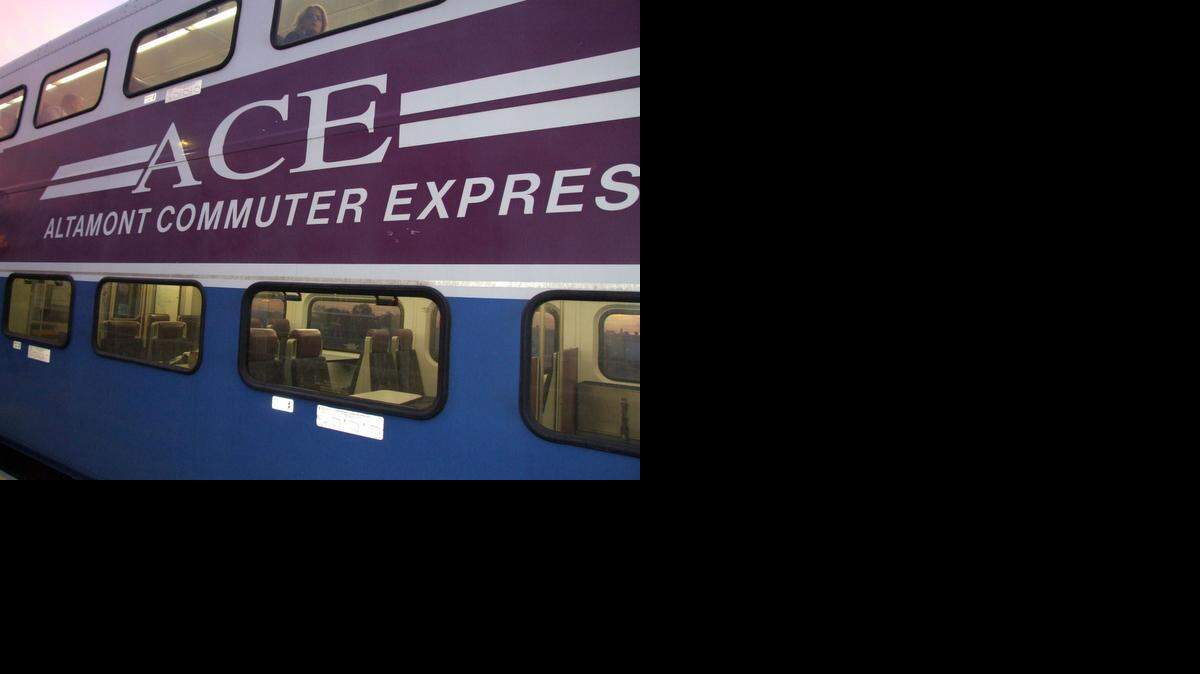
A few dozen leaders from Stanislaus and Merced counties waited at a Manteca station Thursday for a train to take them west.
They rode the Altamont Corridor Express, which runs from Stockton to San Jose by way of Livermore, to show their support for a proposed branch to Modesto and points south.
Modesto could get service as early as 2018 and Merced by 2022, with Turlock somewhere in between. The planners do not yet know how to cover the capital cost, estimated at a few hundred million dollars, but that did not daunt the people riding Thursday.
“I think the ACE train is fabulous,” said Cecil Russell, chief executive officer of the Modesto Chamber of Commerce, as he waited for the 7:24 a.m. departure. “It think it’s a boon for our economy, for people who have to commute day in and day out.”
ACE, formerly known as the Altamont Commuter Express, started in 1998 as an alternative for some of the many Northern San Joaquin Valley residents who drive to jobs in the East Bay and Silicon Valley. Each weekday morning, an average of 4,800 people ride the four westbound trains, the first leaving Stockton at 4:20 a.m. and the last at 7:05 a.m. They return in the late afternoon and evening.
ACE is planning the southern branch as part of a larger effort that includes having six trains by 2018 and 10 by 2022, along with track improvements that cut travel times by about 10 percent. This would provide for midday service, more attractive to people traveling for leisure.
The expansion would mean that ACE no longer would be mainly a way to deliver employees to Bay Area companies, said Dan Leavitt, manager of regional initiatives for the San Joaquin Regional Rail Commission, which oversees the service.
Turlock Mayor John Lazar, who took part in the trip with City Manager Roy Wasden, said ACE could serve hometown businesses and bring distant people to cultural events.
“We have a great opportunity for commerce between the Bay Area and the Central Valley, particularly through Turlock,” he said before the morning departure. “I’m excited to see ACE and the possibility of coming through Modesto, Turlock and Merced.”
Blair Kelly of Manteca takes ACE every weekday to Pleasanton, where he gets on a bus that gets him to work in San Ramon. He talked about it while waiting for an earlier train Thursday.
“Many mornings, you will see the westbound traffic totally stopped, and we’re just buzzing along,” he said, adding that ACE could improve its Wi-Fi capacity for passengers using laptop computers and other devices. Plans are in the works to have it for all cars.
ACE plans to study the environmental effects of the expansion until 2016, then will move into detailed design. Construction would not start until funding was determined.
The extension to Modesto would include an estimated $102.8 million in track and other work in San Joaquin County and $96.2 million worth in Stanislaus. Continuing on to Turlock is projected to cost another $122.5 million. The last stretch to Merced would be $227.2 million.
The planners project that local sources would cover 25 percent of the cost, which Leavitt said would leverage other sources. San Joaquin County already supports ACE operating costs with some of the income from a sales tax increase for transportation.
The Merced segment would tie in with an early phase of the state’s high-speed rail system, which eventually would link Southern California with the Bay Area and Sacramento.
The ACE extension would run within the Union Pacific freight corridor, which generally follows Highway 99. The stations would be at downtown locations, which could see high-density, walkable developments that fit with the state’s goal of reducing driving.
Long-term plans call for stations in Atwater or Livingston and in Ripon. Manteca and Tracy could get new stations in their downtowns, and Lathrop could get one at its new River Islands development.
Leavitt helped organize Thursday’s excursion, involving about 75 people who boarded the rear car of the morning’s last train. They talked with regular passengers on the way and, upon reaching San Jose, heard a presentation on the current and future service.
“To help understand what ACE is about, the best way to do it is to get on it,” Leavitt said. He was talking by phone from the Altamont Pass area, where he reported traffic on I-580 moving at 10 to 15 miles per hour.
Bee staff writer John Holland can be reached at jholland@modbee.com or (209) 578-2385.
ACE AT A GLANCE
SERVICE: Four trains each weekday morning from Stockton to San Jose; four return trips in late afternoon and evening
RIDERSHIP: 4,800 people on average day
FARES: $24.25 for round trip between Stockton and San Jose; less for shorter trips; bulk discounts available
SCHEDULED TRAVEL TIME: Two hours, 12 minutes from Stockton to San Jose
ON-TIME PERFORMANCE: 94 percent
FUNDING: Half of the $15 million budget comes from fares, 12 percent from San Joaquin County’s sales tax increase for transportation, 31 percent from public transit funds in Alameda and Santa Clara counties, 7 percent from other public sources
MORE INFORMATION: www.acerail.com
This story was originally published October 30, 2014 at 8:48 PM with the headline "Stanislaus, Merced leaders hope ACE rail comes south."