An inside look at restoring beloved lions from Seventh Street Bridge in Modesto
For 109 years, four concrete lions greeted drivers on the Seventh Street Bridge in Modesto. They endured surface crumbling, vandalism and other affronts but were still beloved by many locals.
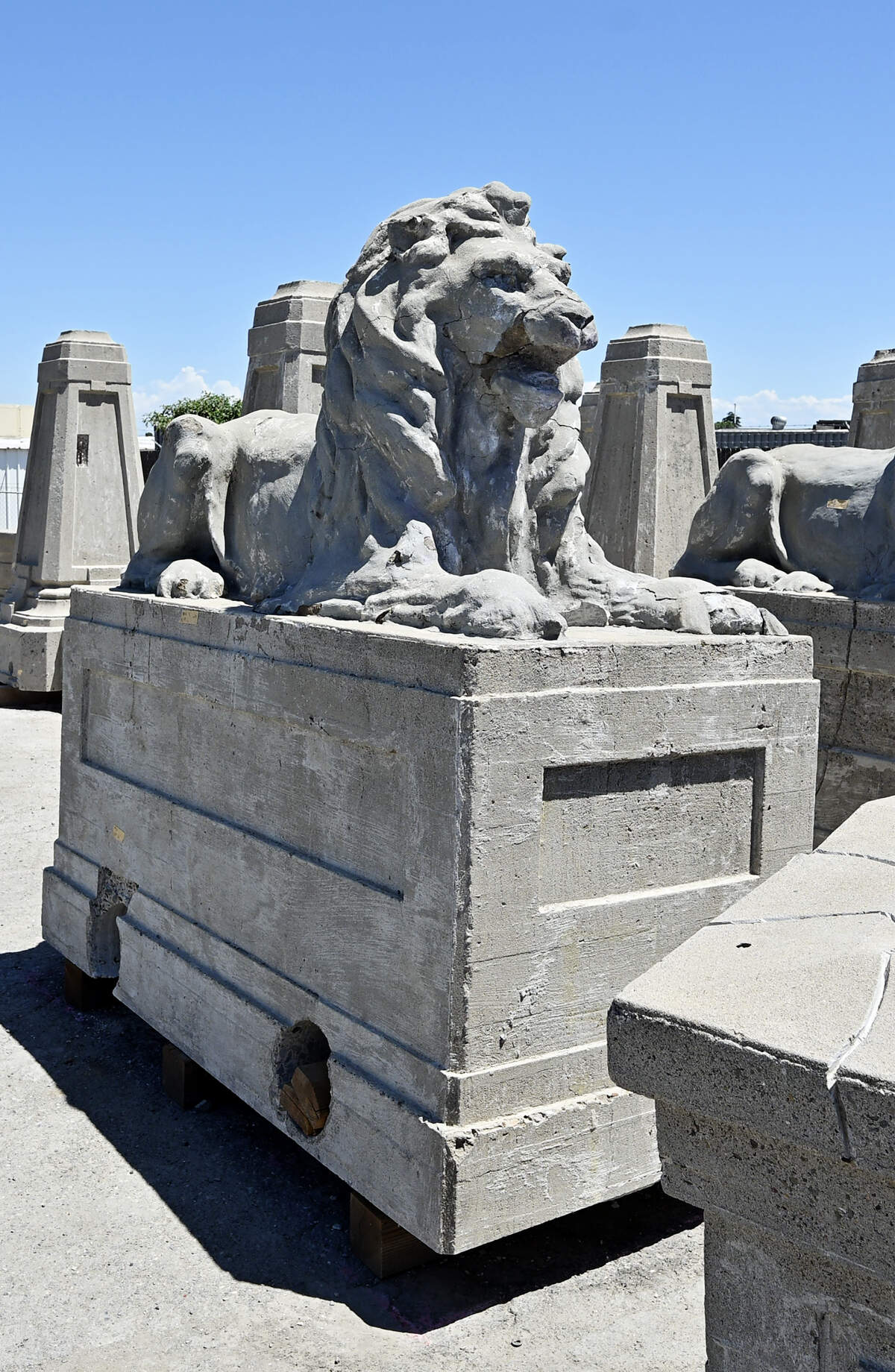
Two of the lions are being restored for display in a plaza next to the new Tuolumne River span, opening by early 2028. Stanislaus County Public Works made that promise to residents who had hoped to spare the bridge from demolition.
The Modesto Bee got a look Monday at the repair work so far. It is taking place at a site in the county that we agreed not to disclose, due to chisel-wielding curiosity seekers.
The plaza also will have a few concrete benches, railings and decorative pieces from the 1917 bridge. The restoration is being done for $4.36 million by the Giampolini Group, based in the East Bay city of Emeryville.
“When these things are all done, they’re going to look pretty impressive,” said tour guide Michael Eddy, an engineer with Giampolini. It is a subcontractor to MCM Construction, the Sacramento-area company building the bridge for $85.2 million.
The total cost of about $127 million includes engineering and improved connections with local streets. A federal grant covered about $92 million. The state added $15 million, and the rest came from the county’s Meaure L sales tax.
The new bridge will double the motor-vehicle lanes to four. It will provide much better foot and bike access to this stretch of Tuolumne River Regional Park.
What other bridge relics will be saved?
Each repaired lion will sit between a bench and railing, just like the original. The plaza will have four of the old obelisks, which have a tapered shape. A column type known as a pilaster will complete the array.
Plaza visitors also can read about the bridge design that Seventh Street helped pioneer: canticrete. It involved covering the steel cantilever trusses with concrete in a way that conserved the metal amid a World War I shortage.
The concrete sloughed off faster than expected, prompting weight and speed limits since the 1930s. The new bridge will handle the semi-trucks that have been banned for decades, easing traffic nearby.
The same concrete went into the lions and other decor. It eroded on the surface, but the interior was harder than expected for the crew that sawed the pieces off in March. A task expected to take several hours instead took several days. The pieces finally were hoisted onto flatbed trucks that can hold up to 20,000 pounds.
At the restoration yard, Giampolini began by inspecting the concrete in detail. The Bee visited just before the start of the main repairs, which are expected to take until late next year.
Much of it will involve patching small flaws with concrete that lasts much longer than the original. The pieces will get a final coating that resists rain and graffiti.
Two of the four lions do not yet have a permanent home after restoration. They will be stored in the meantime at the Public Works headquarters.
What has time done to the lions?
Back in 1917, the lions looked more like they might have on a real savanna — sedate, but ready to pounce on a wildebeest. Monday, lined up side by side, their faces showed the effects of weather and vandals.
“We have one good face at the end, which we are planning on casting a mold of to re-create these (other) faces,” Eddy said. “... (Some are) missing arms, so we’ll be casting new arms and pouring those and attaching them with epoxy pins.”
Giampolini has restored some of San Francisco’s many ornate facades — brick, terracotta and more. Other divisions do drywall and painting.
Eddy had help as tour host from Ray Tunkel, chief inspector for Dewberry, a national engineering firm. It monitors every step of the new bridge, which will have steel girders coated in concrete.
Seventh Street’s old span had 14 footings supporting the roadway across the main Tuolumne channel and floodplain. Modern engineering allows just seven on the 1,238-foot replacement, meaning less disturbance to fish.
Monday’s tour included Virginia Madueño, hired by the county to do public relations for the new bridge. She helps keep residents informed about the detours and other details, in English and Spanish. Madueño is president of Imagen Communications and a former Riverbank mayor and council member.
Who thought lions belonged on a bridge?
The project website details the old bridge’s design and the role of lions in architectural history. Modesto’s was erected in the Beaux Arts style amid the nationwide City Beautiful movement.
Italian sculptor Orestes Sarsi created the basic lion molds in his San Francisco studio. He then traveled to Modesto to finish the faces and manes.
Seventh Street was part of the first state highway through town, later shifted to Ninth Street and then today’s freeway. Modesto had only about 9,000 residents in 1917, but it was booming with new irrigation canals fed by the Tuolumne.
Some residents called it the Lion Bridge from early on. The legacy continues at the Lion Market, a small store still open amid the new span’s construction.
“Throughout history,” the website continues, “lions have been a prominent motif in the art and architecture of cultures around the world. They symbolize a range of meanings, including royalty, strength and courage, and have long 'guarded' entrances to buildings, cities and tombs.”
This story was originally published July 1, 2026 at 3:28 PM.