Why do they do it? Modesto area has 2nd-largest rate of supercommuters in U.S.
Rachel Everett, a nurse, has been commuting from Patterson to Fremont every workday since 2008. After she and her husband, both born and raised in the Bay Area, lost their home to fire, they decided to move to Patterson for more affordable housing.
Because her salary is more competitive in Fremont, she decided to brave a two-hour commute — sometimes with an infant riding with her to the daycare at her workplace.
“Oh my goodness,” Everett said. “Me trying to drive and get us home and having her cry or be upset about something, that was a high stress level for me.”
Weighing competitive salaries in the Bay against housing prices in the Central Valley has become a common decision many former Bay Area residents, like Everett, have made since the ’80s.
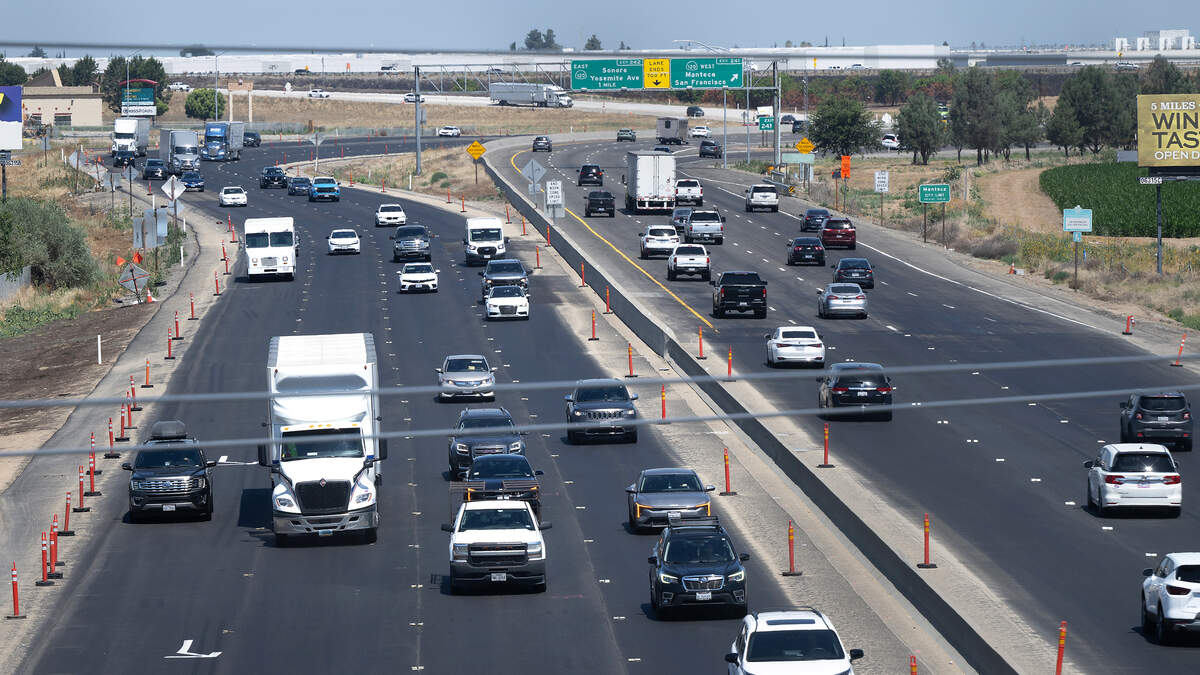
With Stanislaus County absorbing an influx of people employed across the Bay Area, Elk Grove, Sacramento and San Jose, local freeways see bumper-to-bumper traffic as the county’s 60,000 regular commuters — including 18,000 who travel 90 minutes or more — leave and return en masse around their 9-to-5’s.
Several Stanislaus County commuters The Modesto Bee spoke with said competitive wages outside the county and the prices of homes locally meant becoming accustomed to an hours-long journey to and from work. And while a two-hour commute may seem inhumane to some, it has simply become a new norm for others.
California’s housing affordability crisis in California is more acutely felt in some coastal communities, according to California Policy Lab Executive Director Evan White.
“People are seeking to achieve the American dream of homeownership, but are seeking to do it in a place where they can actually afford to do so,” he said. “That is causing a lot of people to go further out to find something they can afford, but their job might continue to be in the Bay Area or Sacramento.”
Affordability also is a factor because many households are seeking an extra room post-pandemic for a home office for remote and hybrid working.
What’s the data on Stanislaus County commuters?
According to a report from UC Davis, Occidental College and USC, between 1995 and 2015, the Central Valley saw a large influx of people from the Bay Area for the aforementioned reasons. Cities like Los Banos in Merced County and Patterson in Stanislaus County saw an increase of folks from the Bay Area who appreciated the towns’ proximity to Interstate 5, the report noted.
A 2020 report from the state’s Economic Development Department looking at data between 2016-20 found that 34,176 people were commuting into Stanislaus County for work while 59,691 were commuting out of Stanislaus County.
The same agency reported in 2020 that 27,196 Stanislaus County residents worked in San Joaquin County, 9,787 in Alameda County, 7,184 in Merced County, 4,367 in Santa Clara County, 1,632 in San Mateo County, 1,469 in Tuolumne County, 1,407 in San Francisco County, 1,368 in Contra Costa County and 1,137 in Sacramento County.
According to the U.S. Census Bureau, the average commute time for someone living in Stanislaus County to their place of employment between 2020-24 is 30.8 minutes, which is above the national average of 27.2 minutes. A 2020 report from the county found that Modesto is home to the-second-largest share of supercommuters — those traveling further than 50 miles or 90 minutes for work — in the U.S.
“Today, a total of 15,335 residents in Modesto commute out of the County for work, making Modesto only second to Stockton, CA as one of the cities with the greatest share of super-commuters across the United States,” the report stated.
What are the primary ways people commute?
Many commuters choose to brave the congested Altamont Pass along Interstate 580 going west — which sees almost 100,000 travelers daily.
State Route 132 is a two-lane highway that ends at I-580 near Tracy, making it an option for those who choose to drive. While the less busy two-lane highway might seem to make commutes faster, there are safety concerns that come with navigating these types of roads, particularly in rural areas with visibility issues.
The highway that runs along Maze Boulevard has no or paved shoulders, making it a higher risk for head-on collisions. Part of the highway contains a 19-mile stretch where drivers are required to keep their headlights on during daylight hours.
Apart from physical road conditions, many commuters navigate roads with logistical issues. Everett frequently drove the 13-mile stretch of Patterson Pass Road to work but avoided that stretch when driving with her young daughter.
The route is known for spotty cell reception and winding two-lane roads through the hills. Having her child with her gave Everett extra concern because “if anything happened, nobody would know where you’re at, or you wouldn’t be able to call anybody for help.”
With the advent of growing populations in Bay Area exurbs, freeways have become congested — meaning that many drivers spend a significant portion of their commute sitting behind the wheel of an idling car and running through one audiobook after another in standstill traffic.
“I can go through about five — maybe three to five audiobooks — (a week) depending on how long they are,” Everett said. “I’m always constantly on Libby and Hoopla.”
Those who travel to the Sacramento area get there quickest by taking Highway 99 before merging onto Interstate 5. Other commuters stay on 99 the entire time.
Public transportation, such as the BART and the Altamont Corridor Express, alleviates much of the stress and safety issues that can come with long commutes.
The ACE Train also provides an option for those who prefer rail service, serving as a way to ease congestion on the freeway. The commuter rail sees an estimated ridership of almost 3,000 passengers daily.
However, the train runs during peak hours only, making it difficult for those without flexible schedules. Additionally, the train doesn’t run directly to San Francisco, leaving many to transfer from the BART station in Union City. For those in Stanislaus County, the nearest ACE station, Lathrop/Manteca, is located right on the border of the two cities.
For Lathrop resident Krishna Thirumalasetty, the ACE Train is his choice of transportation to the Bay Area. In a statement to The Bee, he said the train “helps reduce the stress of driving and gives commuters a chance to rest or work during the trip.”
He noted that the ACE Train would benefit from a vending machine or drinks and snacks cart, added cars during its busiest hours, stronger WiFi for commuters to get some work done, and a later morning train option to accommodate parents who have to drop off their children at school.
“Many commuters have families and young children. A later train would allow one parent to drop the kids off at school and then head to work, while the other parent could handle pickup in the afternoon,” Thirumalasetty said. “With the current schedule, a parent who takes the 7:50 a.m. train often also has to return early for school pickup, which can be disruptive to the workday.”
For many supercommuters, the workday really doesn’t end until 7:23 p.m., when the last ACE train pulls into the station, leaving little time with friends and family.
While many commuters speak about the benefits of expanding a commuter rail line to Stanislaus County, construction has been delayed. An extension of the Altamont Corridor Expression (ACE) train was slated to open later this year, but the opening has been pushed back at least five years for a northern branch. The southern branch of the project is supposed to cover Ceres, Modesto, Turlock Merced and more. The opening date is unknown.
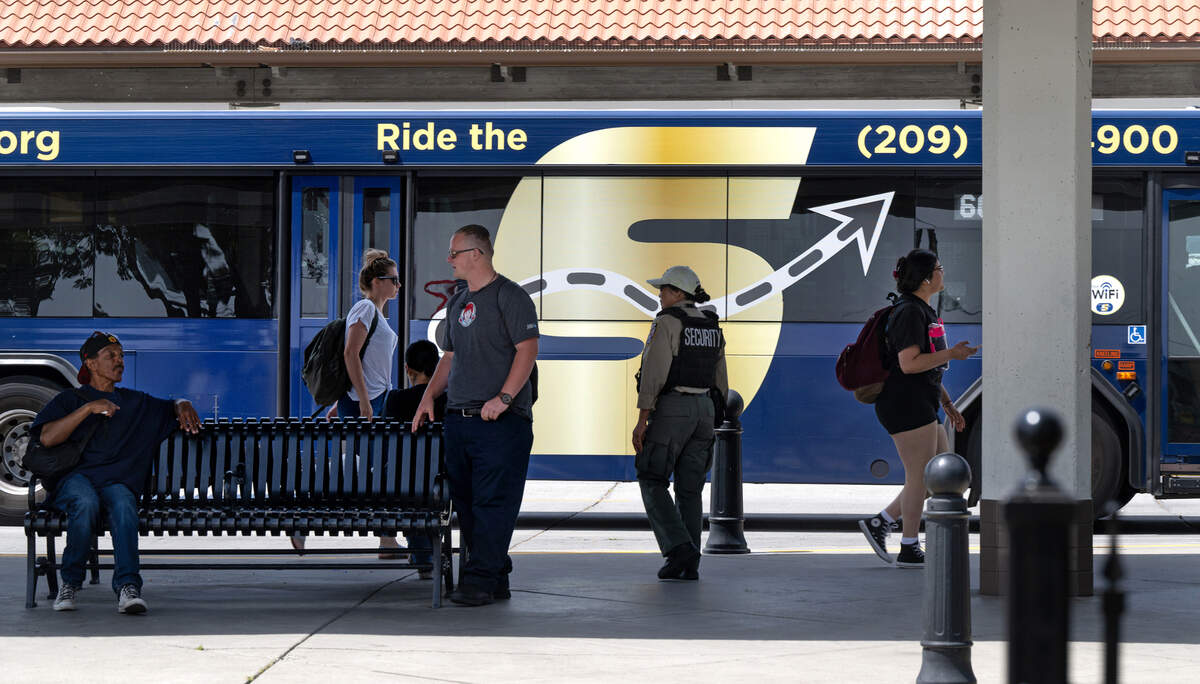
The Stanislaus Regional Transit Authority provides direct commuter express buses from the Modesto Downtown Transit Center, Vintage Faire Mall and the Turlock Transit Center to the Dublin/Pleasanton BART station.
A less popular option, the Amtrak train out of Modesto, sees an estimated ridership of almost 110,000 riders yearly, according to the fiscal year fact sheet. From the station, Stanislaus County residents can reach the Richmond BART station and take either the Red line to get to San Francisco and the Peninsula or the Orange line to get to San Jose. Tickets start at around $25.
What are the impacts on people’s health?
The stress of standstill traffic or back pain from a two-hour drive has been seen as something to make peace with in order to reside somewhere with a lower cost of living. But that way of living takes a physical toll on the lives of supercommuters.
A recent National Institute of Health (NIH) study shows that increased commuting is linked to a “lower subjective wellbeing.” The sedentary lifestyle that comes from spending hours behind a wheel is linked to increased heart problems, exposure to pollutants and poor sleep quality.
Bookish Modesto co-owner Will DeBoard, who commutes to Elk Grove for his job as an assistant commissioner with the CIF Sac-Joaquin Section, said he tries to take a walk during his lunch break to combat the fact that he’s sitting in his car for several hours a day.
He added that back pain and teeth grinding are two issues that arose from his long commutes.
“I’m older than I was when I first started doing this, and my back definitely lets me know, ‘Hey, you’ve been in the car long enough.’” said DeBoard. “[The dentist] wanted to give me a night guard. They’re like, ‘Oh, you must grind your teeth at night … And then I realized that as I’m driving sometimes, my jaw is clenched.”
Despite working in Fremont, Everett noted that she feels connected to her community in Patterson, noting a good relationship with her neighbors and the community connections that form when raising a child.
“They have the Apricot Fiesta and we go there, my daughter’s in the parade,” Everett said. “We try to contribute where we can and attend whatever is going on in town.”
While heavy traffic and lengthy drives are things many of the county’s commuters take on every day, they don’t become easier with repetition — or with any number of audiobooks.
“I don’t think I’ll ever be used to the bumper-to-bumper traffic or anything like that, and I don’t think anybody will be,” DeBoard said. “You wanna be able to drive, you wanna be able to go. But I don’t clench my teeth anymore, so that’s good.”