Can my Stanislaus County neighbor have chickens on their property? What rules say
READ MORE
Nosy Neighbors in Modesto
A multi-part series by The Modesto Bee
Expand All
From street parking to dogs barking, Stanislaus County has rules designed to keep neighborhoods orderly — and neighbors getting along.
A Modesto Bee reader recently asked: Can my neighbor have chickens in a residential neighborhood?
Here’s what Stanislaus County rules say:
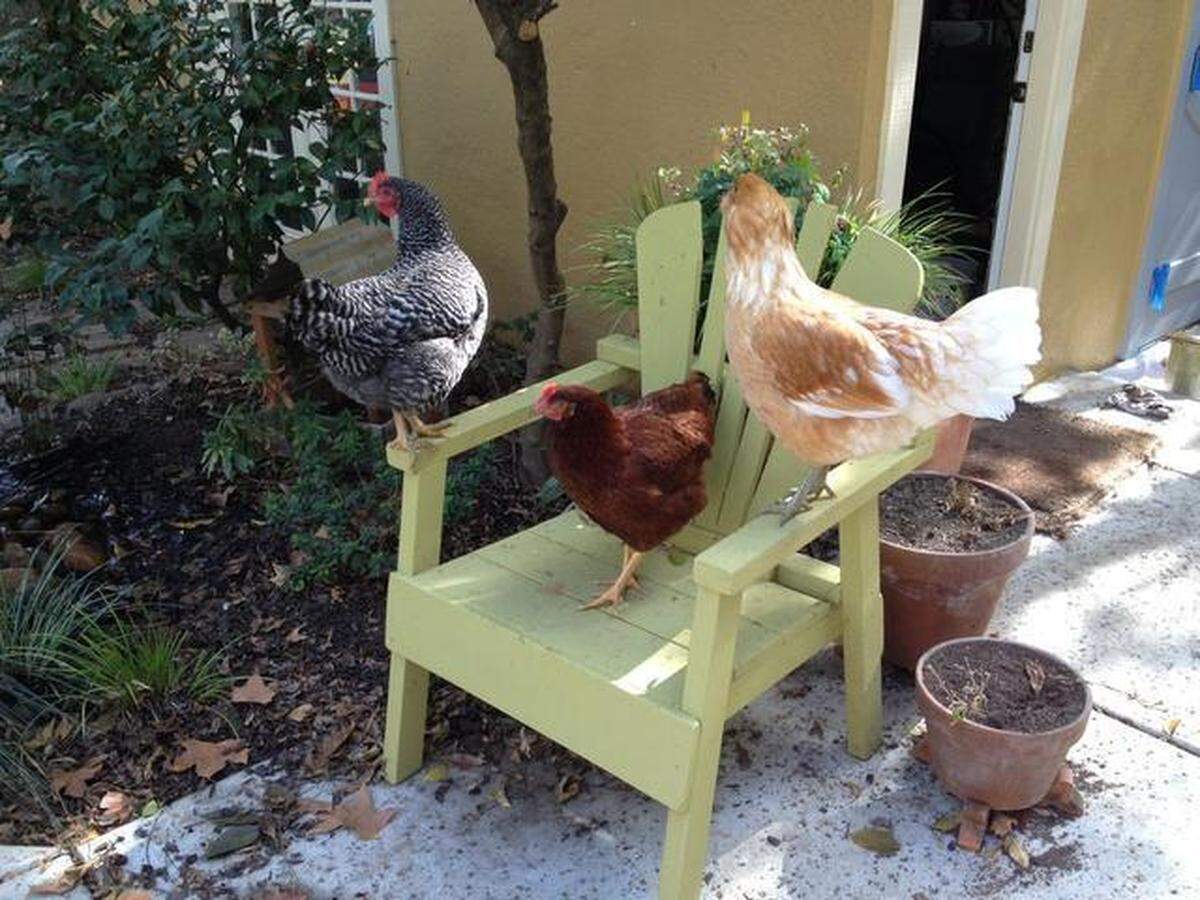
Can my Stanislaus County neighbor have chickens on their property?
Stanislaus County residents are allowed to keep chickens on their property, officials said.
However, there are some restrictions.
“Hens are allowed on residentially zoned properties in the unincorporated areas of the county, provided they remain within the allowable limits,” county officials said.
Households can have up to 12 hens. The birds must be kept in a coop under 120 square feet that’s at least 40 feet away from any home, including neighboring houses.
“Structures larger than 120 square feet are subject to standard building permit requirements, including plan review and placement approval, similar to other structures of that size,” officials said.
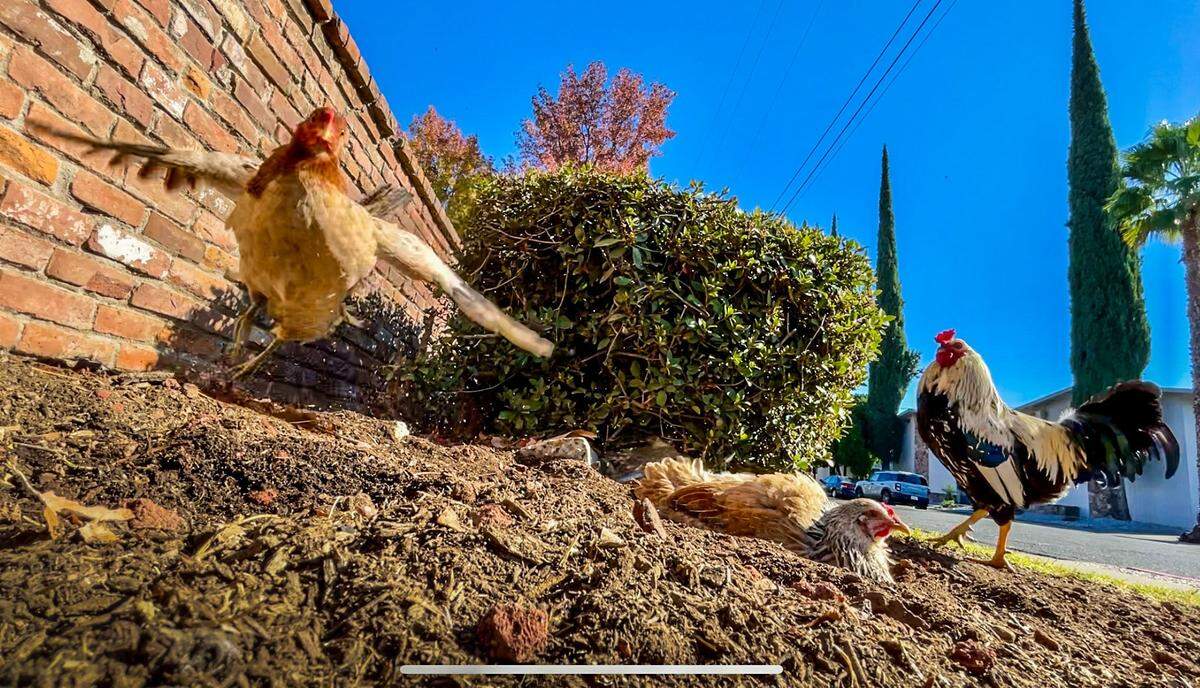
Can my Stanislaus County neighbor have roosters on their property?
Roosters are not allowed in residential areas in Stanislaus County.
They’re only permitted on certain agricultural properties — also known as A-2 zones — that fall outside “urban transition” areas, according to the county Code of Ordinances.
You can call the Stanislaus County Planning Department at 209-525-6330 to live if you reside in one of these areas.
What is considered a nuisance in California?
According to California’s Civil Code, a nuisance is generally anything that unreasonably interferes with someone’s ability to use or enjoy their property.
This law applies statewide, including Stanislaus County.
What can I do if my Stanislaus County neighbor’s chickens bother me?
If chickens next door are causing a nuisance, there are a few ways to address it — depending on the problem.
County rules limit noise in residential neighborhoods to 50 decibels from 7 a.m. to 9:59 p.m. and 45 decibels from 10 p.m. to 6:59 a.m.
A decibel is a “unit for measuring the amplitude of sounds,” according to the Stanislaus County Code of Ordinances.
Noise complaints are handled by the Stanislaus County Sheriff’s Office, county officials said.
You can report excessive noise by calling Stanislaus Regional 911’s non-emergency line at 209-552-2470.
While there’s no set limit for smells, officials said, Stanislaus County Code Enforcement can investigate to determine whether conditions “rise to the level of a public nuisance or indicate a potential code violation.”
You can reach Code Enforcement at 209-525-6700.
If you’re worried about how the animals are being treated, contact Stanislaus Animal Services Agency at 209-558-7387.
“Callers should be prepared to provide the address where the issue is occurring and details about the concern, including when it is happening,” officials said. “Even general timeframes, such as daytime or nighttime, are helpful.”
What happens if neighbors violate Stanislaus County rules?
In Stanislaus County, penalties can vary depending on the city and the situation.
For most issues handled by Stanislaus County Code Enforcement, however, the process usually starts the same way.
An officer will first visit the property to see if a violation exists, according to county officials.
If one is found, they’ll try to contact the owner or tenant and issue a notice of violation, giving them a chance to fix the problem.
“Our goal is to resolve issues at the lowest level possible by providing information and an opportunity to correct the issue,” county officials said. “If compliance is not achieved, enforcement may escalate to administrative citations and, in some cases, further legal action.”
If citations go unpaid, they can be sent to collections or added to the property as a charge on the tax bill.
What questions do you have about living alongside Modesto neighbors?
Living alongside neighbors can be a challenge.
Whether your questions are about reporting violations or understanding what’s allowed, The Bee is here to help you navigate neighborhood issues.
You can submit questions directly to our reporters by emailing The Bee’s Angela Rodriguez at arodriguez@modbee.com, writing to our service journalism desk at servicejournalists@modbee.com, or filling out the form below.
You may be contacted by a Modesto Bee reporter.