Stanislaus County’s overcrowded animal shelter strains rescue network
It’s the same mad dash every week between the Stanislaus Animal Services Agency and rescue support volunteers trying to find homes for sheltered animals.
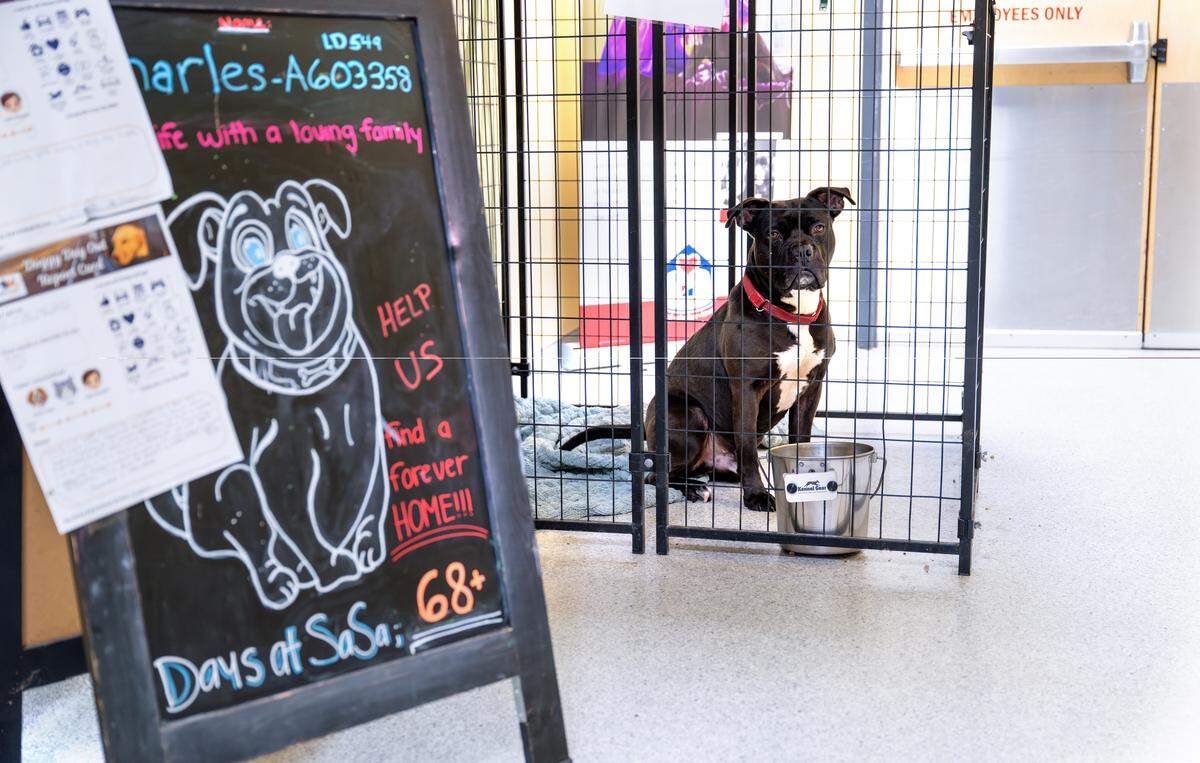
A list of as many as 50 dogs in need of immediate placement is shared with volunteer rescuers, who then scramble to get behavioral tests done on the dogs, along with photos and videos to entice potential adopters. They harness the power of numbers, sharing the dogs’ plights with a Facebook group of 30,000.
The rescue volunteers say the SASA shelter could be doing a better job to prevent dogs being put down. SASA officials say they struggle to keep the numbers of dogs on their so-called RED list low.
A 1-year-old husky was brought to the Stanislaus County Animal Shelter on March 7, initially presumed to have been hit by a car. Five days later, his name still was listed as “A607783,” his wounds were not dressed, and he was slated to be euthanized at 4:30 p.m. on Friday, March 13.
A video of the friendly dog was shared by a rescue volunteer with a large following. It shows him howling in what appears to be pain. Quickly, donations to get the dog veterinary care came in, and people offered to foster or adopt.
Kelly Ceglio and her fellow Stanislaus Animal Shelter - Network/Rescue/Adopt volunteers receive from Animal Services a list of dogs in need of immediate placement every Wednesday. On March 11, the number was 50.
Rescue volunteers take the list and determine how to help entice potential adopters, then share with their Facebook group.
“Our team will do evaluations, post the dogs on our volunteer shelter page and work like squirrels to get these dogs seen,” said rescue support volunteer Nancy Klein. “We pull adopters, we work with rescues, etcetera.”
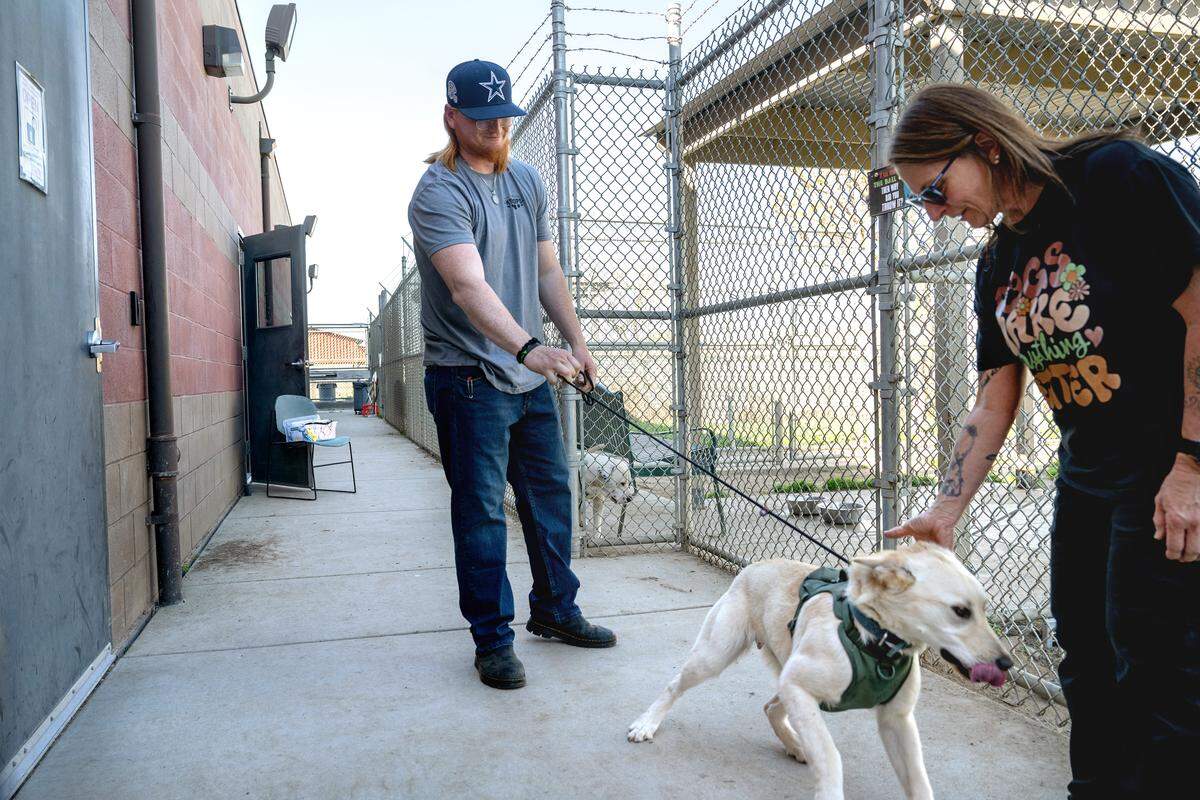
The RED list identifies dogs most urgently in need of placement. The rescue deadline is 6:30 a.m. Mondays. On Sundays, the shelter is essentially closed.
“We do everything possible to limit our urgent animal communications to 50 dogs,” SASA Director Lily Yap said. “Even though we recognize that is a huge number — that’s a big ask — we try to be really transparent in asking our community for what we need. Because the higher our intake gets, the more animals we need to get out of here.”
The list is part of a “capacity of care” model that volunteers say is preventing adopted dogs from finding homes. Volunteers have raised this and other concerns with Yap and the county Board of Supervisors in recent months.
How has the shelter changed since it opened?
Stanislaus County CEO Jody Hayes said more support is needed to meet the volume of animals coming into the shelter.
“At the same time, when you look at the data over the past 15 years, Stanislaus Animal Services has delivered outcomes as strong as, or stronger than, any county department I’ve worked with,” he said. “Those results would not be possible without our nonprofit and rescue partners, whose collaboration is essential to achieving positive outcomes for animals in our community.”
Since fiscal year 2020-21, the shelter has put down an average of 673 animals.
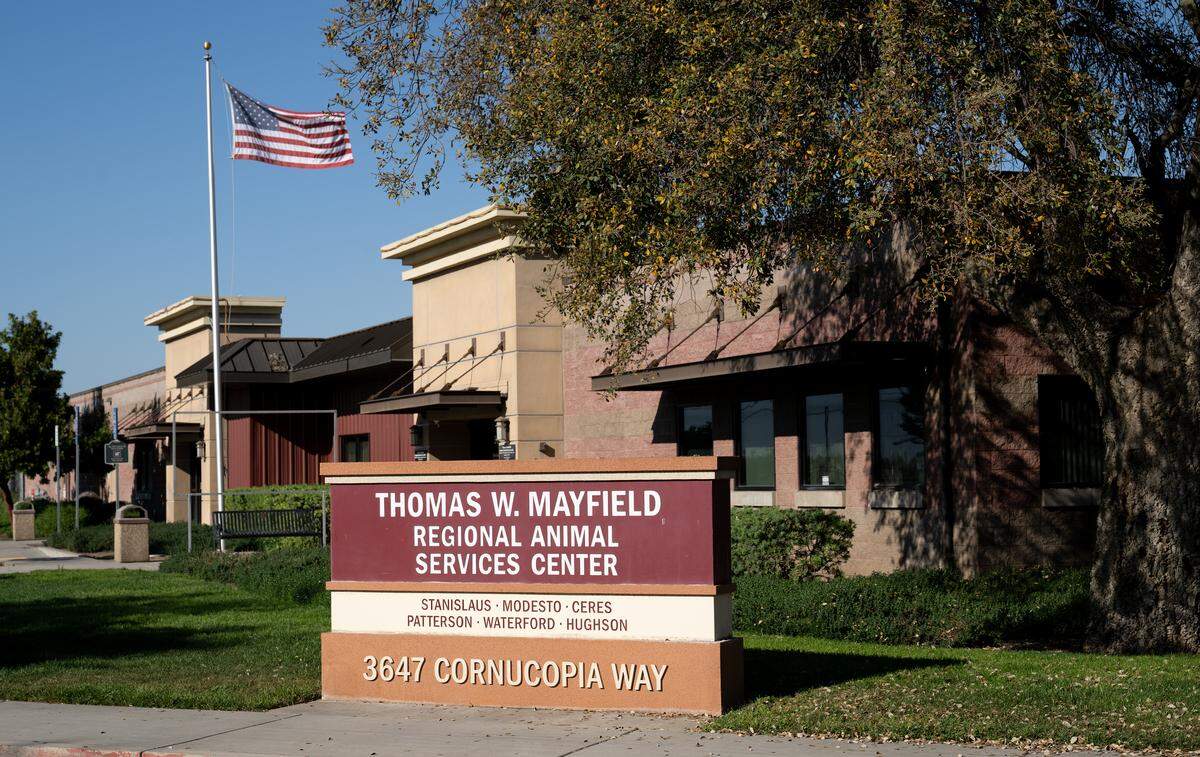
In FY 2010-11, during which the shelter on Cornucopia Way opened, more than 13,000 animals were euthanized. That number decreased drastically until fiscal year 2018-19. It has held steadily since then.
Though the shelter has not released euthanasia numbers for the first two months of 2026, it lists a “live release rate” of just over 80%.
An uncontrolled stray dog population with a spay/neuter backlog
In south and west Modesto and in communities like Grayson, stray dogs often form packs and can be seen weaving in and out of traffic as they navigate life on their own. Additionally, stray cats have collected in large numbers around the county’s waterways.
The shelter’s self-published data shows its intake was from 30% to more than 100% higher than counties with a similar population size.
The shelter has one full-time, on-site veterinarian who performs surgeries three days a week, covering everything from care for injured dogs to spaying and neutering.
Yap said she hopes to get another veterinarian soon. It’s been difficult due to a nationwide veterinarian shortage and the skills necessary to do high-volume spay/neuter.
“With only one position, all the surgical and wellness and administrative duties are heaped on to that one individual,” Yap said. “So we’re really looking at being able to expand our surgery days with that second veterinarian.”
Yap said the shelter does have two registered veterinary technicians, two animal care specialists and a supervising vet tech to help support the veterinarian.
To get dogs into homes without being spayed or neutered, the shelter uses a “foster-to-adopt” program. Dogs removed from the shelter are given an appointment to return for that surgery, sometimes months after their release.
It’s an imperfect program.
“Dogs are being adopted out unaltered, and the people either miss their appointments, move the dog and don’t end up being spayed or neutered. They get loose,” said Paula Nourse, a rescue volunteer based in Idaho.
Yap said the foster-to-adopt program serves two purposes: to get the dogs out of the shelter and into homes and to increase kennel space for intake.
Conditions at the Stanislaus County shelter
When rescuers take a dog, the vet provides a certificate that says the animal is healthy enough for travel within the next 30 days. But there have been notable instances where that was not the case.
Rebecca Martello, a volunteer with the PAWS Network, received a poodle that had been medically cleared for transport but was on the verges of death when it arrived.
“This little poodle showed up nearly dead and died five hours later after transport,” Martello said. “There is just no way this dog should have been taken out of the shelter.”
In response to that incident, Yap put in new procedures. Transporters and rescue volunteers must do visual health checks of the dogs before they are cleared because an animal’s health can change within the 30-day period.
“I appreciate the effort to get more eyes on the dog, but I am not a vet and the health certificate that they provide us should reflect the health of the dog,” Martello said.
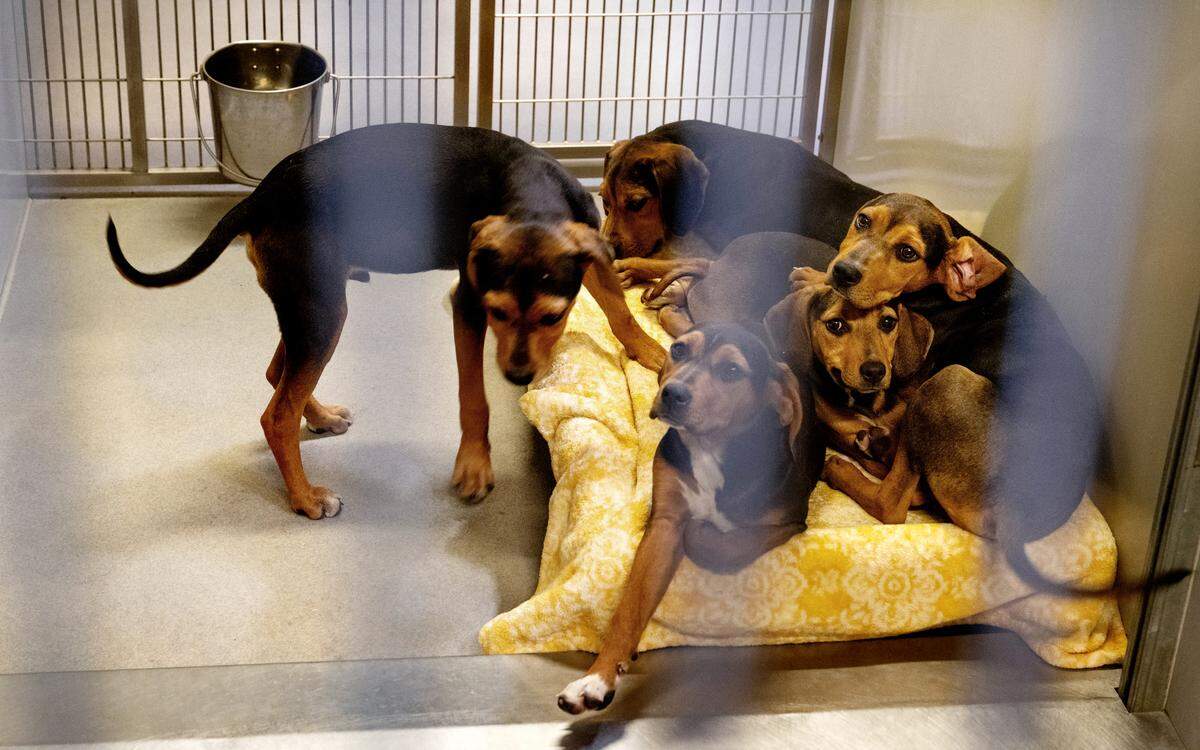
At the shelter, kennels designed to hold one dog, are now holding two. Inside each, there is a divider intended to allow staff and shelter volunteers to clean the kennels without having to move the dogs. Instead, the divider is being used to place another dog.
“That’s roughly a space of four by five feet, which is not very big,” Klein said. “The dog has to eat there, sleep there and poop there.”
Yap confirmed the divider is used to increase capacity during intake spikes because “that flexibility is critical.”
However, the reduced size of the kennels and having to transfer dogs frequently in and out of kennels increase the potential spread of disease, according to UC Davis’ Koret Shelter Medicine Program.
Volunteers say this is happening despite having many unused kennels.
Frequent closures
Yap said SASA tries to keep around 20% of the kennels open for intake to combat a perception that it is not taking in new strays.
“If you have the mindset that you’re not going to have barriers to people dropping off animals, you need to have physical space available to take them readily,” Yap said. “I will say we’re not really good at maintaining that number, but that is what we strive for.”
When the shelter does experience an outbreak, volunteers say it closes for longer than necessary to handle the situation. Whereas other shelters, like Stockton, would be closed for two weeks for kennel cough or zoo strep outbreaks, the Stanislaus shelter is closed for five.
Yap said the shelter follows UC Davis’ “clean break” model, which states that incoming animals be separated from those that are infected, generally limiting intake to emergency only.
“The time you are closed is usually directly connected with how long it takes to lower your population so that the original population of animals is slowly going down,” Yap said.
The shelter has closed twice in the past 12 months for communicable disease outbreaks.
The shelter and SASA are part of a joint powers agreement with the county and Modesto, Ceres, Patterson, Waterford and Hughson.
Modesto Councilmember Chris Ricci, who represents District 3, has openly and routinely criticized the agency online and at public meetings. He said he would not be interested in Modesto expending more funds toward the JPA until customer experience is improved, increased spay and neuter services are provided and there is a greater emphasis on the impact of rescue volunteers.
“They’re saving dozens of dogs every single week and they do not feel valued by Stanislaus Animal Services,” Ricci said.
Recently, Yap said SASA renamed the “urgent dog list” to “remember every dog,” or RED, to highlight often overlooked dogs.
The rescue support team consists of around 35 volunteers who range from local to as far-flung as North Carolina.
“There is no shelter in California that has a team like our team,” Klein said. “Without our team, these dogs would not have any voice, any notice.”
This story was originally published March 24, 2026 at 4:30 PM.