Riverbank residents identify problem areas for truck fumes in Stanislaus County
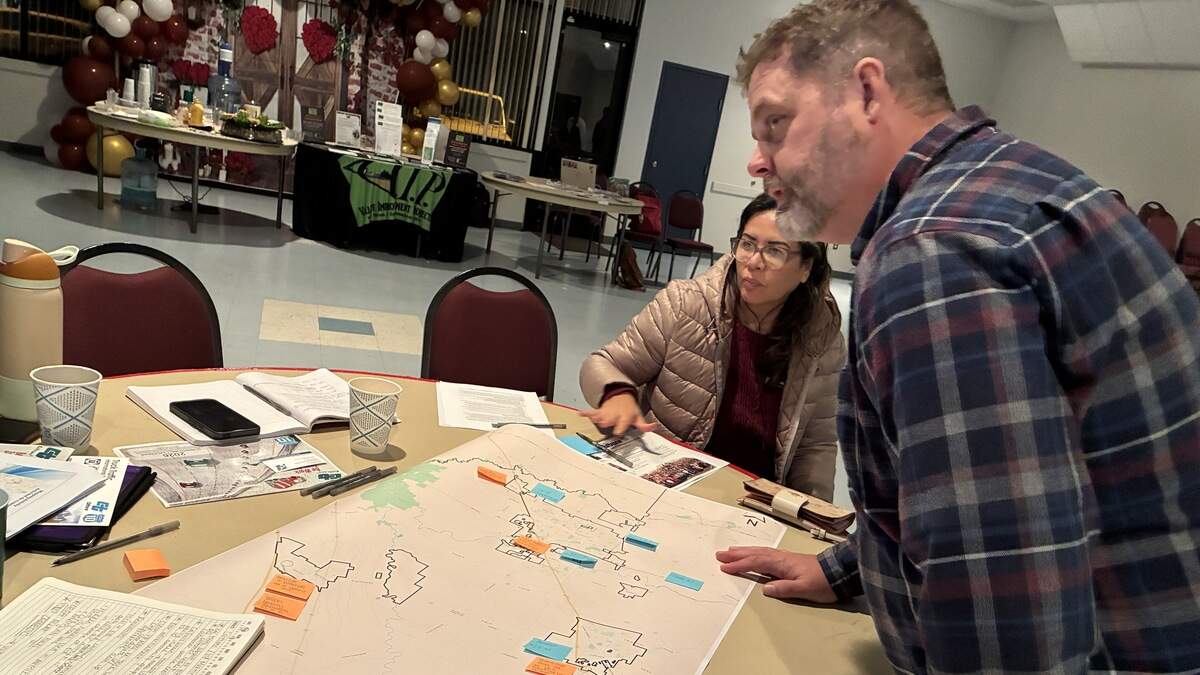
Residents of Riverbank met with the staff from the California Department of Transportation, the California Air Resources Board and Stanislaus County to identify areas impacted by heavy truck fumes and what enforcement is in place to address it.
The workshop was Valley Improvement Projects’ last scheduled before it publishes the Stanislaus County Emissions Reduction Plan, a document designed to present the community’s response to environmental impacts in the county.
The plan will call for more stringent enforcement of environmental laws in a section of the state that, due to the Central Valley’s bowllike shape and high-emission industries, is one of the worst counties for air quality.
Because the county is ag-focused, the Stanislaus County Board of Supervisors exempted all agricultural truck traffic from codes that would otherwise limit driving on county-controlled roads, according to county senior traffic engineer James Ashby.
The county does not have designated truck routes. Instead, there is a limited list of roads where large trucks are prohibited, but agriculture-related trucks will be exempted.
“If you guys see a truck going down the road hauling tomatoes, onions or walnuts, those trucks are exempt and they can go pretty much anywhere,” Ashby said.
He said the vast majority of roads in unincorporated Stanislaus County were built for agricultural truck use.
Enforcement of truck restrictions in the area is challenging because the California Highway Patrol has only three officers designated for the 1,500 lane miles of road under the county’s jurisdiction.
“We have requests for restrictions that may not be feasible or enforceable,” Ashby said. “So just because someone is complaining about some roads in a certain area, and it may be farm equipment or almond hauling trucks, it may be not feasible for us to restrict any of that truck traffic.”
Caleb Brock, deputy district director of planning at Caltrans, said his team determines where trucks on state highways can travel by approving permits for oversize or overweight vehicles, approving road design and controlling truck terminal access.
“The goal is to provide access for trucks to facilities and accommodate goods movement while taking safety and operation of the traveling public into consideration,” Brock said.
Caltrans consults EnviroScreen 4.0 maps, the Healthy Places Index and its own Transportation Equity Index to make decisions in the early stages of projects to mitigate negative impacts of increased traffic.
Who to contact when things go wrong
The meeting, attended by a small group of residents, was held at a Catholic church on Highway 108 in Riverbank. The Transportation Equity Index shows the location is in a census block designated as a “Transportation-Based Priority Population,” burdened by both heavy traffic and disadvantages such as lower income and mobility.
Bianca Lopez, co-founder of Valley Improvement Projects, asked who was responsible for addressing hazardous waste and chemicals that spill from heavy trucks.
Anthony Presto, chief public information officer for CalTrans, said the CHP is in charge of responding immediately to emergencies on state highways.
“They call the shots,” Presto said. “They decide if a road is going to be closed, and then they call Caltrans and Caltrans actually comes out to assist.”
Brock said Caltrans relies on the public and local officials who know the area well to make decisions.
“Definitely work with your local city and county to coordinate with Caltrans,” Brock said, adding the public can use its customer service request portal to log incidents.
Cody Howard, air resource supervisor at CARB, said the board now requires smog checks for trucks and inspections to ensure drivers haven’t tampered with state-required emissions-tracking devices.
“The vehicles you guys own have to go get tested to make sure their emissions … meet the standard. Well, heavy-duty trucks didn’t have that for a long time,” Howard said. “They could just run their truck forever and never had to be checked to make sure emissions-control components are working – so [the state] passed a regulation.”
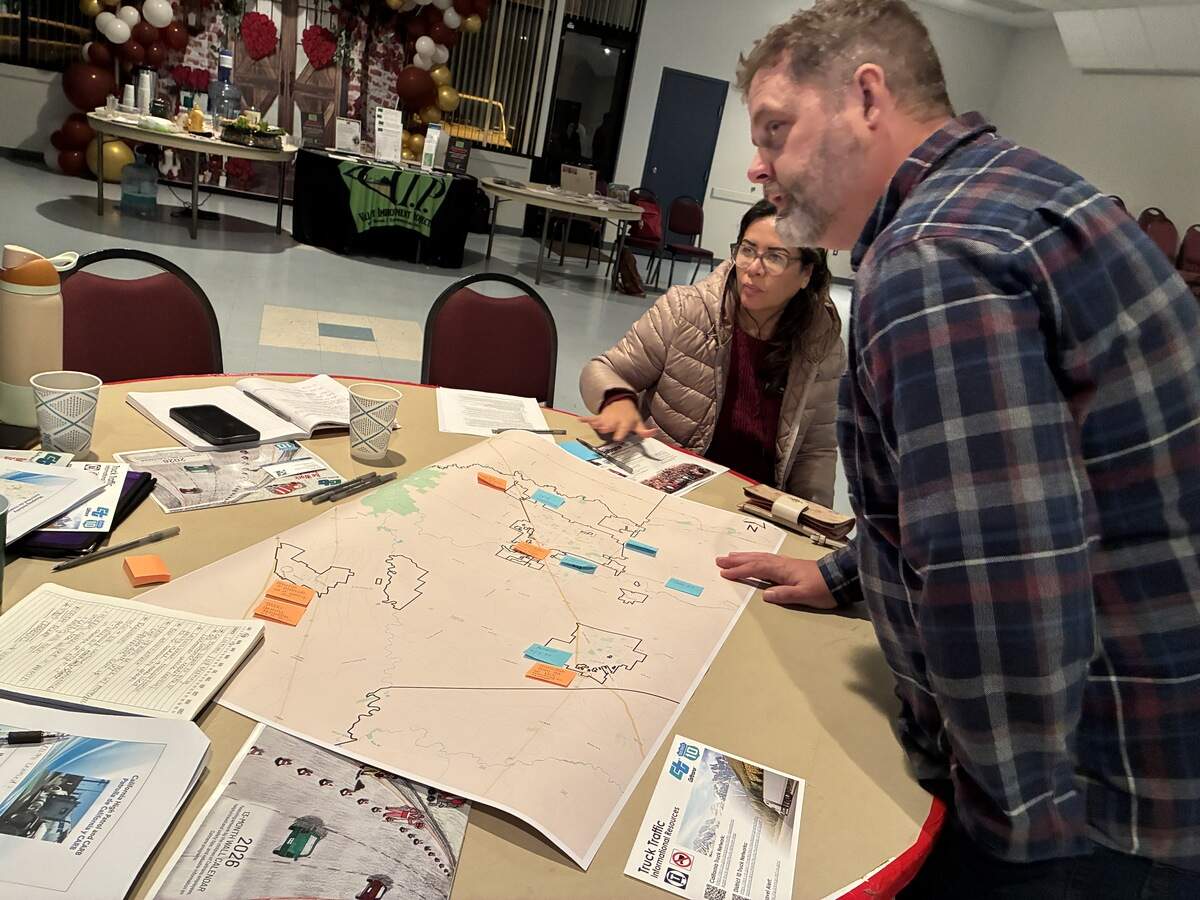
Residents were provided with paper maps of Stanislaus County regions and asked to identify areas with sticky notes where heavy trucks cause issues, so CARB can take the feedback back to its office. There is also an online map for residents to log their concerns.
“Even though you’re seeing air quality improved regionally, there’s still pockets in communities that have been marginalized historically,” said Brian Moore, a supervisor at the Community Support and Strategy Section at CARB. “They have a ton of industry and have really poor air quality at the local level.”
For all environmental complaints, the centralized CalEPA website will direct concerns to the responding agency. Because of concerns with anonymity, Lopez said Valley Improvement Projects created its own portal to reroute concerns specific to the community.