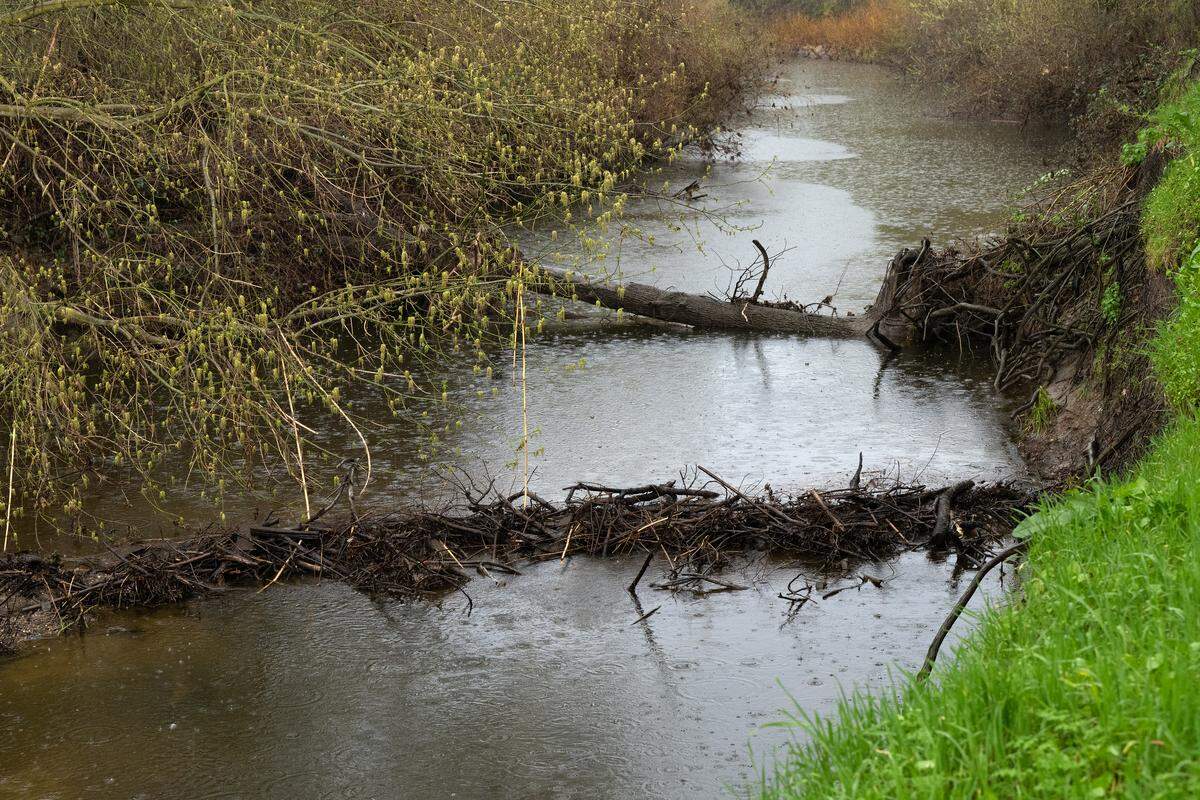
Beavers building dams on Dry Creek in Modesto. Why that’s a good thing
At least three beaver dams spanning Dry Creek in different spots between the Creekside Golf Course and Claus Road were spotted for the first time recently.
Michael Hart, a volunteer with the California Department of Fish and Wildlife who routinely monitors the area, was alerted to them in early February by a homeowner close to the creek.
“Look how you can see how it catches all that sediment, that stuff floating on the water,” Hart said while observing one of the dams recently. He pointed to a line of twigs and branches that stretch along the creek, pooling upstream water.
Beavers are native to California, and the Central Valley in particular, but their numbers were decimated during the fur trade in the late 1800s. Dams like these are evidence of recovery in the region.
Patrick Koepele, executive director of Yosemite Rivers Alliance, said he’s seen beaver activity on the Tuolumne River, but this is the first he’s learned of dams being constructed in Dry Creek.
“It can be helpful for the river and the ecosystem,” Koepele said. “It slows water down and spreads it out. It helps it sink into the ground, so it can help with groundwater recharge.”
Beaver builds dams in shallower waters because the structures create the depth necessary to build burrows.
The section of Dry Creek where the dams were spotted has high banks on both sides. Beavers will create dams and then have a burrow further upstream where dams have made the water deeper.
Kate Lundquist, co-director of the Water Institute at the Occidental Arts and Ecology Center in Sonoma County, said beavers need water at least 3 feet deep to create a submerged entrance to their burrow, while the burrow itself stays dry.
“When the flow is low and steady, or decreasing but not deep enough for them to feel safe, they will build a channel-spanning dam like that,” Lundquist said.
Beavers typically weigh 40 to 80 pounds and their tails are pure fat, said Lundquist, so they are highly sought after by predators including mountain lions, coyotes, bobcats, wolves, bears, and even domesticated dogs and humans.
“They have a lot of good meat on them, so that’s one of the realities beavers are facing,” Lundquist said.
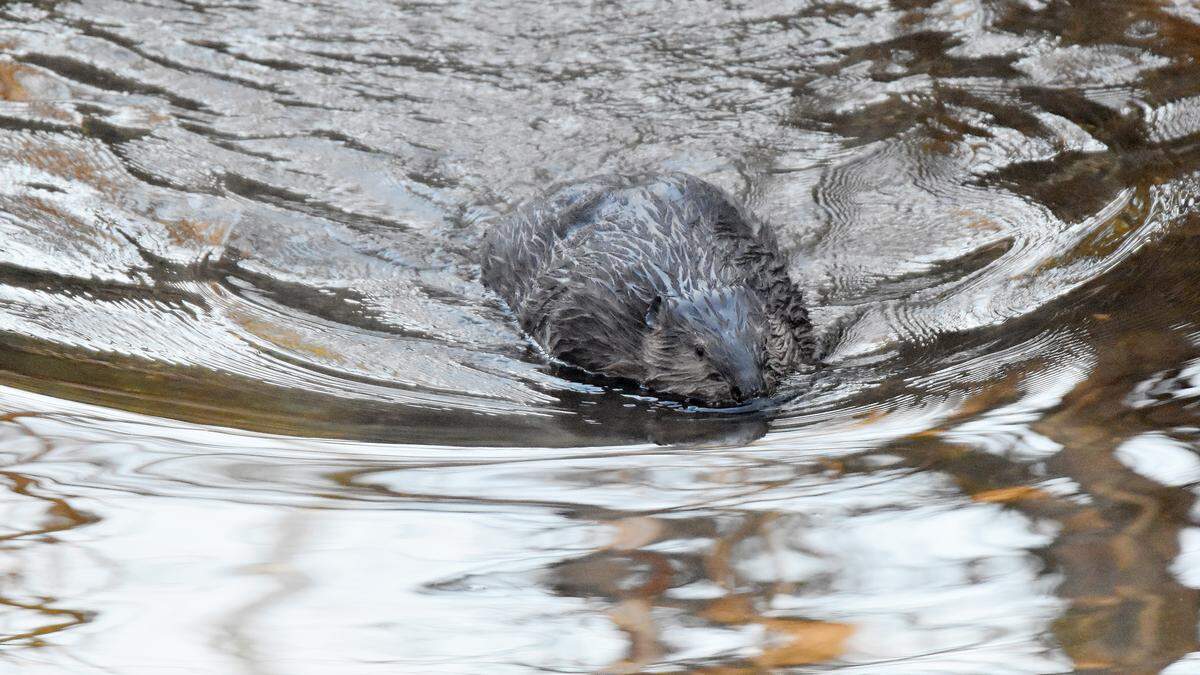
Beavers are nocturnal, which may be why many park users along Dry Creek and the Tuolumne River haven’t spotted them, but they can sometimes be seen in the early morning. Hart spotted one swimming in Dry Creek near Claus Road on Feb. 13.
Though a thriving beaver population creates considerable upsides, like contributing to biodiversity, flood resistance and groundwater recharge, the rodents can also cause some unwanted issues that landowners should look out for.
“They can create problems for people, plugging up culverts and removing trees that people don’t want removed and things like that,” Koepele said.
Beavers favor chewing on trees in the poplar family, like willows, cottonwoods and aspens, but they have been known to chew on other trees if those aren’t available.
“We love beavers and love to see them doing their thing and help with the ecosystem, and hopefully in this particular case, they don’t cause problems for anybody,” Koepele said. “Because we don’t want beavers to get a bad name, either.”
Lundquist said that if beavers do start creating issues, the state has ways to encourage coexistence rather than treating them as pests.
“We now have a beaver help desk (www.calbeaverhelp.org) that’s available to anyone in the state of California, and that’s a place where any landowner can get advice,” Lundquist said.
The California Department of Fish and Wildlife also provides funding if issues do come up to help landowners coexist with beavers since they also provide benefits to farmers.
“Ranchers are becoming pro-beaver because of the way they help the [plants] adjacent to the beaver wetlands grow longer into the dry season,” Lundquist said.
Around 3:45 p.m. Feb. 11, the Modesto area was pelted by heavy rainfall. In stronger currents, less resilient dams during the rainy season will wash out. On Feb. 16, there was water over one of the dams, but the majority of it was still intact.