Then and now, Stanislaus County’s Westley is at the center of migrant history
In the late 1930s, the Westley Migrant Center supplied nearby pea fields with eager workers looking for a way out of Dust Bowl and Great Depression-era poverty. Almost 90 years later, the need remains in Westley for a place to provide housing for farmworkers.
Miriam Giebeler, director of the property management division at Stanislaus Housing Authority which runs the site, said she sees a lot of returning families.
“It’s like a family reunion every year,” Giebeler said. “I’ve seen babies being born, [and] babies who are no longer babies, they’re teenagers.”
The unincorporated town of Westley was established to move Grayson residents from the no-longer-profitable steamboat shipping industry along the San Joaquin and Tuolumne rivers to the then-booming and newly constructed railroad tracts, which still operate parallel to Highway 33.
The migrant center is occupied from mid-May to mid-November, following the harvest season, practically doubling Westley’s population.
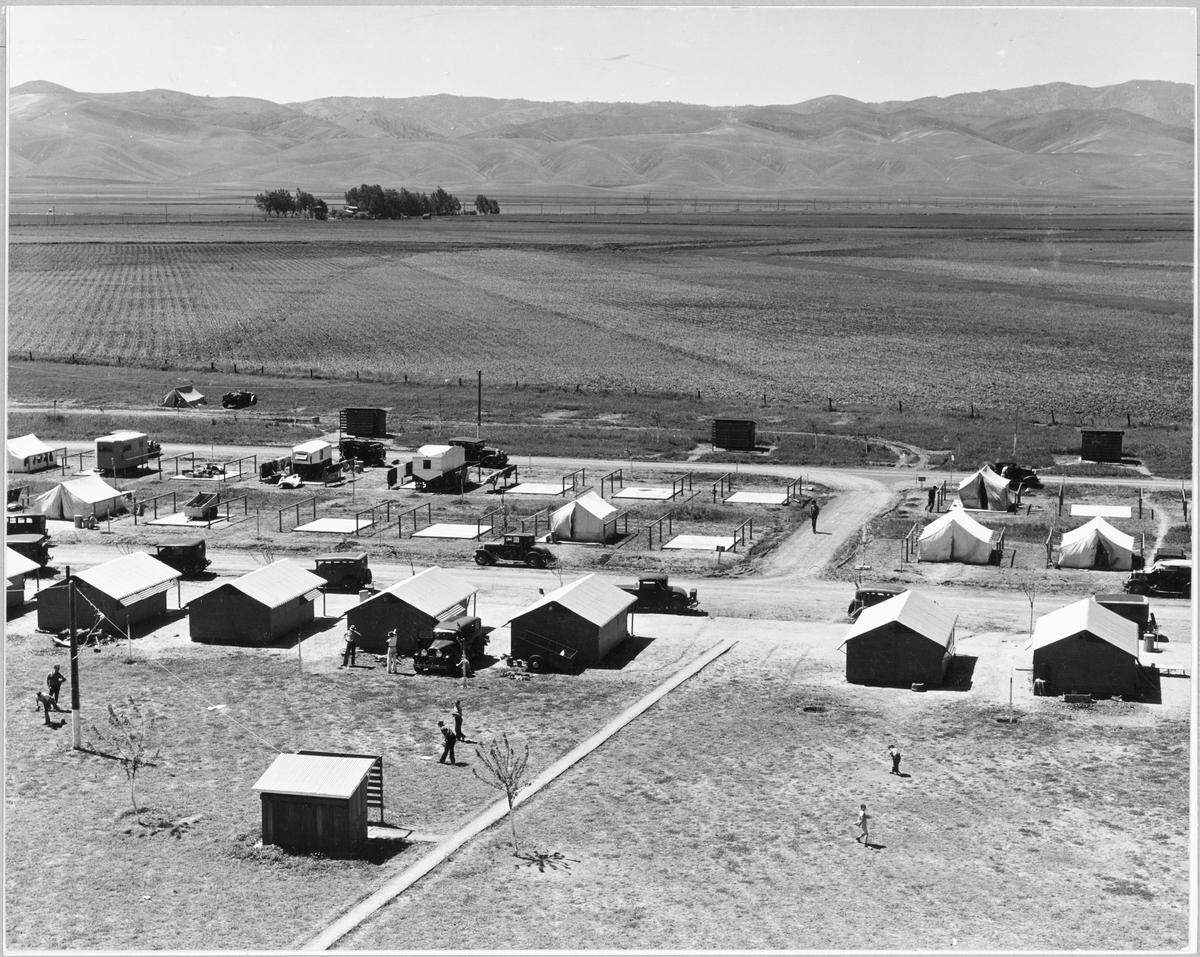
Each year, farmworkers living at the center organize a resident council, which determines the opening of the center for the next year. To qualify for housing, workers must prove they live at least 50 miles away from the camp for at least three to six months.
Westley’s role in Dust Bowl-era migration
In 1939, photographer and Farm Security Administration documentarian Dorothea Lange photographed migrants from Oklahoma and Arkansas who had arrived at the migrant center desperate for work but were turned away due to a surplus.
When Lange came to the Westley Migrant Center, the gross value of agriculture in the county was the equivalent of $600-700 million. Based on the 2024 Agricultural Report the value has ballooned to over $3 billion.
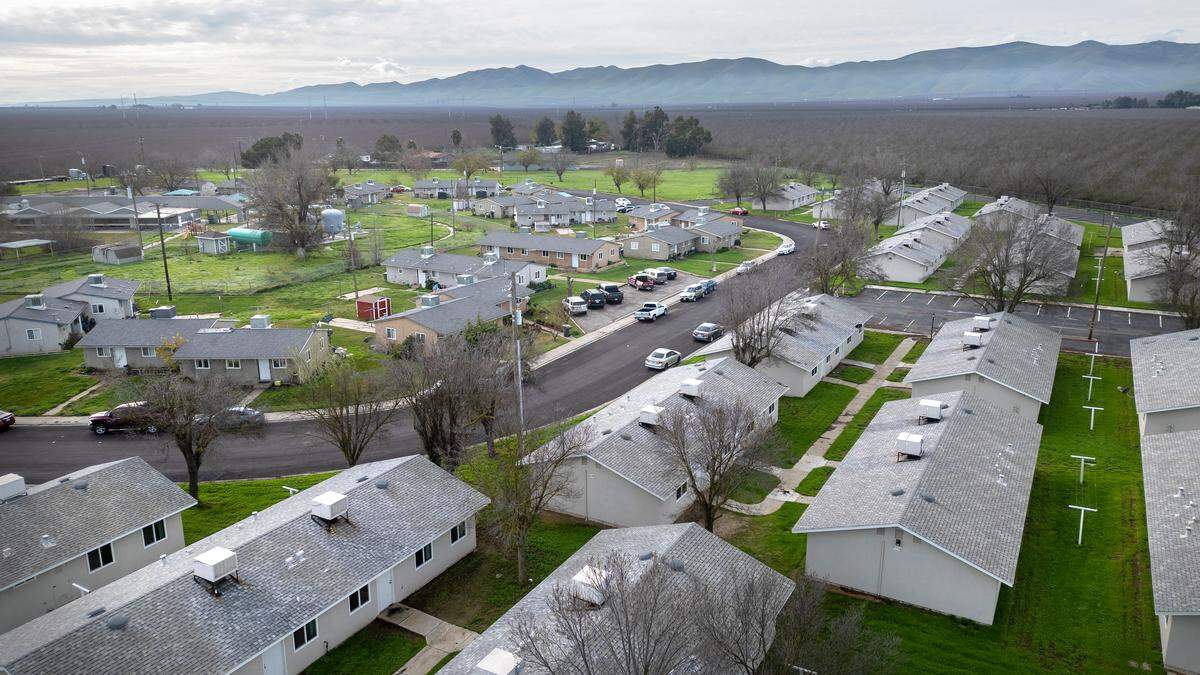
Though still referred to as “cabins,” the original corrugated steel buildings that Lange encountered were replaced in the 1990s with rows of identical two- to four-bedroom duplex-like homes with white-painted clothesline poles erected in between.
The 84-unit hexagonal community has a waiting list for migrant workers seeking opportunities to work in fields, harvesting melons and tomatoes, or to work the canneries in Modesto and Newman.
“They get affordable units to reside in while they come to work the harvest season in California,” Giebeler said.
While the migrants to Westley once came from Oklahoma and Arkansas, they now come from Texas, Southern California and Mexico, according to Jim Kruse, the Stanislaus Housing Authority’s executive director.
The center includes a Golden Valley Health Centers clinic attached to Grayson Elementary School and a community daycare for residents.
Westley’s role in the farmworker movement
Like many communities in the Central Valley, Westley was part of the unionizing efforts of the United Farm Workers movement.
Community organizers like Herlinda Gonzales, whose mother was a cook at the migrant camp, advocated for better standards of living for migrant workers.
In the 1960s, Modesto resident and National Farmworker Ministries member Sandy Clark Sample would drive pregnant women to and from doctor appointments 30 minutes away in Modesto. She would entertain children while their parents were in the field by projecting movies onto a blank washroom wall.
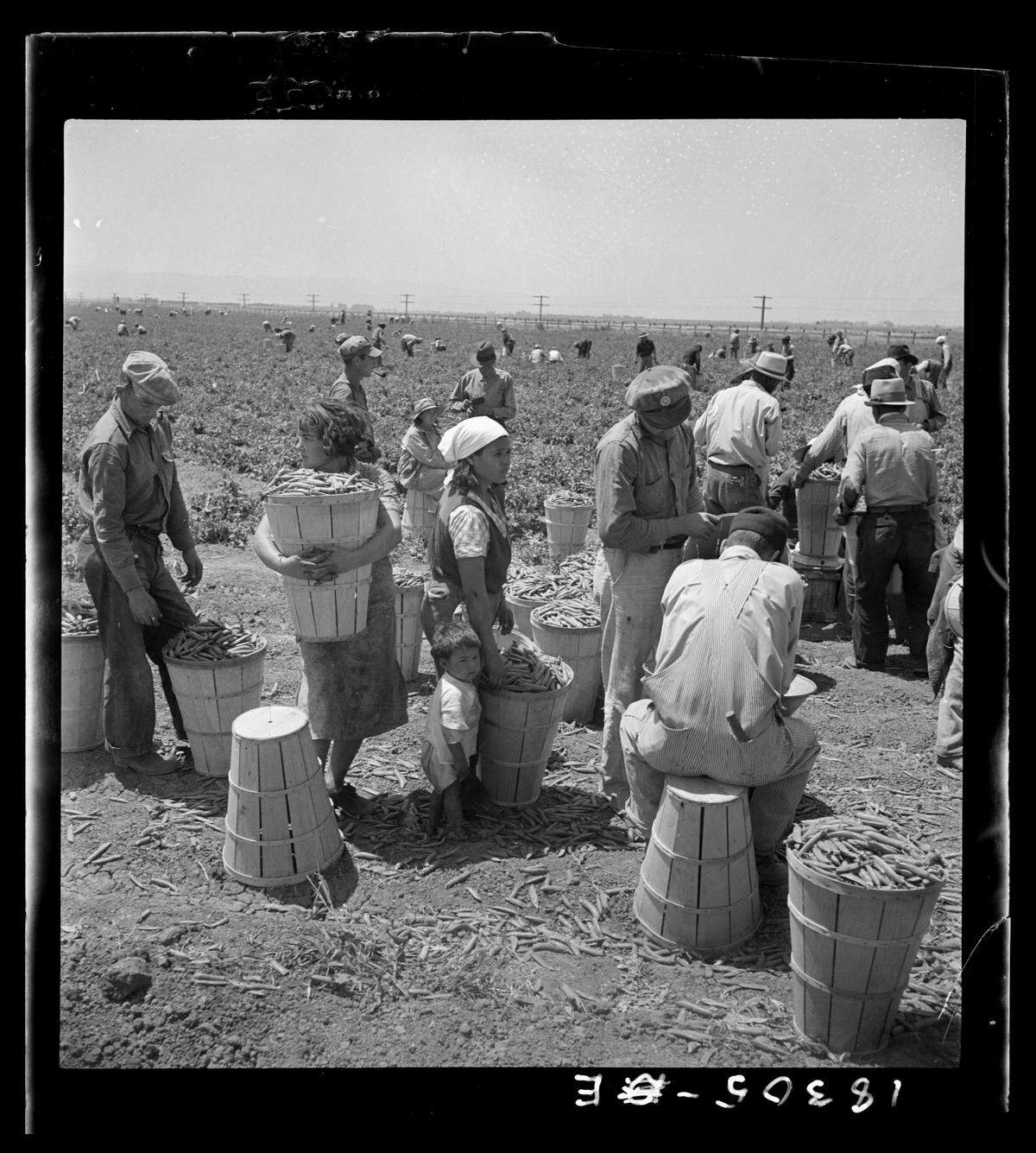
“Most of us had little knowledge of Mexican-American culture beyond what our week of training had offered, and all of us were naive, but we were eager, energetic, full of faith, and fearless.” reads an essay of Sample’s experience during those years.
National Farmworker Ministries Executive Director Julie Taylor said women’s groups such as Women United and other church denominations addressed the basic needs of workers who were isolated by language barriers.
“They needed long-sleeve shirts when the weather turned a little bit cool, they needed blankets,” said Taylor. “They didn’t have access to health care, all of those kinds of things.”
Sample, a longtime member of Modesto’s Peace/Life Center, died in 2024.
Environmental advocacy
Westley continually has been subjected to environmental hazards. In September 1999, a lightning strike sparked a 36-day-long tire fire that choked the community in toxic fumes.
Local activists, including John X Mataka, advocated for environmental justice during and after the fire, which burned about 6 million tires.
“We’re a rural community, and have a lot of Spanish-speaking people,” Mataka said. “The feds came out, state, the county — everybody was pretty much content with just letting those tires burn out.”
Mataka said Karen Cox, a local farmer, organized a meeting of around 150 people at the now-closed Westley Hotel.
“Everybody said, ‘Well, if you don’t put it out, then we’re going to put it out, and you’re probably not going to like the way that we’re going to put it out,’” Mataka said.
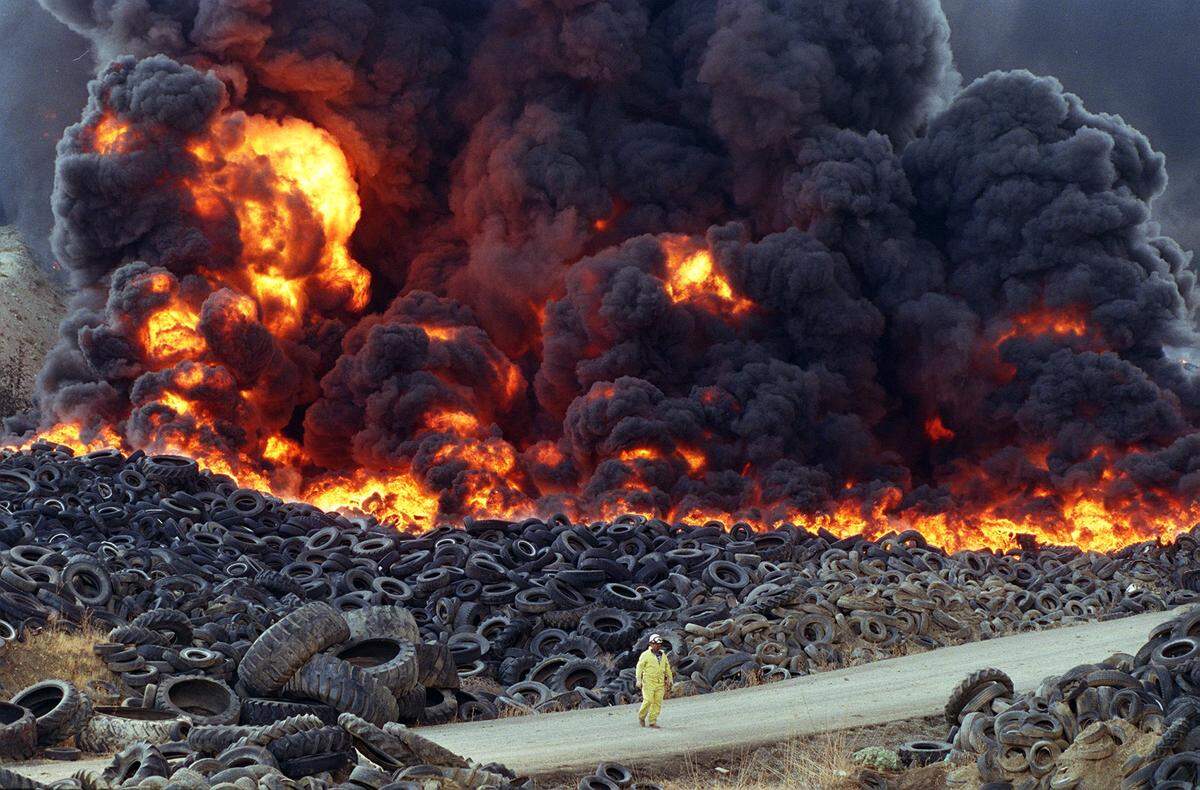
After that, funds were allocated by then-Congressmember Gary Condit to address the fire.
Mataka said community organizers put pressure on the county to provide mobile clinics around the area because residents still suffered nose bleeds, rashes and breathing problems from the thick black soot and ash.
Just before the fire, photographer Edward Burtynsky created a series of photographs titled the “The Oxford Tire Pile,” capturing mountains of tires piled up alongside Westley’s Ingram Creek Road; it now hangs in Nevada’s Museum of Art. Oxford Tire Recycling was among the companies held responsible for the fire.
More recently, the migrant center, like many regions in the county, has had drinking water quality concerns. At the center, 1,2,3 TCP, a byproduct of a legacy pesticide, has contaminated the wells. Stanislaus Housing Authority said it now has a filtration system in place.
Mataka has advocated for safer drinking water at the center and at the adjacent Grayson Elementary School for years but said it’s been hard to get folks to focus on the migrant community in Westley.
“I think that’s largely because the majority of the population is seasonal,” Mataka said. “They come and they go.”
This story was originally published February 8, 2026 at 6:00 AM.