Modesto water director had clear conflict of interest, ethics experts say
AI-generated summary reviewed by our newsroom.
- Experts say Byrd had a clear conflict and should have recused from vote
- Board split halted probe; data flagged inconsistencies but no conclusive finding
- Public trust risks erosion amid unanswered questions over further oversight
Editor’s note: The story has been updated with a brief comment by MID Spokesperson Melissa Williams.
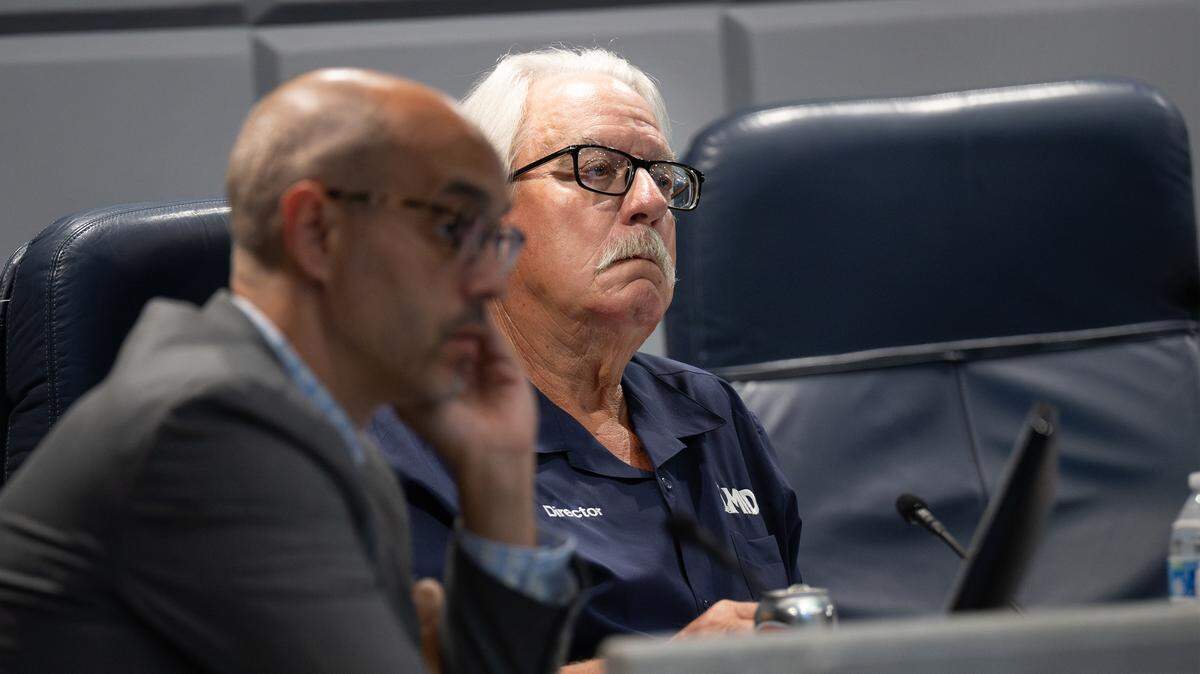
Since Modesto Irrigation Director Larry Byrd voted to squash an investigation into himself last month, some, including experts, have wondered how he was allowed to do that.
MID’s explanation for why, combined with Byrd’s past allegations of conflict of interest, the board’s handling of the investigation’s findings, a contentious meeting when the findings were presented and a perceived lack of interest from MID staff in trying to find out more, have led to questions about the district’s integrity.
But one question has surfaced more than others: Should Byrd have voted on whether to continue an investigation into allegations of water theft against him?
“That’s an easy, obvious no,” said Gerard Wellman, a political science professor who teaches a course on public service ethics at California State University, Stanislaus. “The conflict of interest is substantial and strong, and that alone should have been enough to recuse.”
In September, MID launched an investigation after Byrd was publicly accused of either stealing or misusing the district’s canal water.
The investigation found that Byrd’s previous answers to some of the accusations against him were impossible. However, the report, scientific and data-reliant, failed to clearly implicate Byrd. But had Byrd recused himself, the investigation would have continued. Byrd and Director Janice Keeting voted against the motion while Board President Robert Frobose and Director Chris Ott voted in favor.
Wellman is not alone in this opinion that Byrd should have recused himself. Christina Bellon, a professor and member of Sacramento State University’s Center for Practical and Professional Ethics, called Byrd’s vote a “somewhat standard case of conflict of interest.”
Bellon’s colleague at the CPPE, Chong Un Choe-Smith, added that it “goes without saying” that further investigation into Byrd “materially concerns him” and his financial interests, which presents a conflict of interest.
“Regardless of the merits of the investigation, public officials shouldn’t be voting on whether to continue or discontinue an investigation into themselves,” wrote Choe-Smith in an email to The Bee.
MID’s legal counsel argued that Byrd’s vote was allowed “because he has the right to defend himself on matters of self-governance and potential censure,” according to MID Spokesperson Melissa Williams.
But Wellman doesn’t buy that. Instead, he believes that MID’s reasoning makes no sense.
“It certainly raises the appearance of misconduct,” said Wellman. “Whether or not that misconduct actually happened, it sounds like the MID board is not all that enthused to go find out, but casting a vote against continuing an investigation as a vote of self-defense, certainly does not increase the average person’s trust in government.”
What is Byrd’s potential conflict of interest?
The Fair Political Practices Commission, which enforces conflict of interest laws for state and local government and public agencies, stated that it could not comment on Byrd’s case specifically.
However, it stated that in general, a public official has a disqualifying conflict of interest in a governmental decision if it is foreseeable that the decision will have a financial impact on their “personal finances or other financial interests.”
“In such cases, there is a risk of biased decision-making that could sacrifice the public’s interest in favor of the official’s private financial interests,” wrote FPPC spokesperson Shery Yang in an email to The Bee.
Ahead of the presentation of Byrd’s investigation at MID’s December meeting, Director John Boer IV was advised to recuse himself from discussion or any vote that followed — and he did.
In a financial disclosure document, Boer listed himself as farm manager for a company named T&S Byrd. He reported his income as between $10,001 and $100,000 a year in “fees and expenses.” T&S Byrd LLC is owned by Tim Byrd, Larry Byrd’s brother and business partner at AB La Grange Ranch.
Larry Byrd received over $100,000 in 2024 as a result of income produced by AB La Grange Ranch — which is worth over $1,000,000, according to his financial disclosure documents. His financial interests were largely disclosed during a previous accusation of conflict of interest five years ago.
In 2020, an attorney submitted a packet of documents alleging that, for years, Byrd pushed for the sale of MID water at below-market rates to out-of-district growers to benefit his business partner, Tyler Angle.
Angle is a partner of AB La Grange Ranch.
Byrd strongly advocated for selling water outside the district at prices well below what some other districts charge — around $200 per acre-foot — through MID’s groundwater replenishment program (GRP).
In February 2021, the FPPC advised Byrd that AB La Grange could not participate in the GRP. But at least three of Angle’s properties did: Double A Ranches, Triple A Ranches and Modesto Reservoir Ranch, according to Byrd’s letter to the FPPC asking if he needed to recuse himself from voting on the GRP.
However, the FPPC stated it could not offer advice as to whether Byrd could vote on matters related to the GRP, since Byrd already voted on it in 2017, 2018 and 2019. Byrd continued to vote on and participate in discussions on the GRP.
“You think I didn’t want that water for 60 bucks an acre-foot? Oh, my god, you gotta be out of your mind,” said Byrd at MID’s December 2025 meeting.
Angle also reportedly put pressure on MID Board President Bob Frobose to vote in favor of selling water at $60 an acre-foot, citing his $2,500 contribution to Frobose’s campaign. When Frobose instead cast a vote against this in 2024 Angle and Byrd were furious, Frobose told The Bee.
“My vote is not for sale,” said Frobose.
Frobose said he told Angle that he would return the $2,500. Angle, according to Frobose, did not take him up on that offer. Angle also contributed money to Boer and Byrd’s campaigns.
“I’m the one who nominated (Frobose) to the board, I campaigned for him when he ran for board. I helped him get there — my resources, my friends, my people and the farmers that I’m associated with and my endorsement list is what got (Frobose) appointed here,” said Byrd. “I never knew or thought that he would turn on me, but he did.”
Erosion of public trust
Wellman argued that ratepayers and the public have a right to know what’s being done on their behalf, calling it “basic governmental transparency.” When it comes to MID’s failure to conclusively investigate the allegations against Byrd, it creates an erosion of trust with the public.
“Even if there are only suggestions or allegations of misconduct, they should still be treated with the appropriate respect,” said Wellman. “Because it’s the public’s resources that we’re investigating … not Mr. Byrd’s resources.”
MID is the first line of defense of its resources. But, it’s unclear what agency or department can continue an investigation into Byrd’s alleged theft, misuse or misconduct, if it fails to police itself.
“It’s going to cost the district a lot of money… I’m not trying to chill this, but I’m trying to provide candid advice to the board, and to the public, about expectations,” said MID’s attorney Frank Splendorio about further investigation. “We could come back and we can be here six months from now and we will be litigating the same issue because of strong feelings.”
Wellman countered this by saying that, whether or not the law can be litigated, the ethics of how MID was operating could still be reflected on and examined.
“It’s important to remember that the law is the bare minimum, it’s the lowest threshold,” said Wellman. “So ethics is going to … propel us to behaviors that might be more than what the law requires.”
Director Chris Ott, who voted in favor of continuing the investigation, stated that he hoped the board’s failure to look further wouldn’t be “misconstrued as a cover-up.”
Just before the adjournment of MID’s December meeting, and after the board’s vote, Ott said that he hoped MID could “move forward.”
“Let’s move forward, we owe it to the ratepayers of this district,” said Ott. “So hopefully, in the new year, we can come together, we can start anew. That’s my hope.”
When asked if MID reached out to a law enforcement agency to determine if there was theft, Williams stated that no further action has taken place since its December meeting.
“Any actions for proceeding any further would need to be discussed and acted upon in a public Board meeting,” wrote Williams in an email to The Bee.
This story was originally published January 7, 2026 at 3:50 PM.