For Central Valley Cambodians, the border conflict with Thailand hits close to home
When fighting broke out again between Cambodia and Thailand in December, Vunmara Kong felt helpless.
A nurse in Modesto, Kong said that when she would bring up the conflict with coworkers or patients, many told her they didn’t even know it was happening.
Kong did what she could. She created a GoFundMe campaign, which raised nearly $3,500 in three weeks for displaced Cambodian families. She has been coordinating with an American content creator living in Cambodia to ensure the funds reach those in need. The content creator also is running a GoFundMe page, which has raised nearly $59,000 to provide medical supply packages to refugees and frontline military units.
“I think the community here just wants to feel like we’re being heard. We want people to stay informed about what’s going on,” Kong said.
Despite a recent ceasefire, the territorial dispute between Cambodia and Thailand has left Cambodian Americans in the Central Valley in fear as they look for ways to support their homeland from afar.
Last year also marked the 50th anniversary of the start of the Cambodian Genocide, during which an estimated 1.5 million to 2 million people were killed by the Khmer Rouge. This reminder along with the recent fighting has resurfaced trauma for many Cambodians.
Stockton is home to the fifth-largest Cambodian refugee population in the United States, and Modesto also has a sizable Cambodian community.
In a statement to The Bee, Modesto Mayor Sue Zwahlen said she formed close friendships with Southeast Asian refugees who settled in Modesto in the early 1980s.
“My thoughts are with those who are now suffering considering the current conflict in their homeland. War is horrific for everyone. I am grateful for the current ceasefire and hope it continues,” she said.
What’s happening between Cambodia and Thailand?
Cambodia and Thailand clashed for five days in July over competing territorial claims along their disputed border, resulting in dozens of civilian and military deaths and forcing tens of thousands of villagers on both sides to flee.
A ceasefire brokered by Malaysia later that month — under pressure from the United States and President Donald Trump — temporarily halted the fighting. However, fighting resumed again in December.
The two countries signed another ceasefire agreement on Dec. 27.
The dispute largely stems from a 1907 map created during Cambodia’s period under French colonial rule. Thailand argues the map is inaccurate. In 1962, the International Court of Justice awarded Cambodia sovereignty over the disputed area, including the 1,000-year-old Preah Vihear temple, a ruling reaffirmed in 2013.
Tensions over the territory previously sparked several armed clashes between 2008 and 2011.
Resurfaced trauma
Kong, who was born and raised in Modesto, said her parents fled to the Cambodian-Thai border during the Cambodian genocide in the late 1970s. They lived in refugee camps before being sponsored to resettle in the U.S. Families were scattered across the world depending on which countries sponsored them.
She said her parents continue to suffer from post-traumatic stress disorder as a result of that experience.
Kong still has family in Cambodia, including relatives she later reconnected with after believing they had not survived. She said they are afraid to leave their homes, worried they could return to nothing.
“Now they’re going through this heartache again,” Kong said.
Sophy Reese, president of the nonprofit United Cambodian American Network, and her brother were born in a refugee camp after their family fled Cambodia. In 1984, they were sponsored by a church in North Carolina, where they stayed for several months before joining relatives in Stockton. Reese was 3 years old when she arrived in the United States.
Reese said many Cambodians who came from rural areas were drawn to the Central Valley because its agricultural landscape resembled their homeland, offering familiar work and a way to make a living.
Reese helped push for the city of Stockton in 2016 to officially recognize April 13-17 as Cambodian Genocide Memorial Week.
“This new conflict that’s here now, it’s really stirring up a lot of emotions for people because people are just starting to heal and open up about what happened 50 years ago. And now there’s something else,” Reese said.
Donovin Ly, president of the nonprofit Khmer Harmony & Heritage, based at Wat Dhammararam Buddhist Temple in Stockton, said the border clashes have brought the local Cambodian community closer together but have been especially difficult for older generations who survived the genocide.
Ly’s parents are among those survivors. His mother was about 6 years old at the time, and while her memories of the bombings have faded, he said she remembers running and hiding in fear.
Ly said he still has relatives in Cambodia who were forced to leave their homes in the fall because they live near the border. Some have since returned, but others remain hesitant. Despite a signed peace agreement, he said, his family continues to live in fear that fighting could resume any day.
He also has a friend in Cambodia who fled with his family on a six-hour bus ride to the capital to seek refuge, only to be called back shortly afterward to work in his hometown, where he is an accountant for a convenience store company.
“He had to go all the way back that six-hour bus ride back to his hometown, all by himself,” Ly said.
Rally for peace and aid
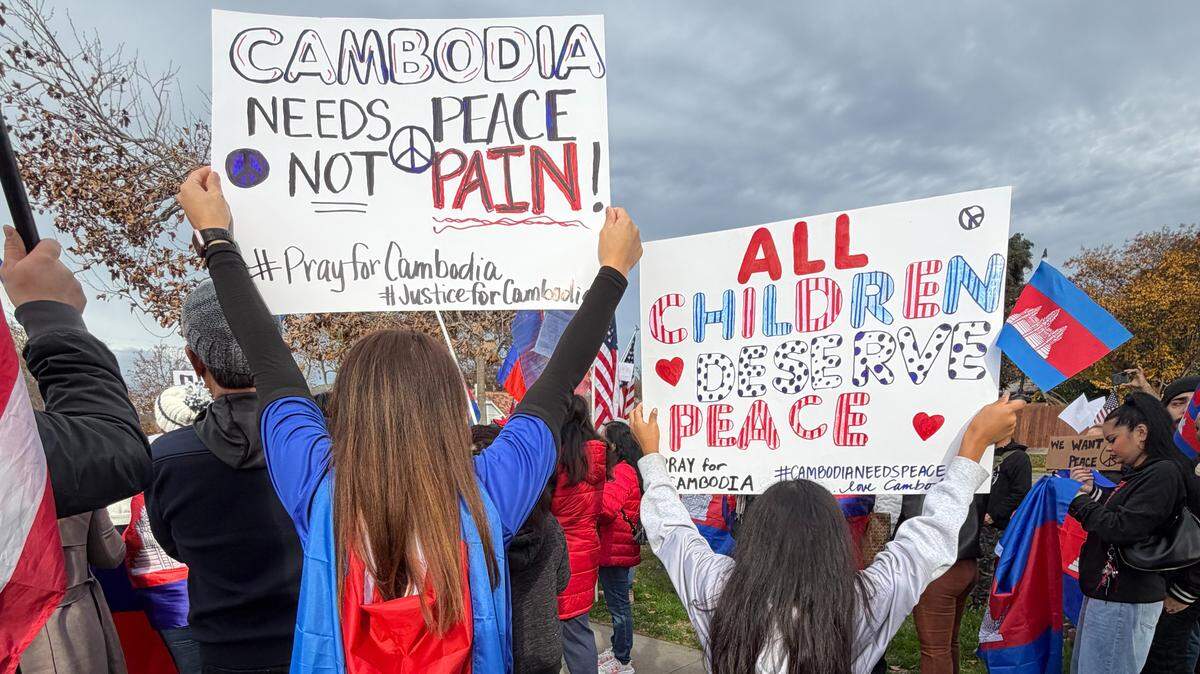
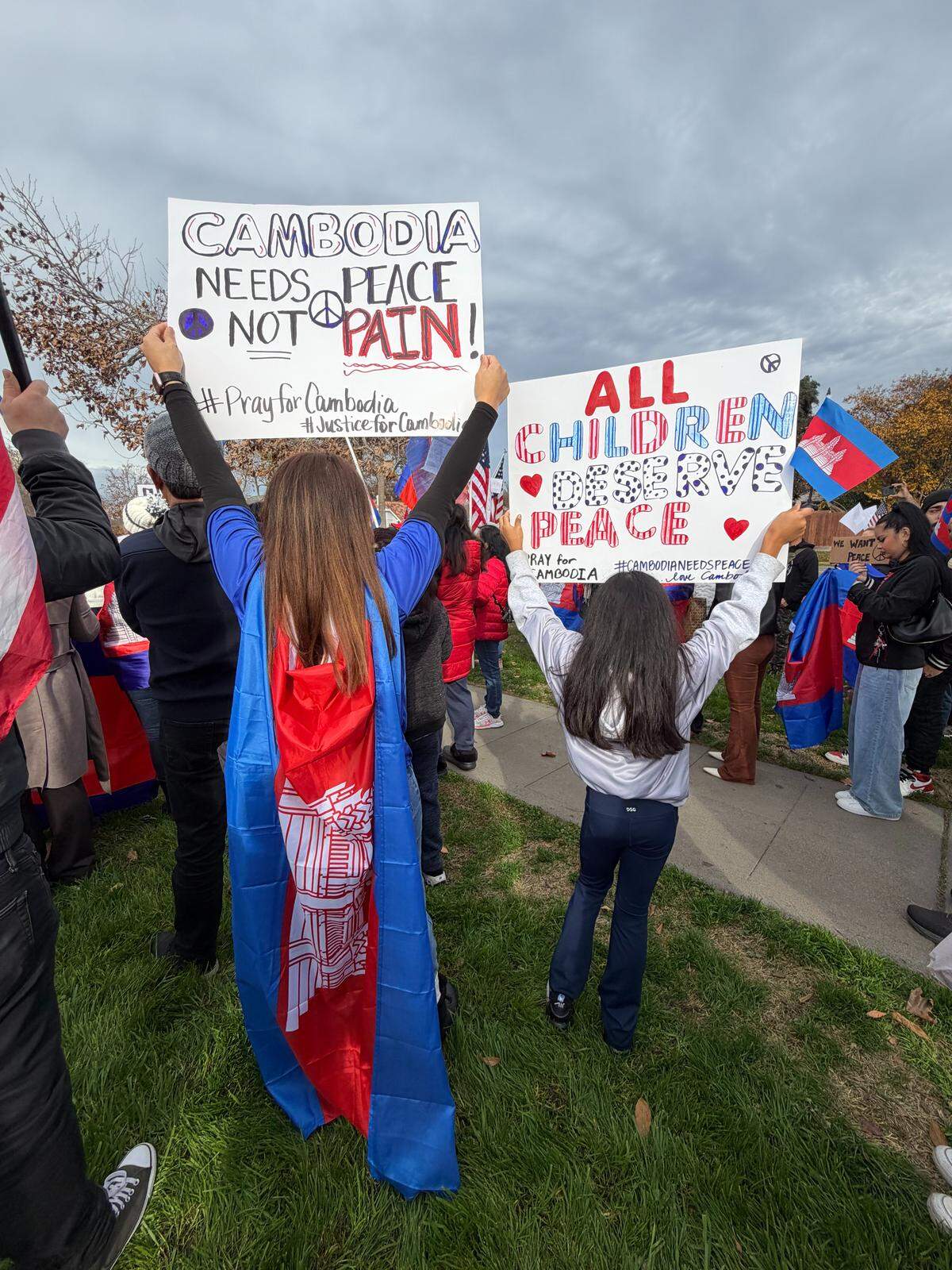
Vickie In of the nonprofit Khmer Aid Foundation helped organize a peace rally in Stockton in December to unite the community and raise awareness about the conflict.
Similar peace rallies have been held across the United States, Canada and Cambodia, with plans for another rally in front of the state Capitol on Jan. 11 from 9 a.m. to noon.
Reese said raising awareness and sending aid remain critical. She urged community members to contact their local and state representatives.
“Our ultimate goal is just to make sure that we obviously raise awareness to help raise funds so that we can help people back home,” Reese said.
Ly said it has been comforting to have the surrounding community mourn and grieve together. If people cannot donate, he said, he also appreciates them taking the time to spread awareness and learn more about what is happening between the two countries.
In echoed that message, encouraging people to research the conflict and support organizations providing humanitarian aid. She said mobilizing is new to the community and that they don’t really have the infrastructure to push for something big.
She doesn’t agree with people boycotting Thai products. She said politics aside, she just wants peace.
“I think it’s important, the more people know about our story, the more we can find ways to help make a bigger impact,” In said.
Local Cambodian organizations