Crows Landings water bill just doubled. What’s behind that?
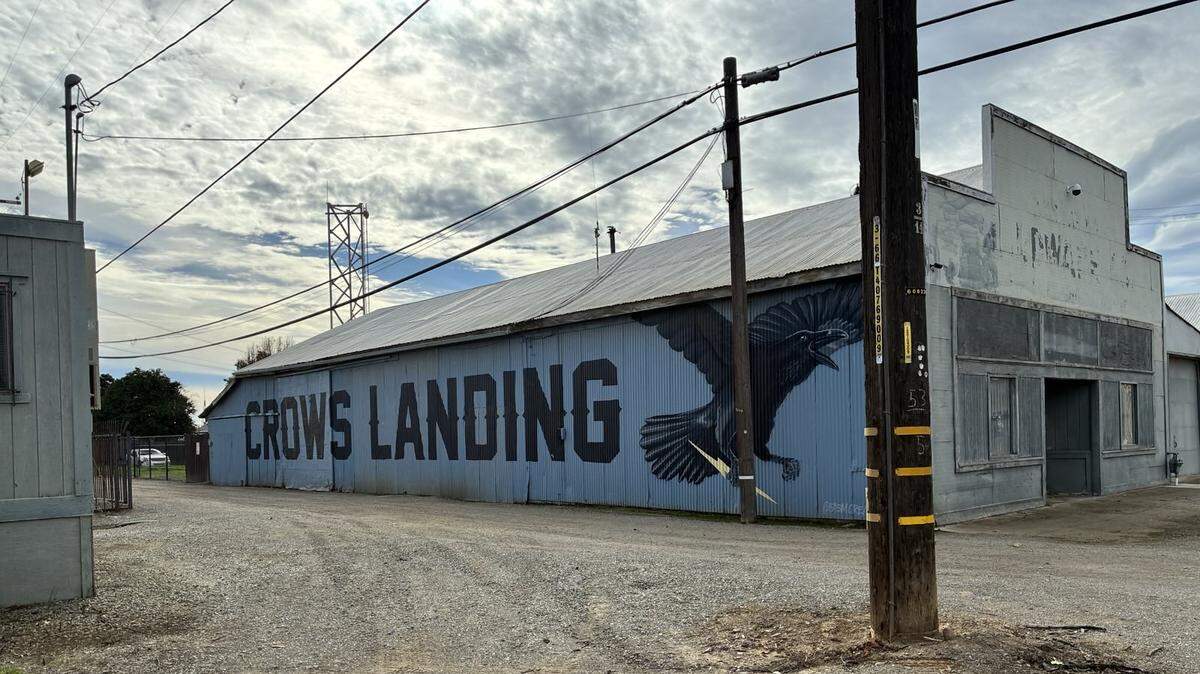
Crows Landing has relied on its small water system since 1986. For the first time in 15 years, its water rates are increasing — dramatically so. Since 2010, the water bill has stayed the same: $50 per household per month. If rate increases had stayed on pace at a little over $3 a year, the new rate of $100 wouldn’t have been shocking, but for a low-income community like Crows Landing, it stings.
Crows Landing has around 140 service connections, largely for homes but also for businesses and one elementary school. It can provide water service to a little over 500 people in the small, unincorporated town and is governed by a five-member volunteer board of residents.
The increase will help pay off debt the Crows Landing Community Service District has accrued and help pay for maintenance of the water lines.
Community-run small water systems are hard to maintain. In Crows Landing, this has resulted in multiple shut-offs and a boil-water notice that lasted 11 days in October.
Ignacio Lopez, District Manager for the Crows Landing Community Service District, said he wished they had done the rate increase earlier.
“Always with the small districts it’s a tough thing, and it’s getting tougher,” Lopez said.
The district relies on part-time workers to maintain the system. One thing that increases the difficulty of keeping up with expenses, Lopez said, was meeting the same laws and regulations that larger water systems do.
Richard Church, who has lived in Crows Landing for 28 years, said though he’s on a fixed income, he understands there’s no way to prevent the hike.
“It depends on how you like your pain. You like it spread out over time, or do you want to have it like Hammer time,” Church said. “So I don’t object to it, even though I don’t like price increases.”
Bartle Wells Associates gave residents a presentation on the need for the rate hike before the board took a final vote Dec. 17.
Larger infrastructure projects won’t be covered by the new water bill. The system relies on grants from the state or through the county to fund those. To apply for the grants, the system needs to prove it’s solvent.
Lance Perry, a member of the community service district, explained to residents at the meeting that Stanislaus County recently funded a new well but the district is seeking another grant as well.
“This grant that we’re going for is going to give us an additional well and water tank, too, besides what the county’s doing,” Perry said. “So we’re not going to totally rely on the county, either.”
Without the rate increase, the district risked a projected $50,000 shortfall next year, according to the presentation by Erik Helgeson, a consultant with Bartles Wells Associates.
“It’s at a point now where it’s critical to just keep the lights on, essentially, to raise rates,” Helgeson said. “There’s really no cushion remaining to buffer against the increases to be more incremental.”
After receiving seven letters of protest and no in-person comments against the motion to increase the rate, it passed unanimously.
The last meeting in September was a bit more contentious, with residents expressing their opposition to a 100% rate increase. Though some resistance to the increase remained, it’s a small, tight-knit community and neighbors did not want to go on the record for this story.
The community relies entirely on ground wells in a region with subsidence, meaning the ground has been sinking largely due to agricultural overpumping. The region is also known to have water quality vulnerabilities like arsenic, nitrate and chromium hexavalent.
The cost of water in Crows Landing is higher than its incorporated neighbor to the south, Newman. Newman’s rate is just over $30 a month, but the system has a considerably larger customer base at 12,300 residents, which helps control cost.
And though areas to the north, like Patterson, are expanding rapidly, Crows Landing is at capacity and does not have the ability to accommodate new residents or businesses, according to a 2024 Delta-Mendota Subbasin report.
The new rate increase was implemented as soon as the action took place. The planned rate schedule adds a $4 increase per year beginning in 2026 through 2029.
“To sum it all up, we looked at the costs and looked at the revenue you’re getting at the rates currently, and you have to identify the amount you need to get from point A to point B,” Helgeson said. “The district has been able to keep rates low and not increase rates for quite a long time, but costs have continued rising over that time period, and now your district has to act.”
This story was originally published December 26, 2025 at 12:11 PM.