Whose responsible for Modesto-area’s missing and broken sidewalks?
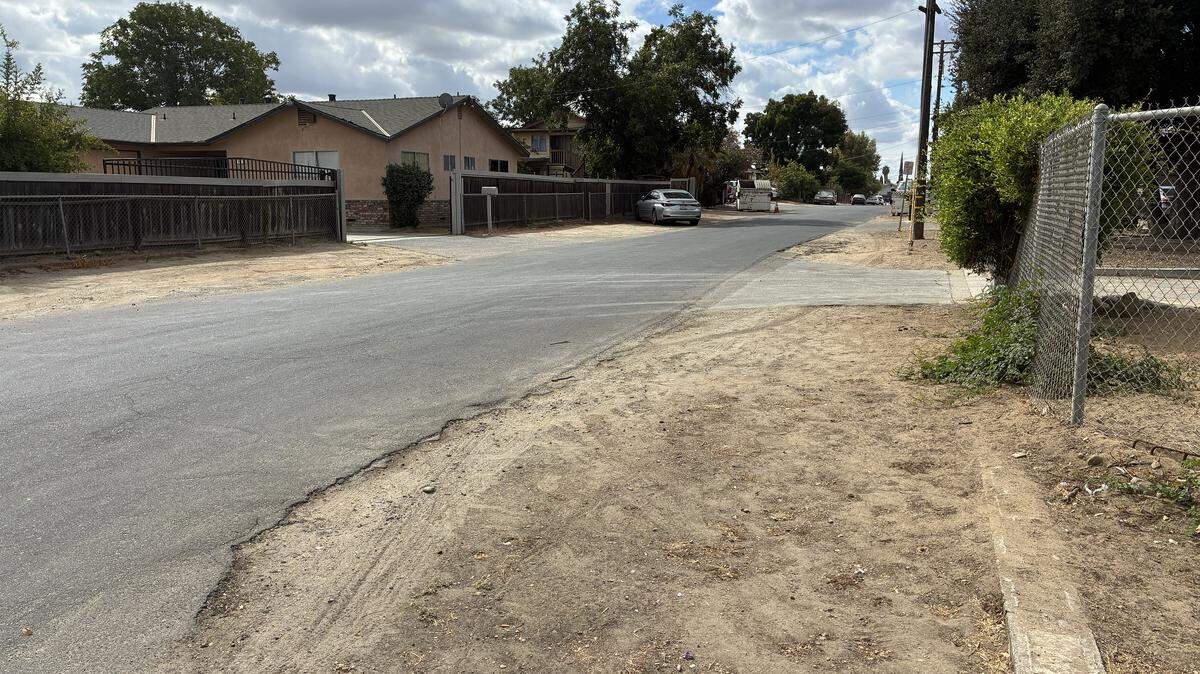
Many parts of south and west Modesto are a patchwork of city and county public works, meaning sidewalks on one side of a street but not another, or on one block but not the next.
That makes it challenging for those who use mobility devices or are visually impaired to get around safely. It also makes it harder to know whom to complain to.
One grievance filed with the city in March stated: “The absence of sidewalks on Ryder Way poses a significant threat to public safety and violates the principles of the Americans with Disabilities Act.”
The grievance, about an area near the airport neighborhood, was closed as “remediated” but an asterisk showed this was because it was not within city limits.
Christine Alger, an ADA coordinator for Modesto, said that though these grievances are closed, she often refers them to the county for follow-up. She’ll also send a letter to the grievant explaining what’s been done.
Alejandra Ramirez, a resident of north Modesto, said she’s been going back and forth between the county and city for years, battling over who is responsible for the patch of dirt on the side of her parents’ property at Spencer and California avenues in west Modesto. The area is often used as a parking space for a car carrier, which blocks where her parents, who have limited mobility, can go. She wants a sidewalk put in to resolve the issues.
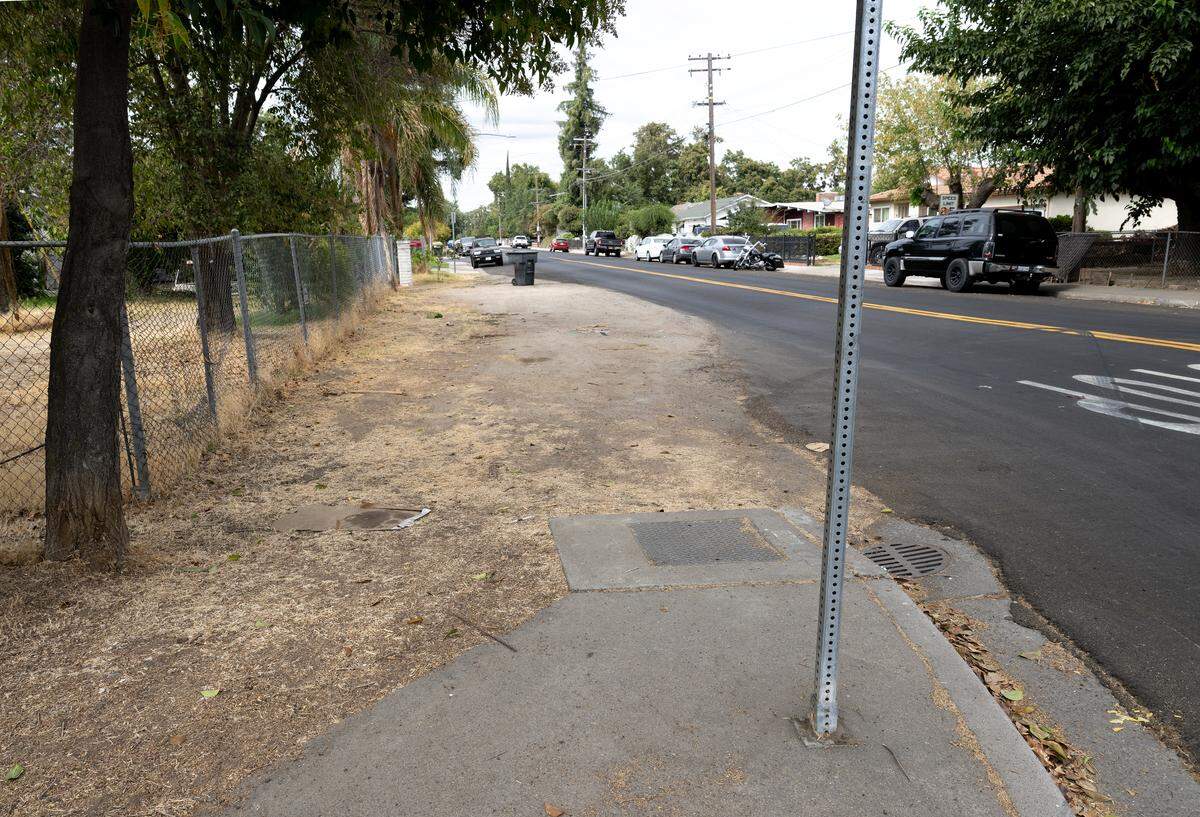
“It’s been dragging,” Ramirez said. “My dad has also gone and talked to city staff and been told ‘It’s going to get done — it’s just going to take a couple of years’ — nothing has been done. They’ve been at that property for 23 to 24 years.”
Toby Wells, the engineering services director for the city, said there are hundreds of these sections abutting county lines throughout the city, not just in south and west Modesto.
District 2 Councilmember Eric Alvarez spoke with Ramirez after her public comment at the Aug. 6 City Council meeting.
About Ramirez’s parents’ home specifically, he said, “It’s located within the city limits, which is kind of frustrating, because it’s surrounded by county islands or unincorporated county pockets to the east and the south,” he said. “It’s leading to inconsistencies throughout that neighborhood in terms of the infrastructure.”
Mohamed Rashid, founder of Advocacy is Success, a disability advocacy group, said the areas where he sees a complete lack of sidewalks tend to be in west Modesto or the rural county regions. When he navigates these sections with his wheelchair, he’s extra cautious.
“I had to make sure I was aware of my surroundings because there’s no sidewalk for me to wheel on, so I was basically wheeling on the side of the road,” Rashid said.
Most additions of sidewalks and gutters happen as part of larger infrastructure projects, because the cost to go from dirt patch to full sidewalk and gutter system is expensive.
Wells said that before recent influxes of funding like Measures L and H, there really wasn’t any funding to cover upgrades. Now, the city is looking to address these areas on a case-by-case basis, weighing safety and cost for repairs — but it often doesn’t learn about these problems until they’re raised by residents like Ramirez.
Alvarez said he has asked city staff to identify these small sidewalkless areas throughout the city so that they can come up with a comprehensive way to address them. Because the area that Ramirez’s family lives is between a park and a school, Alvarez said it’s a public safety issue and he plans to make it a priority in his district.
“I continue to thank them and welcome these issues being escalated to my office,” Alvarez said. “Because I am from the district, I come from a county pocket.”
Other Modesto areas with ADA issues
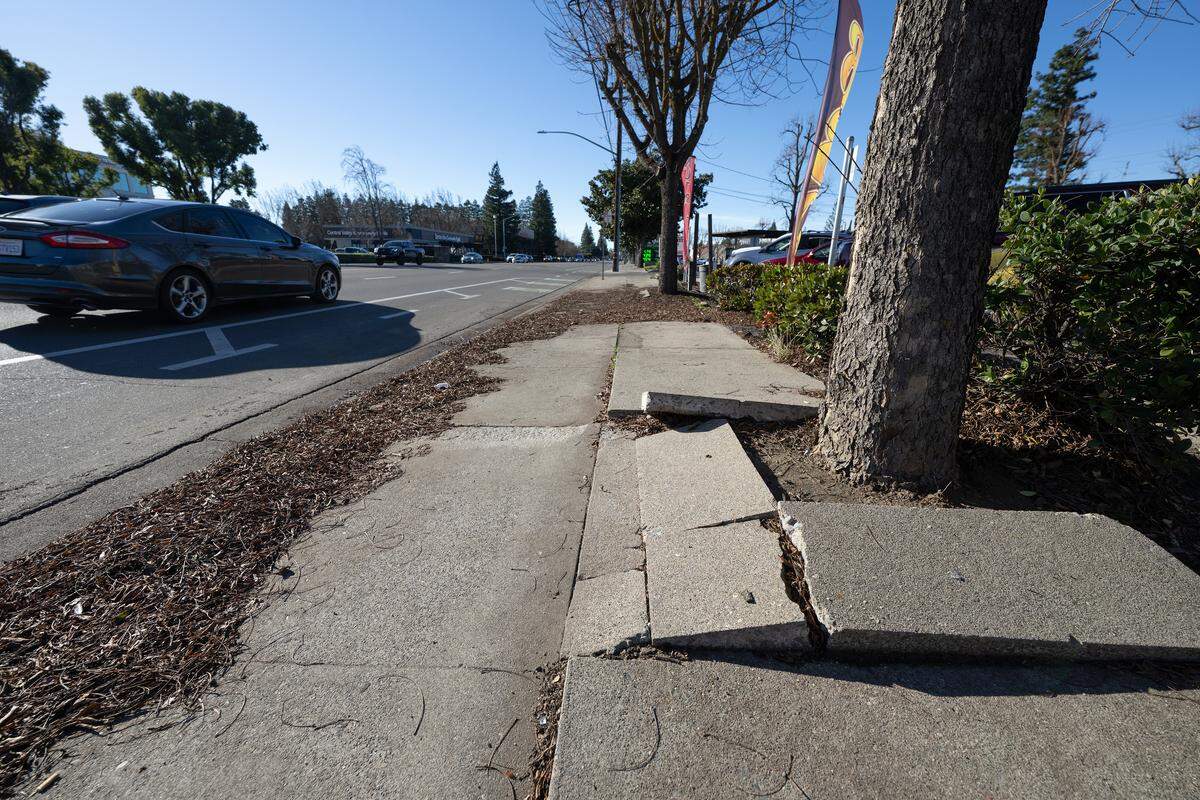
Rashid said the majority of sidewalks in the city are uneven, some to the point where he detours his planned route to make sure he’s on sidewalks.
Ruber Berdeja started using his mobility scooter a year ago and immediately ran into issues trying to navigate his northwest Modesto neighborhood.
“I used to see other people in wheelchairs and they were always in the street and I wondered why when I used to work, and now I know,” Berdeja said. “I know other people probably complained about it, but they have not done anything.”
On many streets, there are no sloped curb cuts. Some sections have a slope further along the sidewalk, but for someone in a wheelchair, that means they may have to go into the gutter or into the street.
Isaiah Siordia, executive director of Modesto-based Visually Impaired Persons Support, said there are multiple issues with Modesto’s sidewalks. For one, there are areas where they are missing the bumpy yellow surfaces called “truncated domes” that help alert visually impaired people that they are entering a traffic area.
“The transition from the road to the street is so smooth that you almost never notice that you’re in the middle of the street,” Siordia said.
Another issue is poorly maintained city trees that buckle the sidewalk.
“Instead of properly repairing it by removing the sidewalk and cutting down the root that’s the problem, what they often do is they just kind of patch it with asphalt and that’s pretty dangerous when you’re using a white cane,” Sioridia said
Mauricio Molina, assistant technology instructor at Visually Impaired Persons Support, said he used to live in an area near Floyd and Roselle avenues where broken sidewalks were left unrepaired.
A few years ago, Rashid walked with County Supervisor Channce Condit through downtown Modesto to show the issues he faces every day. “I did it back in September 2021 and yet none of the sidewalks have been fixed,” Rashid said.
The grievance process for Modesto, along with its transition plan, can be found on the city’s website.
What are the county and city doing about this?
Help is on the way in some sections of south Modesto, in the areas of Brete Harte and Parklawn funded by the American Rescue Plan Act.
Danny Mauricio, a Public Works engineer for Stanislaus County, called the funding a “once in a lifetime” opportunity to address needed improvements. Condit helped secure the funds for the projects.
“Both of these, what we call ‘county pockets’ because they’re surrounded by city limits, will be receiving curbs, gutters, sidewalks, storm drain infrastructure as well as widened roads,” Mauricio said.
Sections of Sylvan and Coffee, Colorado/Rouse and streets in Hickman, Riverbank, Ceres, Turlock and other unincorporated regions will also be addressed.
Mayor Sue Zwalen said as of 2022, Modesto was ranked the highest for fatal and serious injury crashes for a city of its size. Because of this, a project started last year called “Safe Streets For All.” It identified high-traffic roads it intends to improve for safety purposes, but also for ADA compliance.
Richard Virgo, an engineering designer for Alta Planning who helped draft plans to increase safety in dangerous areas for the city, said some stretches are not ADA compliant, such as El Vista Avenue from Scenic Drive to Yosemite.
“Someone in a wheelchair would have to go into the dirt or go on the road in order to go around– that’s not great,” Virgo said. “So what we’re proposing here is to widen the sidewalk on the east side of El Vista in order to fit a shared-use path.”
Modesto prioritized updates on H Street from Fifth to First, Rumble Road from Prescott to College, Coffee from Scenic to Orangeburg and other “high priority” areas, but this will all depend on funding that hasn’t yet been approved.
Alvarez said he’s trying to figure out a way to be creative in tackling the concerns, starting with the list of areas similar to the Ramirez family’s throughout the city.
“Once I have a comprehensive list, we can identify a few locations and tackle them,” he said.
Rashid said the conditions of the sidewalks affect not just the disabled community, but the community at large.
“I would like more action and less just talking and saying, ‘Oh, we’ll fix it,” Rashid said. “Actually fix it.”
This story was originally published September 10, 2025 at 11:31 AM.