Red light cameras return to Modesto. Here’s where and how much a ticket will cost
Faced with data that showed its streets were among the most dangerous in the state, Modesto’s City Council voted unanimously Tuesday to bring back red light cameras.
The deal approved by the council secured just under $3.7 million over five years to the Mesa, Arizona-based company Verra Mobility to install cameras at 10 intersections across Modesto.
The new cameras will be placed at the following intersections:
- Briggsmore Avenue at Coffee Road
- Sylvan Avenue at Coffee Road
- Briggsmore Avenue at Carver Road
- Pelandale Avenue at Carver Road
- Oakdale Road at Briggsmore Avenue
- McHenry Avenue at Standiford Avenue
- Oakdale Road at Scenic Drive
- Carpenter Road at Kansas Avenue
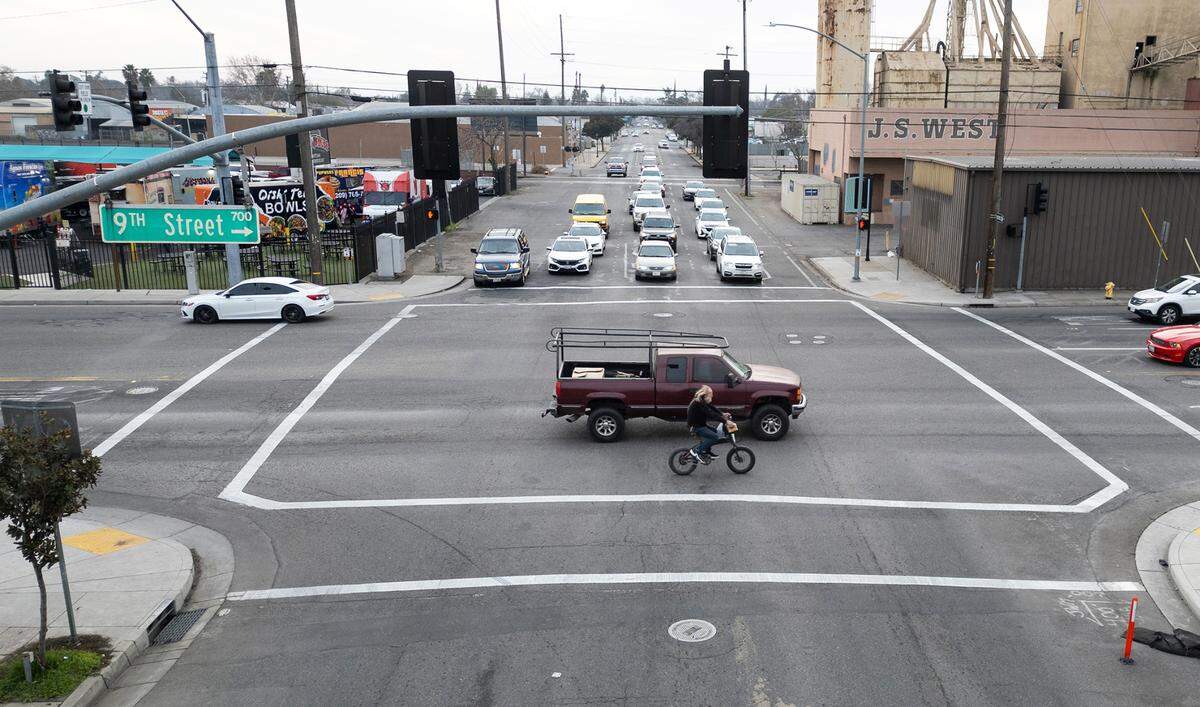
- Ninth and G streets
- Yosemite Boulevard at South Santa Rosa Avenue
Data that informed the council’s decision came from the state Department of Traffic Safety. It showed Modesto ranked No. 1 among similar cities for total injury, fatal, alcohol-related and nighttime collisions in 2022.
Modesto also ranked among the top three out of 60 cities of similar size for total injury and fatal collisions for five consecutive years: 2017-21. Out of those five, Modesto ranked No. 1 three times.
According to the Insurance Institute for Highway Safety, traffic cameras reduced red light violations by 40% at the intersections where they were installed.
“I think that we have to try every tool in the toolbox to make a profound difference. It’s just horrific — these crashes and the results of them,” said Mayor Sue Zwahlen, who worked for decades as a nurse in the Doctors Medical Center emergency department. “So we’re going to try to do everything possible.”
Red light cameras are not new to Modesto; the city had them at several intersections from 2004 to 2014. But once the city’s contract ended with their manufacturer, the program dried up due to a lack of funding and staffing.
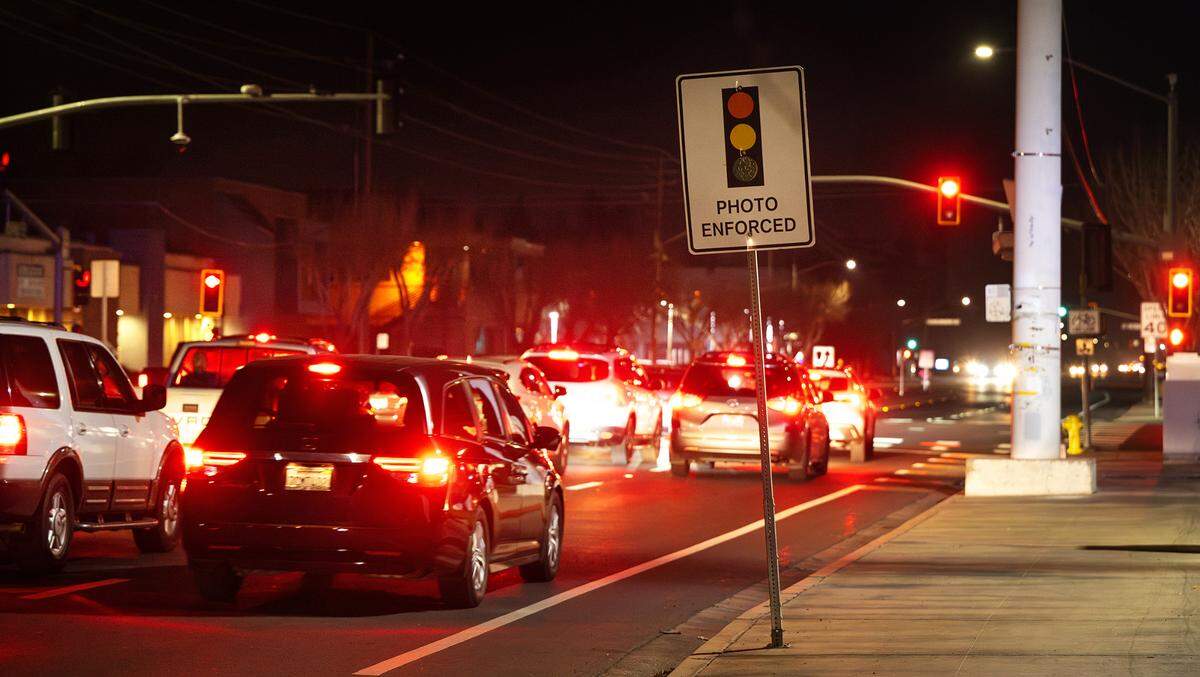
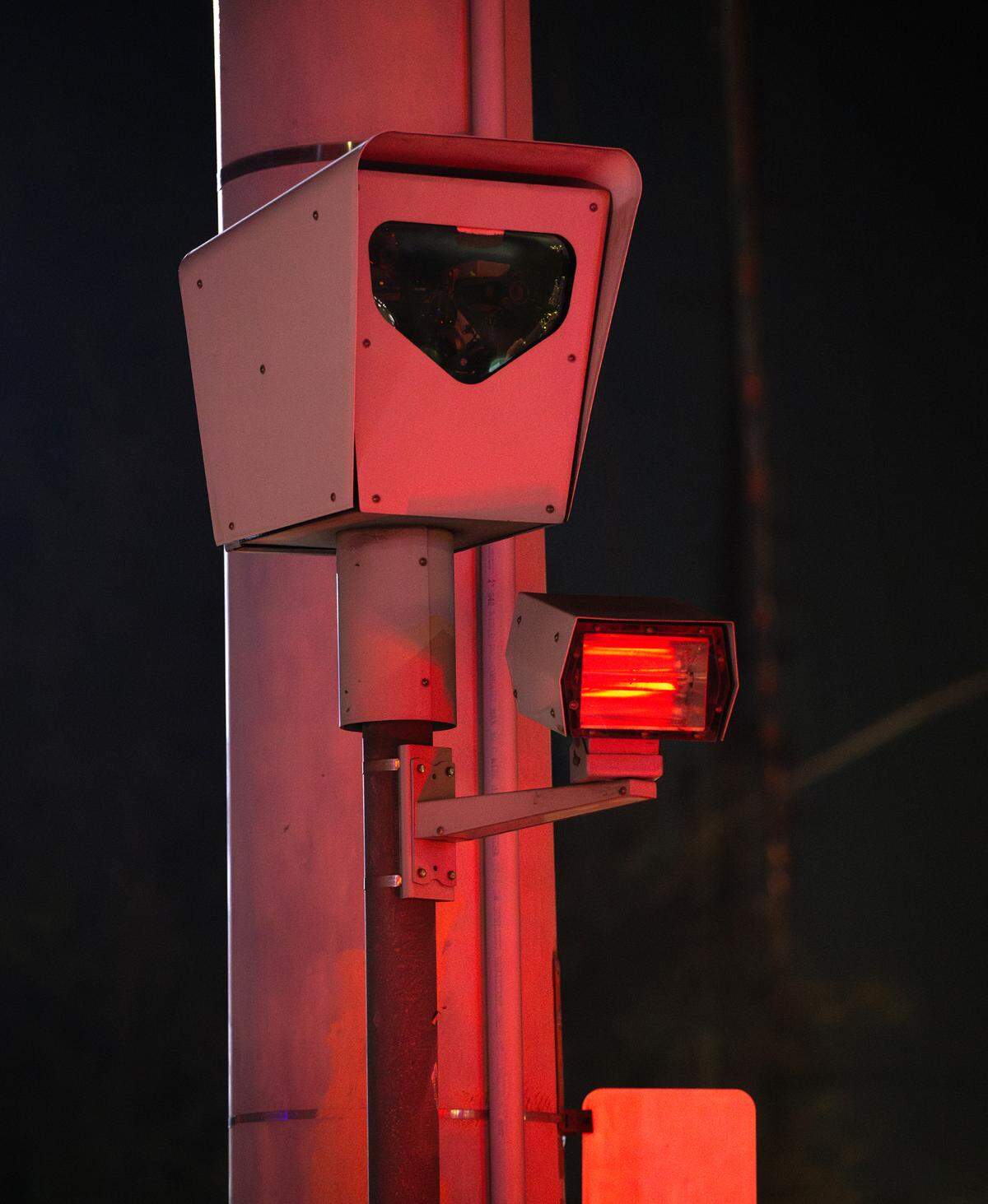
The infrastructure for many of those cameras still exists at several intersections. However, the cameras are nonoperational. Whether or not existing infrastructure would be used for the new cameras would depend on if it’s compatible with the new technology, according to police Lt. T.J. Moffett.
New system gets more than photographs
The new cameras can take both video and still photos. Moffett said this will provide officers reviewing the images with more context and avoid the citation from being thrown out if a driver chooses to challenge it in court.
“I think the benefit of the new system compared to what we had previously, is we now have a video clip to really try and gain more information about what is causing this violation, rather than just a still photo that doesn’t tell a story,” said Moffett.
Moffett said this will allow officers to enforce based on the type of crashes they’re trying to prevent, which mainly are broadside collisions. There were 39 broadside collisions in Modesto in July alone, according to the MPD.
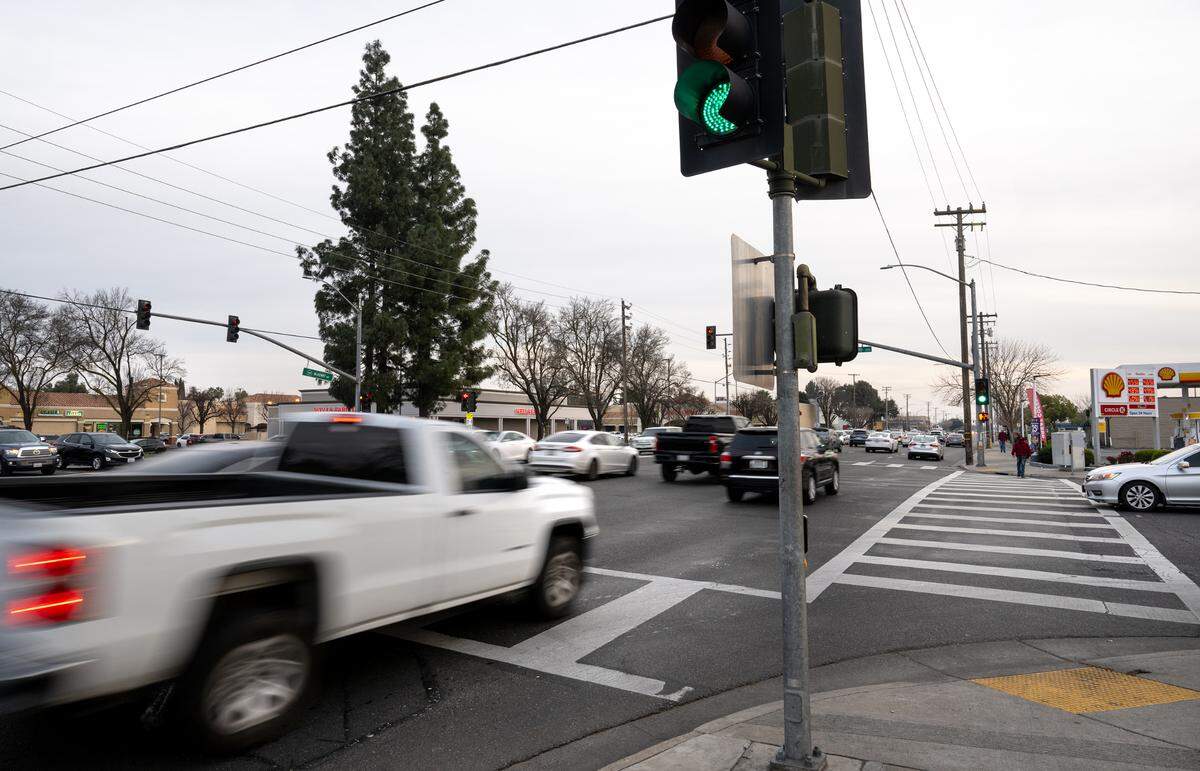
The new system allows the cameras to monitor individual lanes, which can “tailor” certain offenses. The old system would often take photos of drivers slowly turning right on red when it was safe to do so or would cite a driver stuck in the middle of an intersection during traffic.
“That really isn’t the type of driving we’re trying to deter,” Moffett said. But he did add that drivers turning on red at about 10 mph without stopping might face a citation. That discretion, he said, would need to be a clear policy that’s communicated to those reviewing images.
When a car suspected of running a red light is identified by the camera system, it takes a picture and video of the vehicle, its license plate and its driver. These images are reviewed either by sworn officers or by civilian police investigators.
If the reviewer thinks a citation is warranted, the driver receives it the mail. The citation will include a link to the photos and video taken of them, which they can use to decide whether to pay the fine or fight it in court.
Citations and revenue
The citations will cost about the same price as they did a decade ago, which is $480. Between 70% and 80% of drivers end up paying their citations.
According to Moffett’s presentation to the City Council, 27 cities in California use Verra’s systems and 26 of them are “revenue-positive.”
But he said the cameras are not going to be revenue-motivated and MPD’s intent with them is to improve public safety.
“Our goal is voluntary compliance. This is not intended to be a revenue-generation tool. That’s not the spirit of what we’re looking at,” the lieutenant said. “The goal here is to thoroughly educate, educate the public, including a bigger social media campaign. We’re not trying to hide where these cameras are at. It’s not meant to be a trick.”
Any money made that exceeds the cost of the program will be deposited into the Traffic Safety Fund, according to the city.
The program aims to start issuing citations in six months, with one of the months being a 30-day warning period to inform drivers on where these cameras are.
This story was originally published August 13, 2025 at 3:20 PM.