A different type of salmon turned up on the Tuolumne River. Why it’s a good thing
The latest salmon migration up the Tuolumne River brought cheer to experts who watch over the fish.
That’s because it happened in spring this year on a waterway where fall-run salmon predominate. That diversity could help the species survive amid the debate over how much water should be diverted to farms and cities.
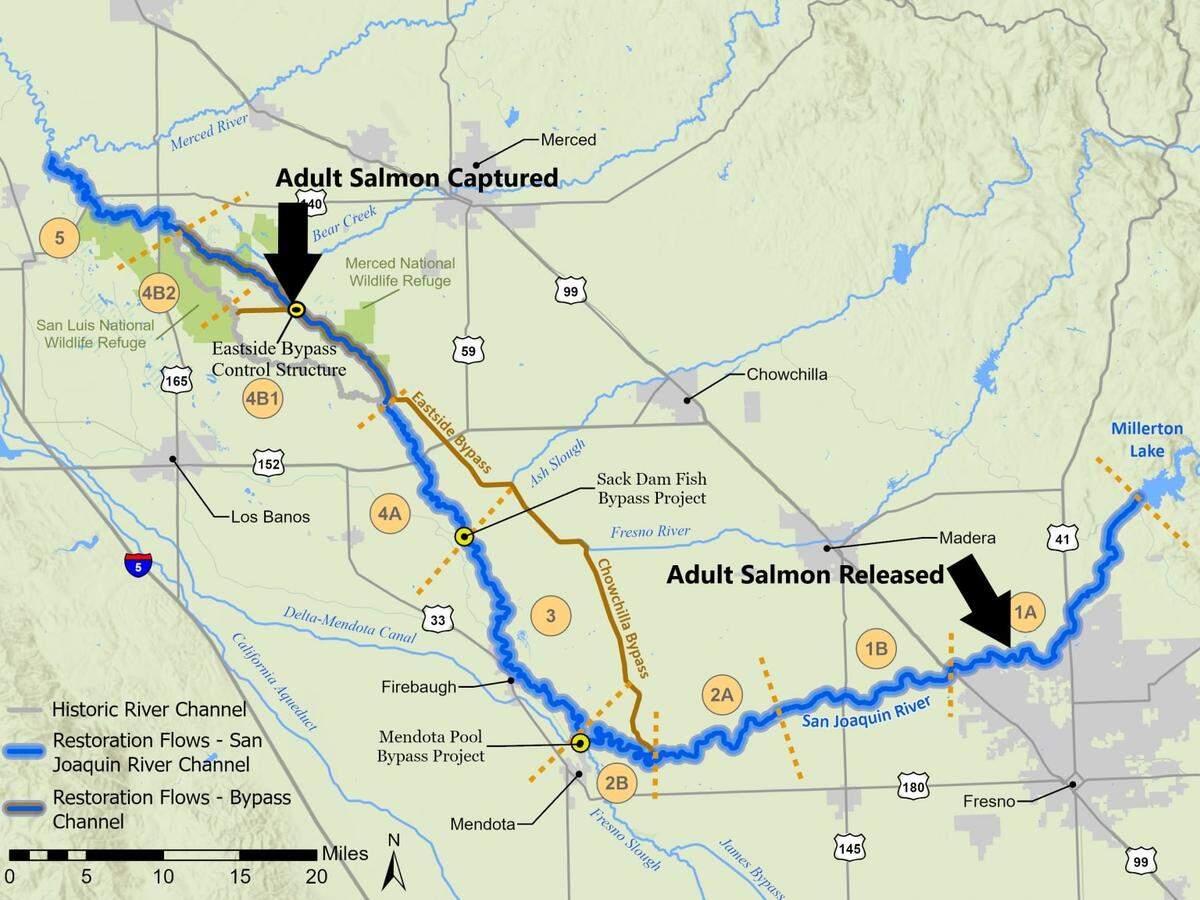
Most of the 1,200 or so spring-run salmon had been born in a Fresno-area hatchery that is part of the San Joaquin River Restoration Program. The Tuolumne is a tributary to the larger waterway, as are the Merced and Stanislaus rivers.
The spring-run strays were found in May in a spawning area near La Grange, after spending two or three years in the Pacific Ocean. It is monitored by the Tuolumne’s three main diverters — the Modesto and Turlock irrigation districts and San Francisco.
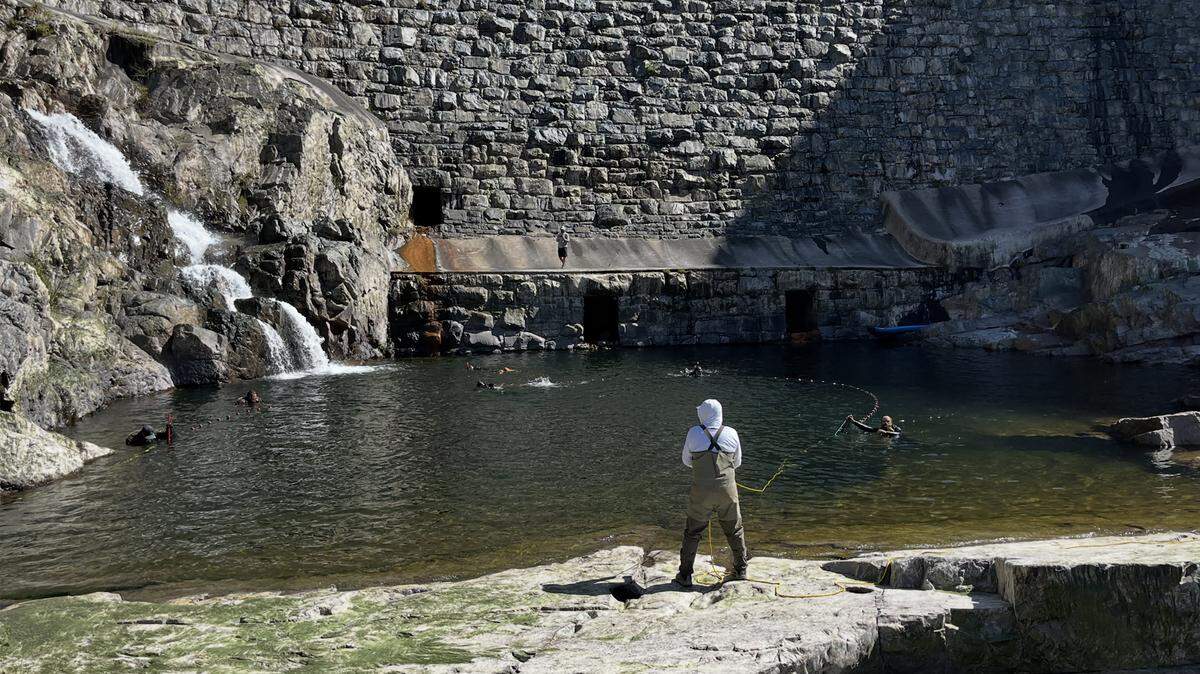
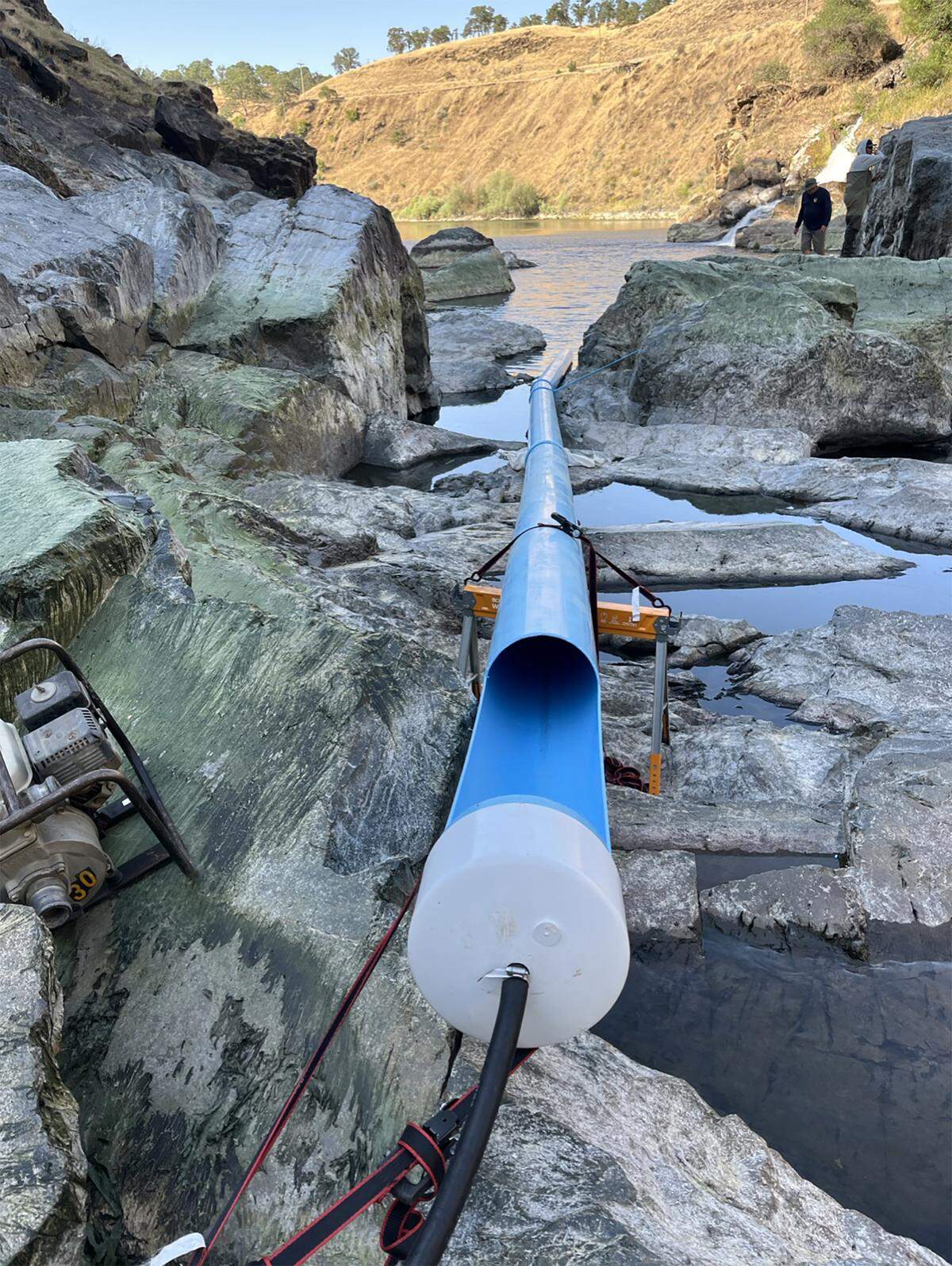
The fish got stuck in an isolated pool where the water would be too warm for laying eggs in September and October, so the partners moved them about 200 feet downstream. Employees of the California Department of Fish and Wildlife did this with a plastic tube about 10 inches in diameter.
“We were pleasantly surprised by the number of spring-run salmon identified in the Tuolumne River,” TID General Manager Brad Koehn said in a July 21 news release, “and it was impressive to see the way district staff and state and federal fishery agencies worked together ....”
The effort won praise from the Tuolumne River Trust, which has long battled the diverters over water levels.
“These are really beautiful fish,” Policy Director Peter Drekmeier said. “They’re not quite mature yet, but they’ll be ready to spawn around September.”
He spoke at a July 30 meeting of the Stanislaus County Water Advisory Committee. It holds bimonthly sessions on various issues involving surface supplies and wells.
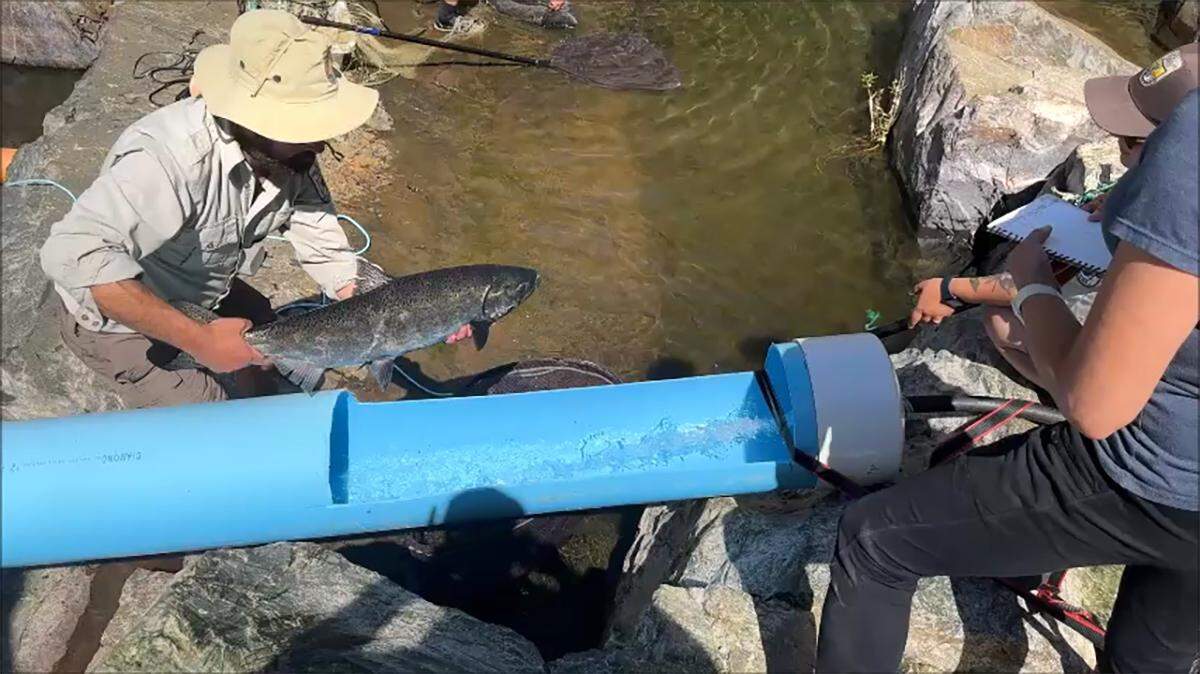
The fish at issue are chinook salmon, which swim off the Pacific Coast in an arc from California to the Bering Sea. Most of the Tuolumne fish return to spawn from October through December. Their babies head out in spring to repeat the process. The fish contend in both directions with reduced river flows, pollution, nonnative bass and other hazards.
Drekmeier said the Tuolumne had 100,000-plus salmon in the time before dams. It dropped below 1,000 near the end of the 2020-22 drought.
The Trust says only about 10% of the natural flows are left in such times, and just 20% during average years. The group and its allies have urged at least 40% for all three rivers feeding the San Joaquin.
The diverters have offered a modest boost in reseservoir releases but say anything more would harm their customers. They also have helped fund non-flow measures, such as restoring the gravel beds where salmon lay their eggs. One such project was completed last year in the spot where the spring-run salmon paid their surprise visit. The TRT had a similar project just downstream.
The rescue happened at the foot of La Grange Dam, which has been the eastern end of the salmon range since its 1893 completion. The dam at times has water cascading down its face as part of controlled releases, including this past May. The spring-run salmon got trapped when the flow decreased.
MID and TID store most of their water about two miles upstream in the much larger Don Pedro Reservoir. The releases for salmon happen at La Grange under state and federal rules. San Francisco taps the Tuolumne at Hetch Hetchy Reservoir, just inside Yosemite National Park, but sends some down to La Grange for the fish.
Reasons behind the strong spring run
The Tuolumne is monitored with the help of FishBio, a consulting firm with offices in Oakdale and Chico. Andrea Fuller, vice president and senior biologist, cited a few reasons for the strong spring run in the news release.
One was the very wet 2023, which helped fish get to and from the Pacific. Another was the closure of commercial fishing of adult salmon off California, resulting from the dry 2020-22. The diverters had enough stored water this spring to increase the “pulse” flow that benefits both departing and returning chinook.
The agencies also credited last year’s spawning gravel project at La Grange, which also repaired long-ago damage by gold dregers. It was the first of about $80 million in upgrades they plan over a decade, guided by the nonprofit River Partners.
“Our commitment to science-based, data-driven measures is making a real difference on the Tuolumne River,” MID General Manager Jimi Netniss said in the release.
The San Joaquin River Restoration Program involves the 152-mile stretch between Friant Dam and the Merced River confluence. It had gone dry almost every year because of diversions to farms as far south as Kern County. The program launched in 2008 and is funded by irrigators and state and federal agencies.
The Fresno Bee reported that 448 returning salmon were counted in June at a monitoring station in Merced County, the most ever for the program. The tally does not include those that hung a left at the Tuolumne River.
The San Joaquin program includes the hatchery that produced most of this year’s spring run in the Tuolumne. Before being released, these fish have one of their smaller fins clipped off so they can be distinguished from those that hatched naturally. The Tuolumne does not have its own hatchery. The Merced does have one, at Snelling.
Experts say spring-run and fall-run salmon can co-exist on the same river as long as it has enough habitat. This includes restored floodplain forest where young fish get shelter and food while gaining strength for the ocean journey. They are especially extensive in and near Dos Rios Ranch State Park, where the Tuolumne and San Joaquin join.