
Advocacy becomes life for mother of murdered woman
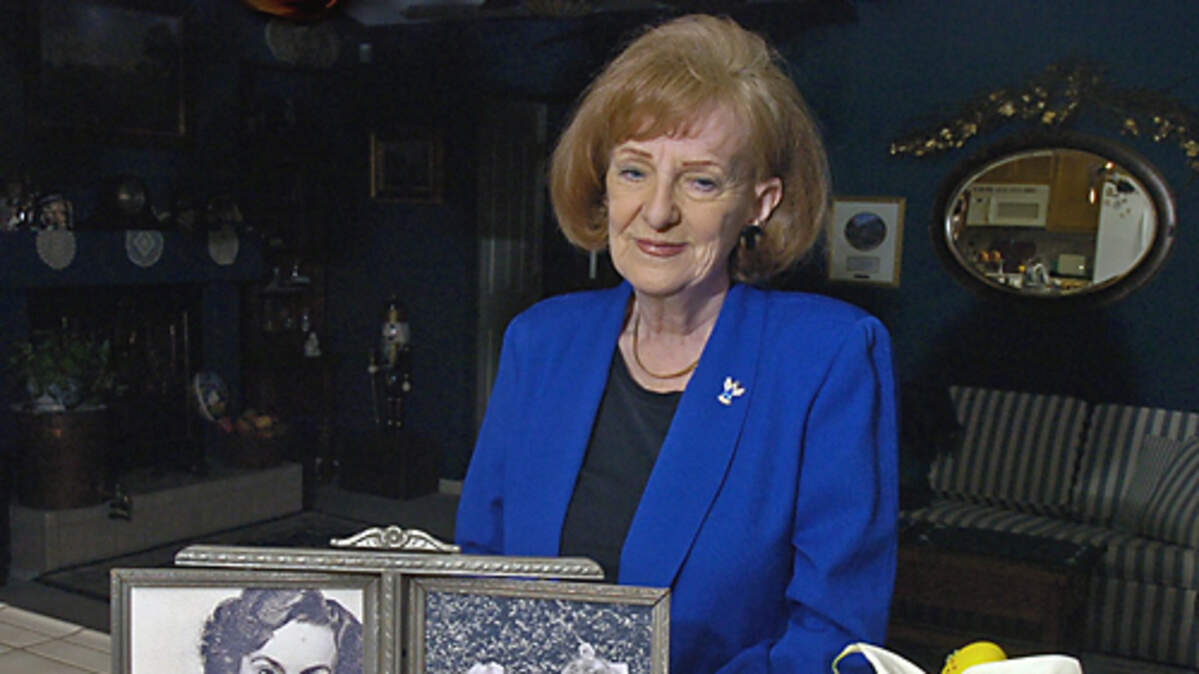
March 25, 1988. The day that split Jacque MacDonald's life into pieces.
"I think of my life in two segments," she said this week while sitting in her home in Merced. "The happy one and the one after."
MacDonald was living in Minnesota when she got the call that day. Her husband phoned to say MacDonald's 32-year-old daughter had been found dead in a hallway in her north Modesto home.
The body of Deborah Ann Whitlock was discovered by her husband, Harold Whitlock, who was at a bachelor party when his wife was stabbed repeatedly and raped. The couple's 3-year-old daughter slept through the attack.
MacDonald flew to Modesto for the funeral and decided to do whatever she could to help solve her daughter's case. And the only way to do that, she determined, was to move to the valley and keep her daughter's face in the public eye.
As soon as she got home from the funeral, she called producers of the television program "Unsolved Mysteries."
Everything became an opportunity to remember "Debi" or a surface on which to plaster her face: billboards, buses, pizza boxes and shopping carts. Talk shows and true-crime programs. Along the way, MacDonald became an advocate for victims' rights and a woman whom law enforcement agents credit with helping solve her daughter's murder, nearly nine years after it occurred.
"I was never like this. I was a little shy, never pushy, quiet," MacDonald said. After Whitlock's death, the grieving mother became a master publicist who wouldn't take no for an answer. "People thought I was a nut. I thought of myself as a dedicated mother."
MacDonald pored over credits of television shows that might air her daughter's case to find out who was in charge of selecting which cases to air. She phoned stations to get to know head producers. One, she found out, drank tea daily. So she sent him a china cup and tea bags.
"A lot of them would tell you, 'We'll call back in a few hours,' " she said. "I would sit there waiting by the phone. But I would never hear back."
Persistence pays off
So she learned just to call. And call. Every few months, she phoned producers trying to get the story out. She was on "every little bitty show in Fresno." Sometimes it took years, but a number of national programs, including NBC's "Dateline," "Unsolved Mysteries" and "America's Most Wanted," picked up Whitlock's story.
The television campaign was just one part of her attack. Noticing billboards while driving down the highway, she realized how many people would see her daughter's face if she could get a sign. It took several years, but she worked with a Marin County group, Citizens Against Homicide, and eventually succeeded.
One night, after getting a pizza delivered, she got the idea to ask Pizza Hut to put fliers of Whitlock on their boxes. The company agreed and paid for the fliers.
"Everywhere I was, all I was thinking about was, where can I put her face?" MacDonald said. "I just needed to keep her face out there. I figured someone would eventually get sick of it and come forward, even if it was just to shut me up."
She even called the Boy Scouts, who agreed to deliver fliers from Modesto to Merced.
"Every time we got publicity, it gave me hope," she said. "I thought, 'Maybe this is the one time somebody will actually come forward.' "
Taking to the airwaves
One day, watching television, MacDonald got the idea to create a local television show for victims, featuring unsolved cases. The program started in 1996 and was co-hosted by Assyriavision's John Kanno. It featured a call-in segment for victims and suggestions about resources. MacDonald ultimately became the sole host. In 2000, the show was picked up as a radio broadcast in the Turlock, Merced, Mariposa and Ma-dera areas.
More than 10 years after it began, "The Victim's Voice" can be seen in about 60 communities throughout California. Several years ago, MacDonald said, Comcast decided to air the program for free.
Her efforts helped bring Whitlock's killer to justice, Assistant Modesto Police Chief Mike Harden said. Harden was the supervisor of the homicide unit when detectives got the break in the case, an informant's tip and testimony, that led to the arrest in Arkansas of Scott Avery Fizzell in January 1997. Fizzell pleaded guilty to Whitlock's murder and is serving 31 years to life in Calipatria State Prison.
"Jacque's involvement was absolutely critical," Harden said. "We had somebody come forward with information we were later able to corroborate. They said they came forward because they always saw Debi's picture. This person finally had a shake-up of his conscience. It probably wouldn't have happened without Jacque's perseverance."
Survivors of tragedy can respond in many different ways, said Christine Ward, executive director of the Crime Victims Assistance Network Foundation in Sacramento.
"Some people will respond by turning away from the situation and just not wanting to ever look back," Ward said. "Some other folks will take a different approach, getting very active in their communities or active in politics to try to make change. Everybody grieves differently."
Ward said MacDonald has distinguished herself as part of the second group.
"She wanted to inform and educate other victims of violent crime about what programs and resources are available. She wanted to get the word out that you're not alone," she said. "This is all in memory of her daughter, but she deserves some credit. If she weren't out there doing this, people wouldn't be getting all the help they are."
Awarded for her work
MacDonald has received awards from the U.S. attorney general's office and last weekend from the Carole Sund/Carrington Memorial Reward Foundation for her efforts on behalf of victims. Still, MacDonald said, her work is not done. She has been trying since 2000 to work with legislators to make it a crime in California to rape someone after murdering her, which is what happened to MacDonald's daughter. Although necrophilia is against the law, there's no penalty for rape after murder.
In 2006, former Assemblywoman Barbara Matthews, D-Tracy, carried a bill to send this type of criminal to prison for life without parole. After several adjustments, the bill would have added three to eight years to a murderer's sentence. The bill cleared the Public Safety Committee only to die in the Assembly Appropriations Committee.
MacDonald is working with Assemblywoman Cathleen Galgiani, D-Livingston, to resurrect the legislation. Galgiani, according to spokesman Robin Adam, is trying to find a way to present the bill so that it doesn't meet the same end this time. The state's prison population crisis, however, has made it a challenging time to pass a law that would lengthen sentences, Adam said.
Despite all the support and recognition, and despite the conviction of her daughter's killer, nothing has diminished MacDonald's loss.
"You never stop missing and you never stop loving, and that equals grief," MacDonald said. "You just learn how to present yourself and deal with it. But in my heart, it's still yesterday."
"The Victim's Voice" airs on Modesto Cable Access, Channel 26, at 8 p.m. Thursdays and 7:30 p.m. Fridays. In other areas, check listings for times and channels.
Bee staff writer Emilie Raguso can be reached at eraguso@modbee.com or 578-2235.
This story was originally published March 22, 2008 at 7:58 AM with the headline "Advocacy becomes life for mother of murdered woman."