Modesto unveils options for dreaded Briggsmore interchange. How to view them and comment
Traffic engineers suggest new Highway 99 crossings to take pressure off the convoluted Briggsmore Avenue interchange.
The city of Modesto hosted a meeting Tuesday, Feb. 18, to get comments on about a dozen initial design options. New bridges, underpasses, roundabouts and other elements are in the mix.
They would aid not just car and truck drivers. State and federal funding sources recently have stressed the needs of pedestrians, bicyclists and transit riders.
The Sacramento office of AECOM is doing the study on a $6.38 million contract with Modesto. Funding is not yet in hand for construction, which could top $100 million.
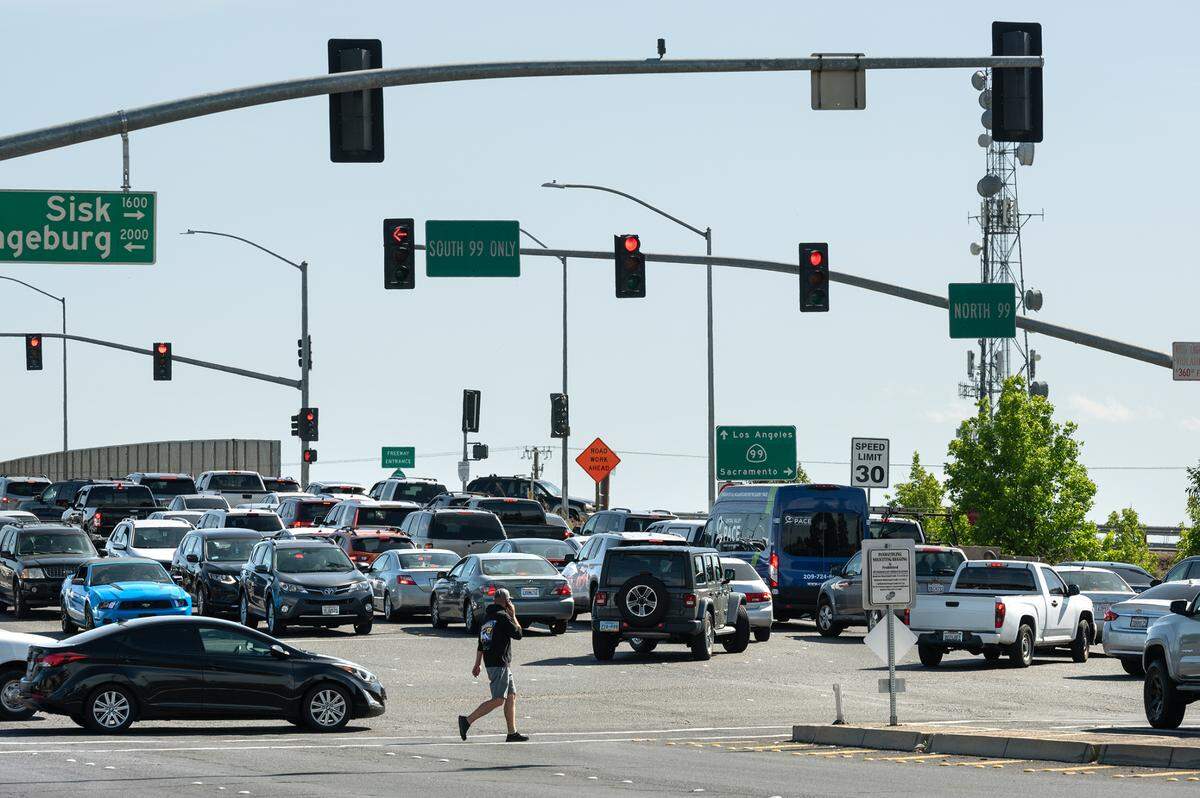
The challenge: The interchange is fed from the east by several busy streets that turn sharply as they approach the freeway. Drivers have scant time and space to get into their desired lanes.
”It’s a mess, to put it simply,” said Howard Michael, an associate vice president and principal engineer at AECOM. He later likened the interchange to “a spaghetti bowl.”
About 80 people turned out at the City Council chamber for the meeting. The options are listed on a PowerPoint document on the study website, www.briggsmore-carpenter.com. It also has an email address for comment over the next few months.
By summer, the team expects to choose the most promising options for further study, including costs and environmental impacts. The final package could involve multiple projects that enhance conditions in the area. Construction could start as soon as 2030.
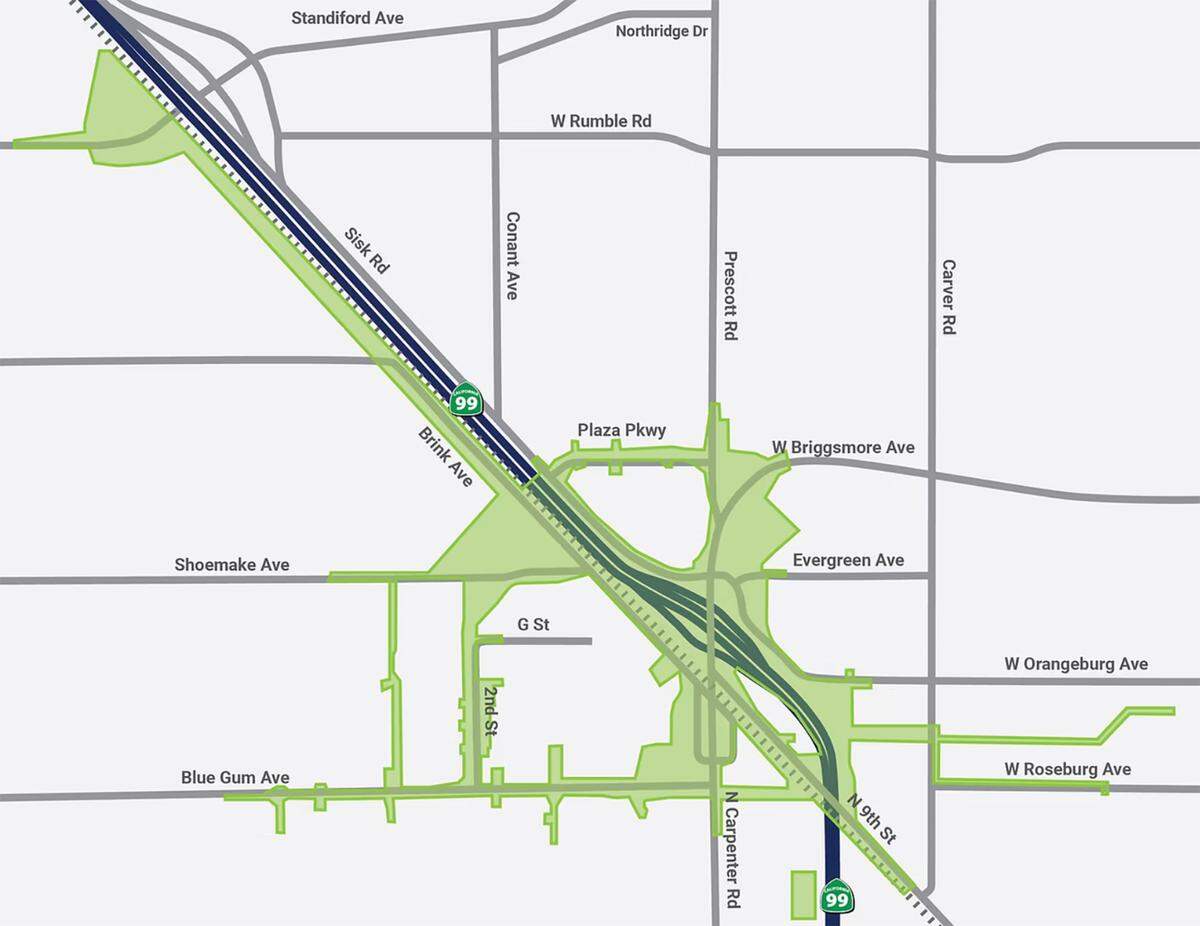
Where might new bridges cross 99?
Michael said about 50,000 vehicles pass on an average day through the point where Briggsmore Avenue meets Sisk Road and Orangeburg Avenue. The Highway 99 ramps are just to the west. The nearest alternatives for freeway access are about a mile south at Kansas Avenue and a mile north at Standiford Avenue.
The project team is looking at a new bridge that would extend Plaza Parkway across 99 to the Modesto Junior College West Campus. This street now serves Kohl’s, Walmart, Winco and many other businesses. It does not provide an easy link with Briggsmore because the latter bends south in this area.
The team also is considering crossing the freeway near the point where North Ninth Street enters the interchange from the south. This could involve an underpass to Blue Gum Avenue, the main access now to MJC West. Or it could be an overpass to Brink Avenue, a freeway frontage route near the rear of the campus. As part of this, Brink could be extended north to the Standiford interchange.
Some of the bridge options could require farmland near the east edge of Wood Colony. The tight-knit community long has opposed being annexed to Modesto and developed.
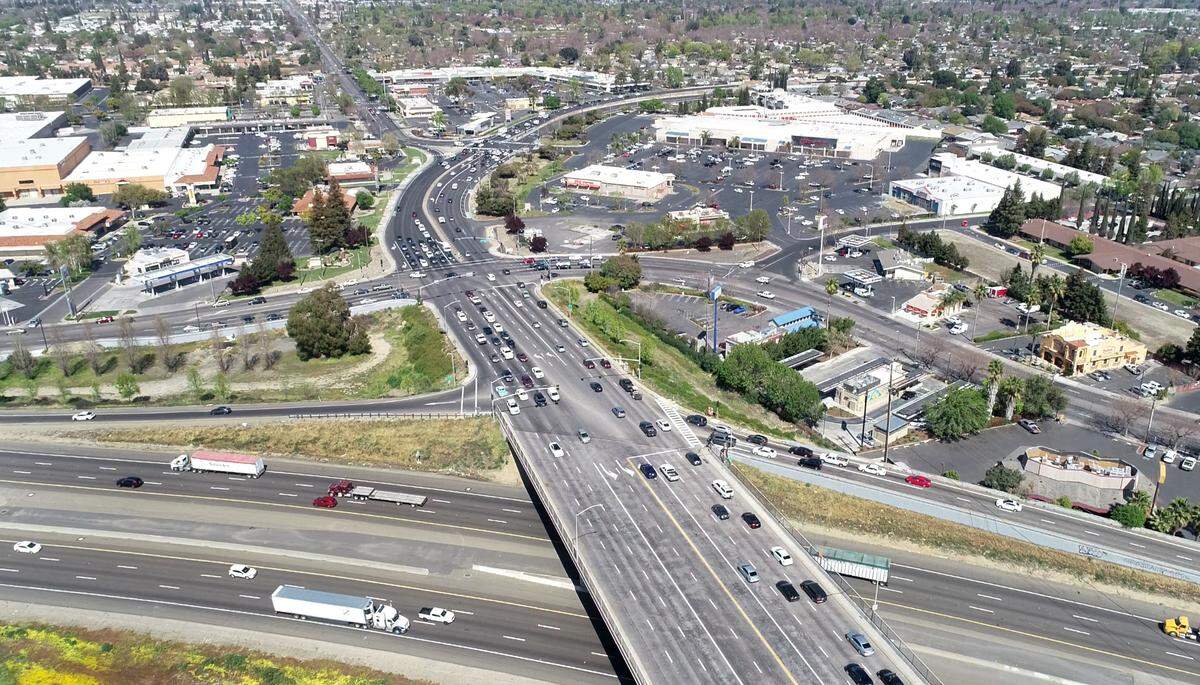
How might Orangeburg be rerouted?
Orangeburg, like Briggsmore, is a major east-west route that enters the interchange at an awkward angle. One option would provide it with its own offramp from northbound 99 just south of Briggsmore. This would allow drivers to go directly east on Orangeburg while avoiding the traffic knot.
Another idea would shift the west end of Orangeburg a little east to more directly connect with Prescott Road. The new alignment would run through the parking lot for FoodMaxx and other businesses. Roundabouts could distribute traffic toward Plaza Parkway and other destinations.
A variation on this option includes a new bridge carrying Briggsmore over its intersection with Sisk and Orangeburg. It would be just east of the current bridge over 99.
Perhaps the simplest project would be on Martin Avenue. It runs for four blocks south from Orangeburg but becomes a dirt path just short of North Ninth. It could get a paved link to the protected bike lane already on Ninth between Briggsmore and the MJC West Campus.
The city already has a grant to extend the bike path to the downtown depot for the Altamont Corridor Express. The first train from Ceres to San Jose could run as soon as late next year on freight tracks next to 99. Modesto officials hope for dense housing around their station and bicycle access from other parts of town.
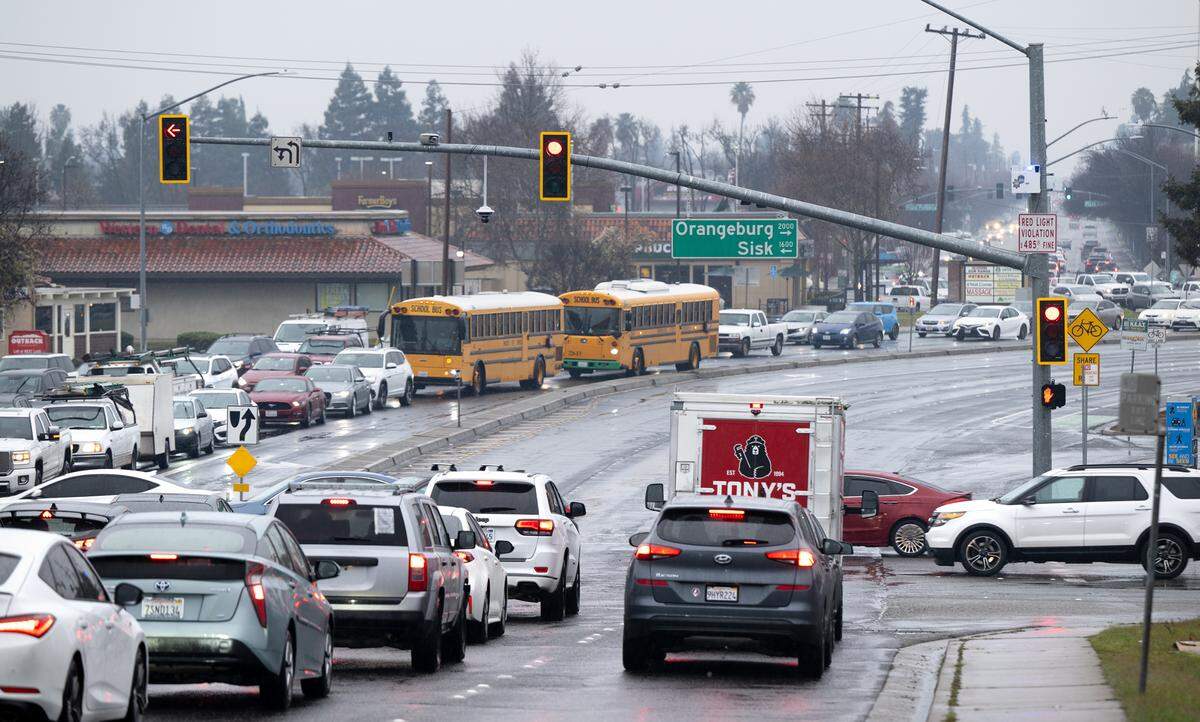
What else might be done at Briggsmore?
Three options for the current Briggsmore bridge over 99 would be variations of the “diverging diamond” design. Drivers would switch from one side to the other before entering the freeway, which fans say is safer than the standard. Manteca opened the state’s first in 2020 on Highway 120 at Union Road.
The Briggsmore interchange was built in the 1960s and enlarged over time, City Engineer Toby Wells said. The onramps and offramps got more lanes, but the junction remains confusing.
“The Band-Aids and the baling wire and the slight expansions are no longer going to cut it,” Wells said.
Because 99 is a state highway, the upgrades must follow the “complete streets” policy at the California Department of Transportation. It was codified into law last year after about two decades of informal guidelines.
This means wider sidewalks and safer crosswalks than those now in place around Briggsmore. Bicyclists would have much more than the obscure route now connecting the MJC campuses. The lanes would have berms rather than the painted stripes on most routes in Modesto and beyond.
Meeting attendee Jim Bishop is a bicyclist who serves on the advisory board for Tuolumne River Regional Park. It has extensive trails away from motor vehicles, but connections to neighborhoods are few.
Bishop said roads would have less traffic if more people could bike near the Briggsmore interchange. The emergence of electric bicycles could help, including hybrids with pedals.
“People are more willing to get out if they have a safe place to ride to get to their destination and back,” he said.
This story was originally published February 21, 2025 at 10:58 AM.