Unsubstantiated reports of ICE and CBP activity in Stanislaus County fuel fear, anxiety
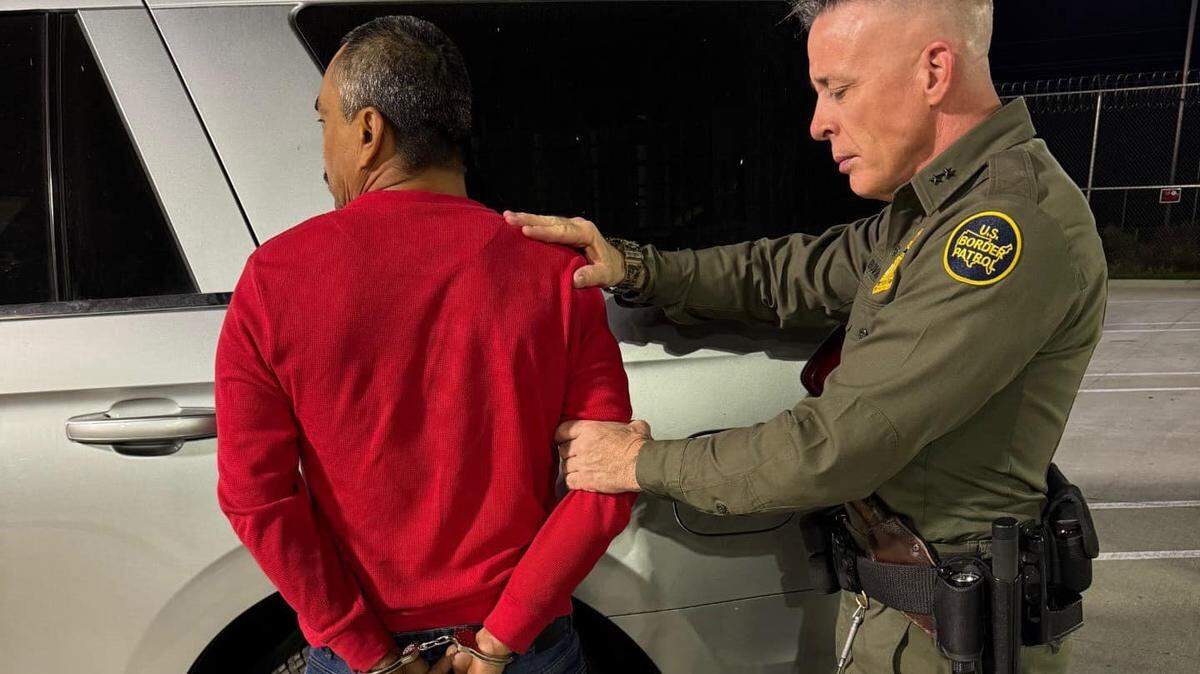
Rumors have flooded social media about immigration agents being active in Stanislaus County after arrests in Kern County. Those rumors have not been confirmed but have caused anxiety and concern among some in the community.
Latricia Beasley-Day, a community organizer for Faith in the Valley, is working with her group’s Valley Watch Network, which has a hot line to report and investigate sightings of Immigration and Customs Enforcement (ICE) and Customs and Border Protection (CBP) agents in the area. She said she responded to two reports on Jan. 9.
“If I get a call from the Valley Watch Network, then I would go out to the scene, take pictures,” she said. “It’s not for us to get involved, just to be there, be a presence, take pictures and document what we see.”
At this point, she’s been unable to confirm any active ICE or CBP activity in Stanislaus County. Sheriff Jeff Dirkse made a point of telling the Board of Supervisors on Tuesday morning that no Border Patrol activity has occurred in Stanislaus County.
Karlha Arias, president of the Stanislaus County Latino Community Roundtable, said she’d been getting reports of sightings of ICE in the county on social media. But she said it’s more likely the reports were about CBP in Kern County, not Modesto.
“Now what we’re doing is unifying nonprofits that have resources to support ‘Know Your Rights’ campaigns for immigrants in our community,” she said.
Both the Stanislaus County Sheriff’s Office and the Modesto Police Department said they have not heard anything indicating that either CBP or ICE is doing any operations in the area.
The Modesto Police Department issued a statement on social media on Jan. 11: “There are reports of U.S. Customs and Border Protection conducting enforcement operations across the Central Valley. To clarify, the law enforcement agencies of Stanislaus County, including the Modesto Police Department, are NOT involved in these operations.”
The Turlock Police Department had a nearly identical post.
Latino leaders from Modesto, Ceres, Riverbank and Patterson issued a joint statement on Jan. 12 about how rumors of ICE and CBP in their communities raises anxiety. “While ICE and CBP operations are typically focused on individuals with criminal records, outstanding warrants, or prior deportation orders, their presence often causes anxiety for many families, including those who are not the focus of these actions. This affects not just undocumented individuals, but the entire community.”
CBP and ICE enforcement roles
The enforcement in Kern County, known as “Operation Return To Sender,” was conducted by the El Centro Sector of CBP. The agency said on social media that it focused on people who were smuggling drugs or had outstanding warrants.
CBP often is seen at ports of entry including harbors, airports and border checkpoints. What makes the recent operation stand out is that CBP is tasked with securing the border and is not considered the primary enforcement agency for immigration law. That would be ICE.
However, CBP can operate within a 100-mile radius of any port of entry, which was determined in 1953 to be a “reasonable distance.” This zone covers more than half of California because the coastline is considered a port of entry. And since both ICE and CBP can enforce immigration law, CBP can do enforcement operations even in the Central Valley.
Though both CBP and ICE are agencies of Homeland Security and can enforce immigration law, most enforcement activity outside of ports of entry is conducted by ICE.
“We have a local ICE office,” said Fernanda Pereira, supervising attorney at El Concilio California. “I’m not seeing it as cost-effective for CBP to randomly advance an operation to do enforcement activity here.”
ICE can operate anywhere in the United States and can detain anyone known by agents to be undocumented.
“If someone is undocumented, they are in violation of the law,” Pereira said. “So the issue becomes, how [is ICE] aware they are here?”
One example is if someone has a previous deportation order but fails to appear in court, ICE can carry out an enforcement operation, she said.
Patrick Kolasinski, a Modesto immigration attorney, recommends staying away from ICE vehicles or agents if you see them. “If they don’t know who you are, they are not interested in you.”
In a response to The Bee, a spokeperson for ICE said, “[Enforcement Removal Operation’s] law enforcement activity takes place around the clock. However, ICE does not conduct raids or sweeps, nor does the agency operate roadblocks or checkpoints. ICE’s enforcement resources are based on intelligence-driven leads and ICE officers do not target noncitizens indiscriminately.”
Kolasinski said CBP regularly can be found in the airport neighborhood in Modesto, but that doesn’t mean there is any major enforcement happening. In his experience, he said, “CPB doesn’t do anything locally, but ICE does.”
However, agents are allowed to ask if you are a legal resident of the United States.
“Don’t disclose more than you have to disclose,” she said. “Don’t carry documents indicating that you were not born in the United States. Don’t lie to law enforcement – just refuse to answer.”
A CBP agent cannot search a person’s belongings without consent or probable cause, and silence does not meet the probable cause standard according to the ACLU.
Everyone has the right to remain silent regardless of immigration status and can exercise that right when asked to respond to an agent.
“The basic advice I give to everybody is don’t carry stuff on you that identifies you as being undocumented,” Kolasinski said. “Don’t pretend to have papers, but also don’t carry anything that could give them reasonable cause.”
If an agent approaches a person at home, the resident is not required to answer the door or answer any questions.
Pereira said people should keep these items in their homes:
evidence of presence in the United States for the last 10 years,
marriage certificates,
birth certificates of any U.S. citizen children
and if possible, passports for citizen children.
People approached by an ICE agent outside of home can ask if they are free to leave. If the answer is yes, leave calmly according to the ACLU.
The Immigrant Legal Resource Center provides “red cards,” which spell out rights and protections, that can be provided to an immigration officer when a person is approached.
Detention and deportation
If people are detained, Kolasinski recommends they remain silent and not sign anything. He said they should get in touch with their family and an immigration attorney as soon as possible.
Unless a person has been previously deported or has committed an aggravated felony, deportation is a very slow process. “If they don’t meet one of those categories, the process can take 13 years,” he said.
Under an application known as “Cancellation of Removal and Adjustment of Status for Certain Nonpermanent Residents,” there are opportunities to get a green card after ICE detention This application applies to people who have “good moral character” and have a documented spouse, parent or a child under the age of 21.
There is a good success rate in California for these cases, Kolasinski said, as long as the subjects have not signed away their rights and agreed to be removed. “For people who do have kids, or a spouse, or a parent who has status, this is often their only path to citizenship,” he said.
Pereira recommends people be prepared in the unlikely event that they are deported. For parents, this means preparing and signing a caregiver’s affidavit so that someone in their family who has status has the power to care for their children’s medical and school needs.
“At this point, we prepare for the worst and hope for the best,” she said.
Faith in the Valley is holding training for people who would like to join the rapid response team for the Valley Watch Network. There are two online trainings scheduled Jan. 15 and Jan. 16.
This story was originally published January 15, 2025 at 8:14 AM.