Rare mountain lion sighting in home’s patio near Stanislaus River in Riverbank
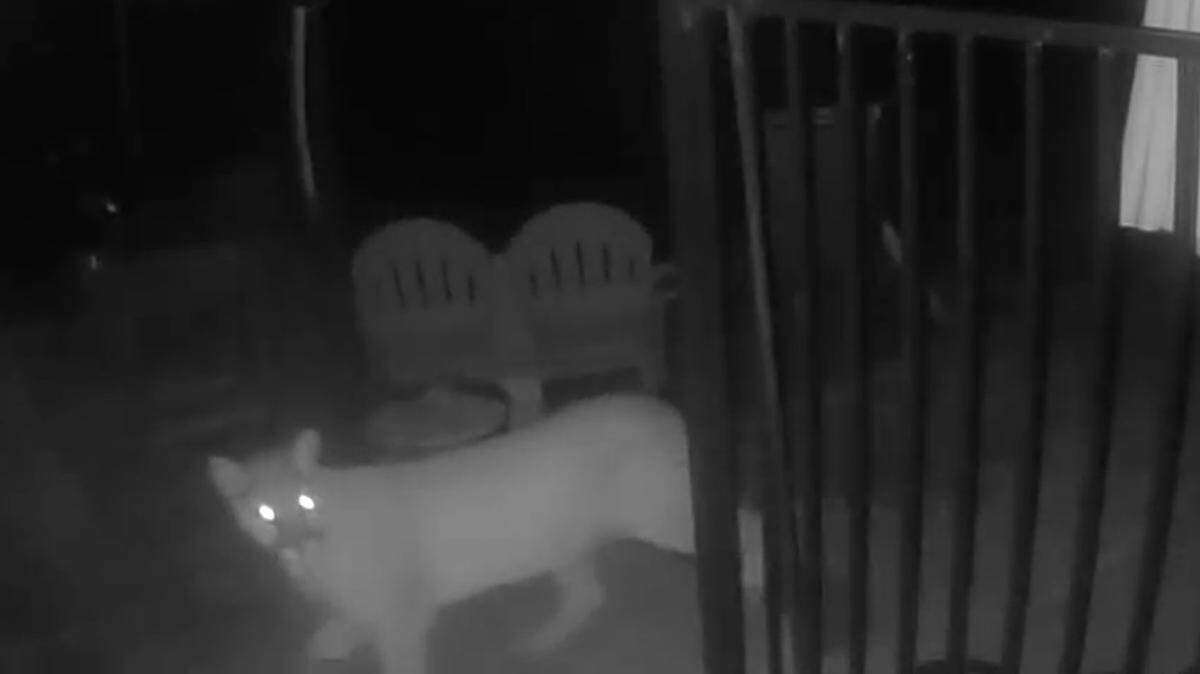
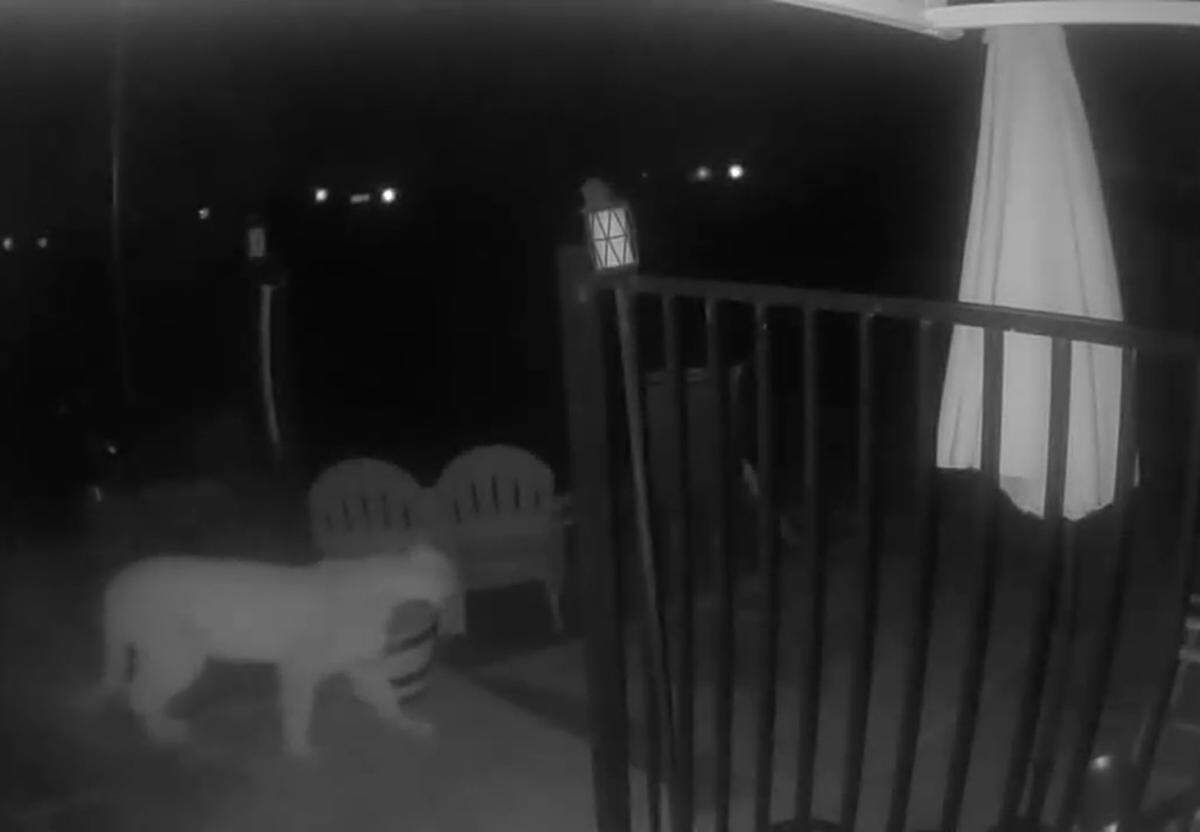
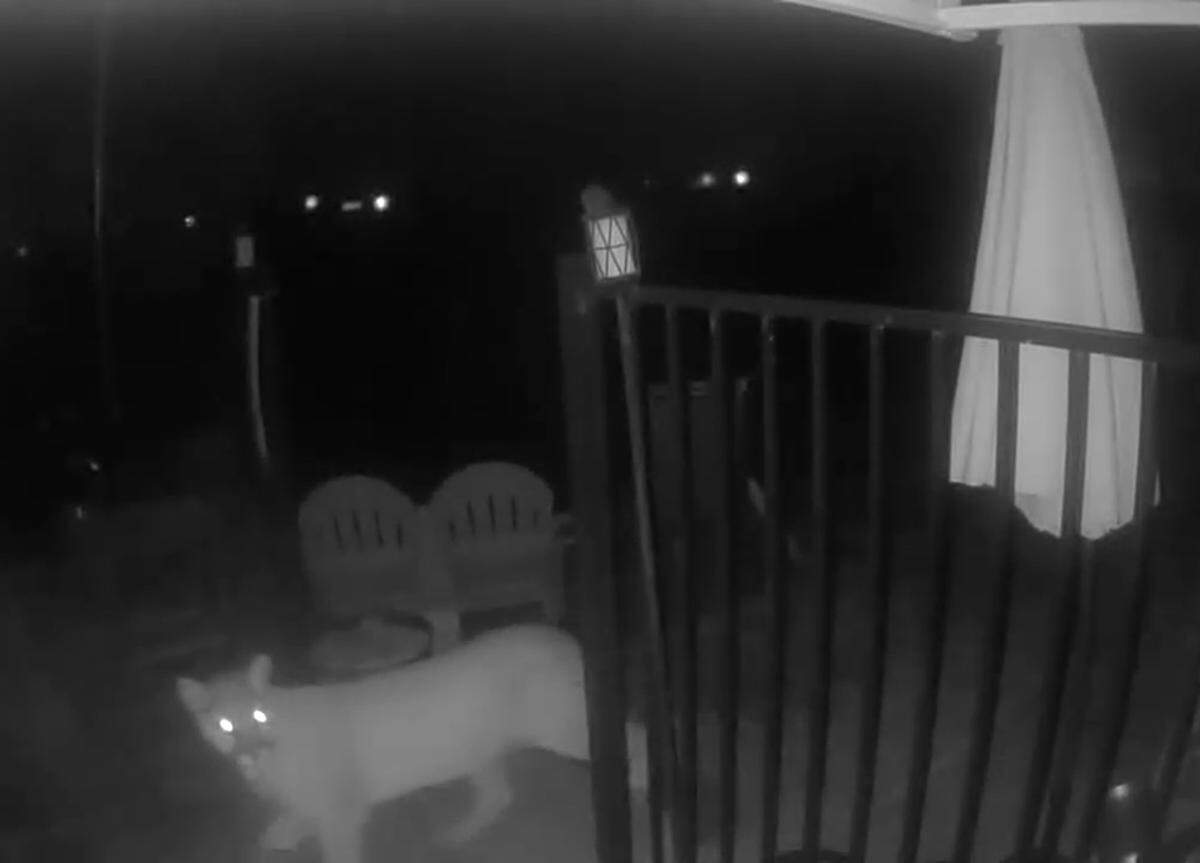
A rare sight greeted a Riverbank resident as she checked her Ring camera Jan. 8: A mountain lion had wandered onto and off of her property overnight.
Rene Lindgren, 34, said she heard from a neighbor whose Ring camera caught the large mountain lion running away Tuesday night, which prompted her to check her own camera.
“Sure enough, he came in front of our camera about six times,” she said. “He went back and forth in front of our patio and we got a pretty clear shot of his face — it was a beautiful cat, but also pretty scary.”
The large cat was seen around 1 a.m. Wednesday.
Mountain lions, or “pumas” as they are often referred to, are native to California but largely stay away from humans. There are around 4,500 mountain lions throughout the state, according to Mountain Lion Foundation.
Krysten Kellum, spokesperson for the California Department of Fish and Wildlife, said it’s rare to see a mountain lion in a populated area.
“They typically avoid humans, they don’t want to be seen,” she said. “But sightings are not unheard of.”
Lindgren said she had heard there was another mountain lion in the area a couple of years ago, but nothing since then.
“We live right on the Stanislaus River, so it’s kind of a highway for animals,” she said. “We get all sorts of animals that come through there — raccoons, we have beavers that we look at down on the river. You know, it’s a highway for wildlife.”
Kellum said the mountain lion likely came down from the open space to the east, following the river corridor.
“They’re looking for prey, they might be looking for water, “ she said. “They usually make their way back into the open space. They didn’t know they were making their way into a populated area.”
Josh Rosenau, director of policy and advocacy at the conservation organization Mountain Lion Foundation, said mountain lions probably always have been in these areas. But now with the popularity of home security cameras, they are being seen more often.
“Ten years ago, you wouldn’t have necessarily known about it,” he said, “even if the actual number of mountain lions coming close to housing may not be any different than it ever was.”
Rosenau said mountain lions are really mobile and can cover large areas of the state.
“One mountain lion, an adult, may have a home range of 100 and in some cases 200 square miles,” he said. “And usually one male will overlap with the home range of four to five females.”
Take precautions during times cats are most active
The big cats are most active between dusk and dawn.
“This is the time when you might want to avoid going on a walk, hike or bike ride,” Kellum said.
If there have been sightings in your area, Kellum recommends taking pets in for the night or moving livestock to a secure enclosure.
While sightings are most likely in rural areas or locations abutting wooded areas, Kellum suggests caution. “If you are out taking a walk with pets or small children, keep those dogs on a leash and keep small children close to you. Don’t let them run up ahead,” she said.
Lindgren said she has a dog and a cat, but both were indoors. She has large windows and wondered if that may be the reason the mountain lion stuck around. “Maybe he saw the cat in the window,” she said.
“If you’ve got a garden or something that’s drawing deer, you may want to deer-proof your property, because if you are attracting deer, you are attracting a mountain lion’s favorite food source, ” Kellum said.
You can also install outdoor lighting, which will help keep mountain lions visible, and avoid thick vegetation around your home, which may serve as a hiding place.
With all that said, Kellum emphasizes it’s still “incredibly rare” to encounter a mountain lion.
“You’re more likely to be struck by lightning than by a mountain lion,” she said.
Violent encounters with humans are rare
Rosenau said there are very rare examples of mountain lions having violent interactions with humans.
“It’s not zero, but when you think about the fact that most mountain lions are in wooded areas, in the kinds of places where people go hiking, they are around people and have no interest,” he said.
Keep pets leashed and not walking ahead of you when in a mountain lion habitat, and never approach a mountain lion. When you see one, do not run — stay calm, face the cat, make yourself appear big and make loud noises to scare it off.
If a mountain lion goes after a pet or livestock, contact the California Department of Fish and Wildlife so it can assess the situation and provide mitigation strategies.
Lindgren said her first reaction to seeing the large cat on camera was shock. She knew they were in the area, but to see one so close to home was “pretty wild.”
“We are in their territory, but we also have to be safe in our community,” she said. “Just understand that they’re in the area.”
This story was originally published January 12, 2025 at 6:00 AM.