A game-changing law against secret meetings started here in Modesto over 70 years ago
The Brown Act is one of the most comprehensive open-meeting laws in the country and has left a lasting legacy on how local governments and agencies conduct the public’s business.
The story of its creator, California Assemblyman Ralph M. Brown, starts here in Modesto.
The preamble to the Brown Act, states in part, “The people, in delegating authority, do not give their public servants their right to decide what is good for the people to know and what is not good for them to know.”
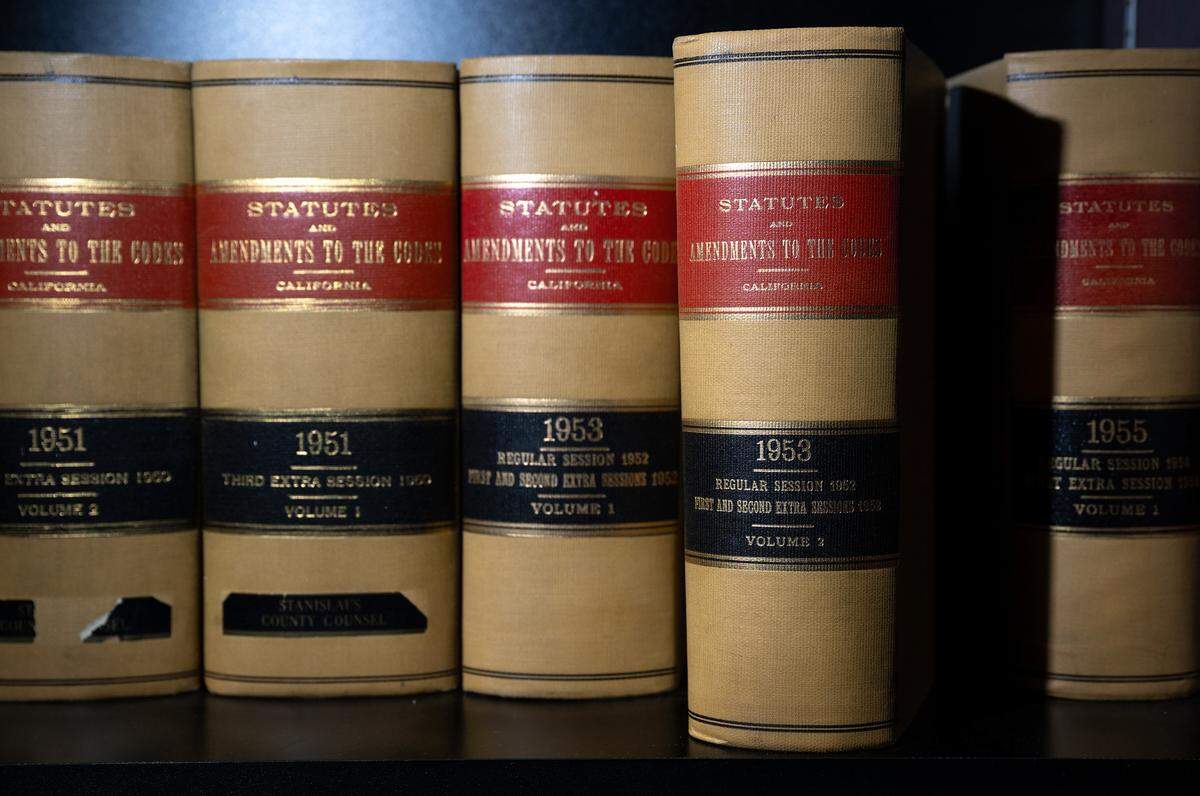
Though there were general open meeting laws in place in 1952, there was nothing this “in your face,” said Stanislaus County Counsel Tom Boze.
“They were angry, they were insistent and they were demanding,” he said of lawmakers and the public before the law. “That’s history speaking to us today.”
In essence, this “sunshine law” created an explicit requirement that public bodies — including advisory bodies, boards, commissions and committees — make decisions where the public can participate and detail how that should be done.
The local history of Ralph M. Brown
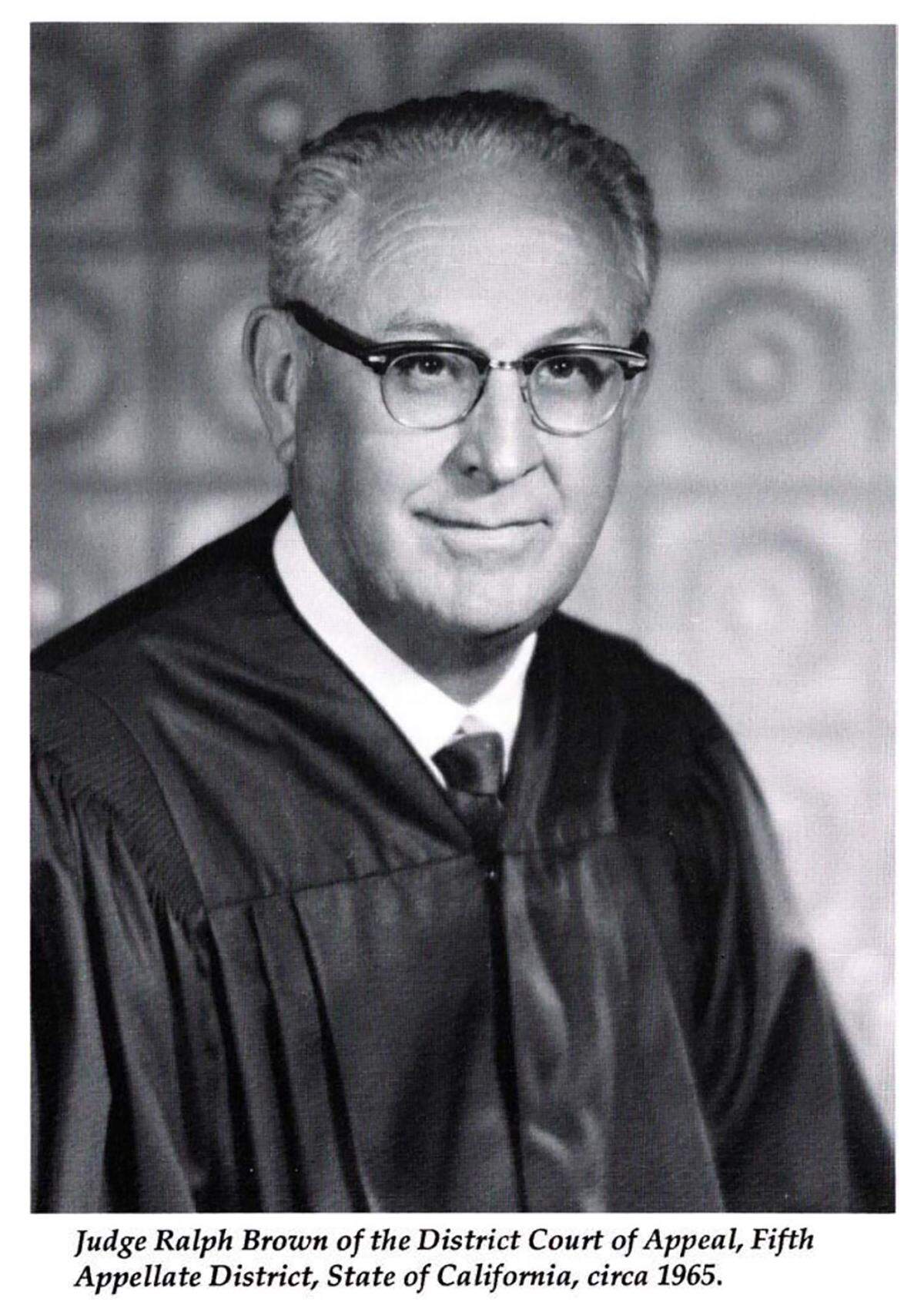
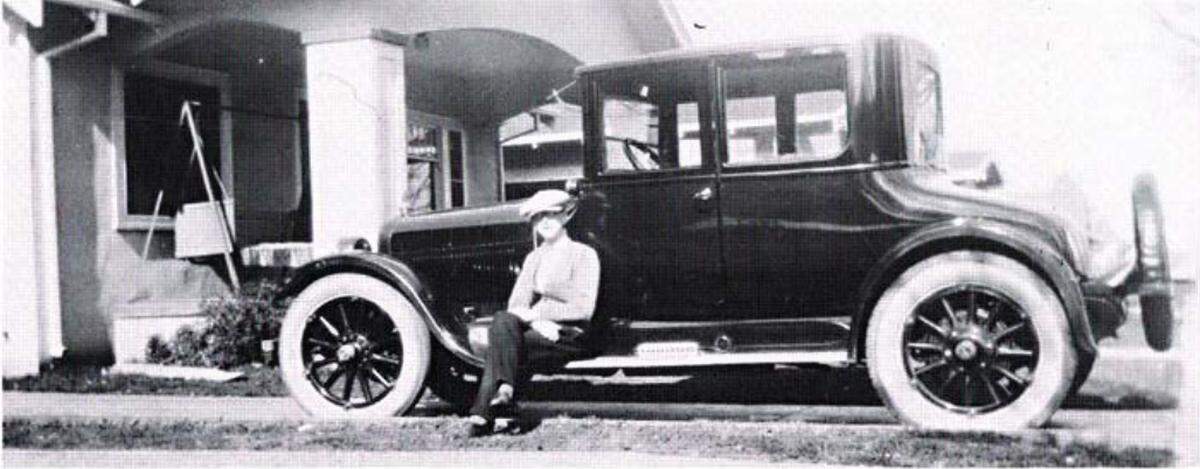
Just north of downtown Modesto on Magnolia Avenue sits a California-style bungalow, now considered a historical landmark, where Ralph Milton Brown spent his childhood, having moved with his family from Kentucky in 1910 when he was 15 months old.
Brown’s father was district attorney for Stanislaus County, and when Brown got older, he followed his father’s legacy and became an attorney.
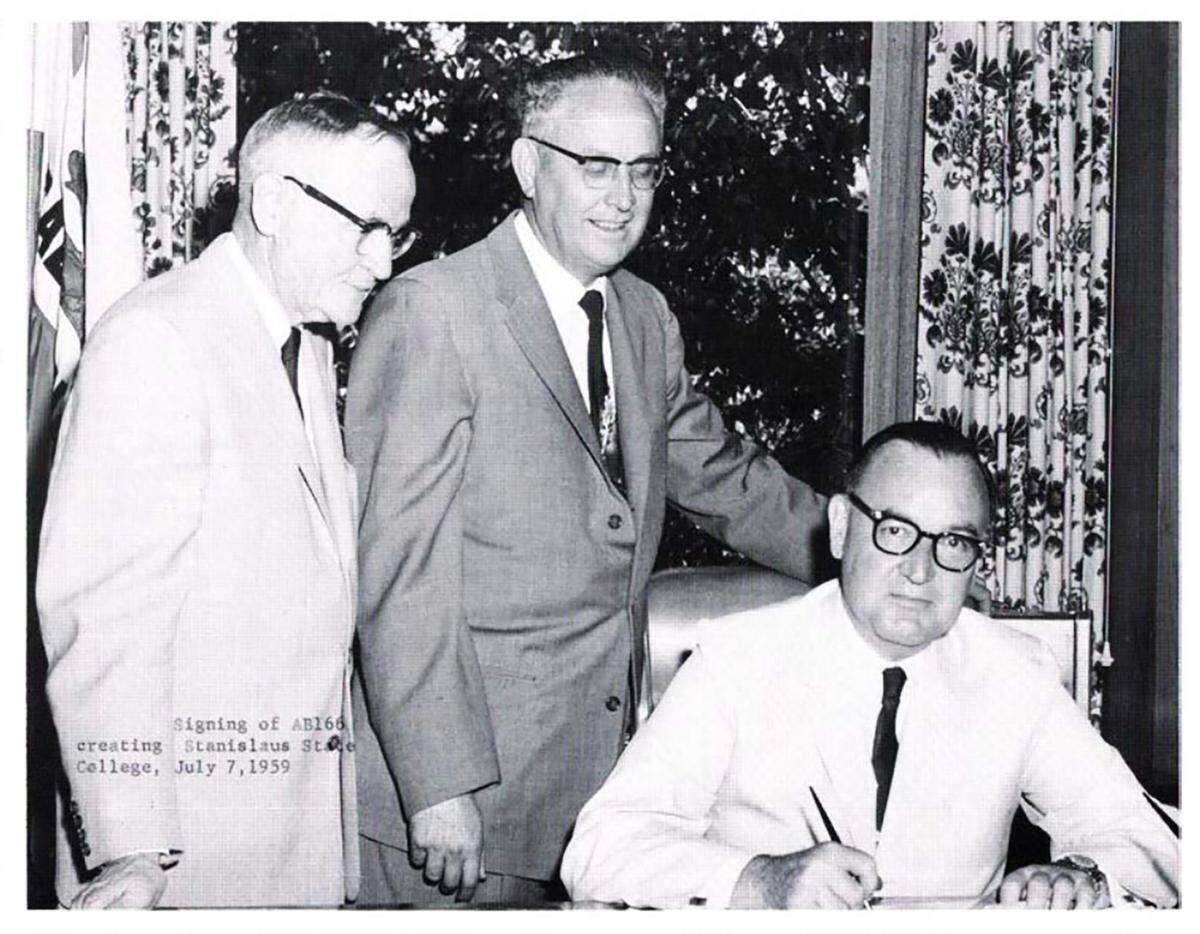
In 1942, Brown turned to politics and became a California Assembly member representing the area of Stanislaus, Merced, Tuolumne and San Joaquin counties. He served nine consecutive terms, and it was in that role that he drafted the Brown Act of 1953.
“When I landed here in 2005 and I discovered that Mr. Brown grew up here, that was a great feeling,” Boze said. “It was great to know, ‘Hey, I live in a place that has a real tangible connection to something that I do every single day.’”
In 1952, The San Francisco Chronicle published a 10-article investigation, “Your Secret Government,” that looked into local scandals that arose from decisions made out of public view. The growing concern about public meetings aligned with Brown’s desire to increase transparency in local government.
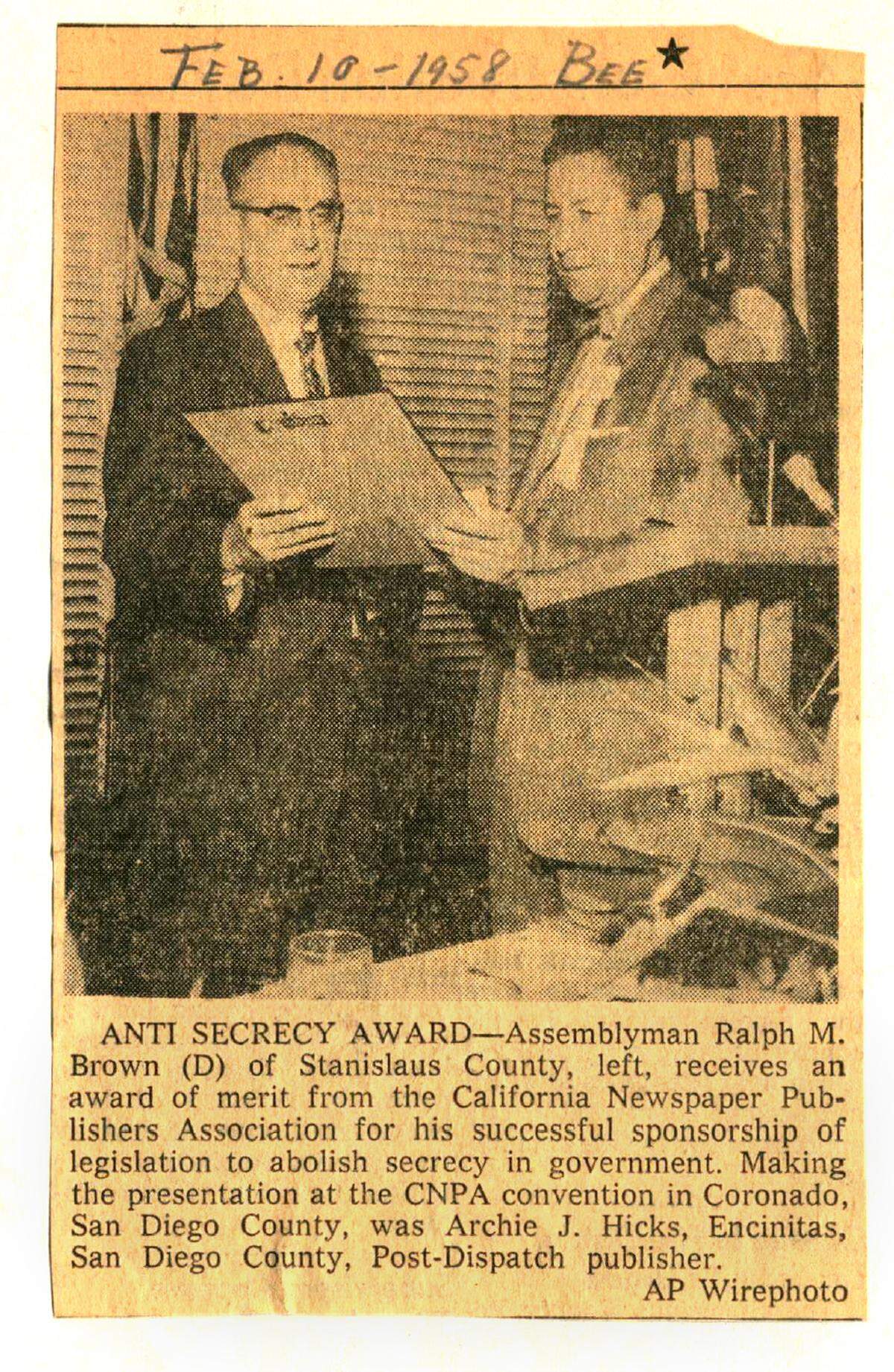
Five years after the Brown Act went into effect, Brown received an award for anti-secrecy from the California Newspaper Publishers Association. A year later, he was named Assembly Speaker. By 1961, he was sworn in as an appellate judge of the California Supreme Court’s newly created 5th District.
On April 9, 1966, Brown died at age 57. His funeral was at the First Christian Church in Modesto, where he was an active member, and he was buried at Lakewood Memorial Park in Hughson.
The importance of the Brown Act today
Angélica Salceda, director of the ACLU of Northern California’s Democracy and Civic Engagement Program, said legislative bodies including state, local and special districts make important decisions and have a duty to meet in public.
“We need our local government to be transparent in their dealings so that they can make the important policy decisions that are reflective of the values and needs of the community,” she said.
Boze said the Brown Act comes up in his work about once a week since he moved out to Modesto in 2005. About half of his time working with the Brown Act is training, he said.
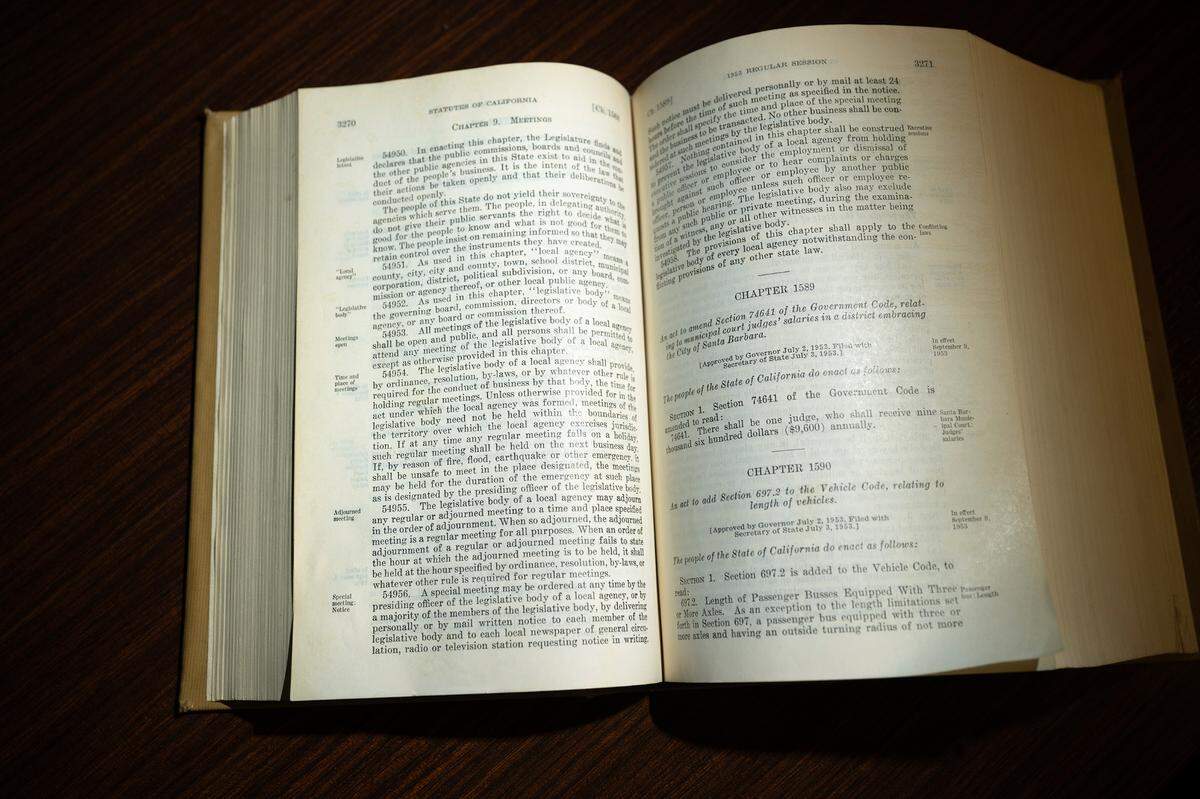
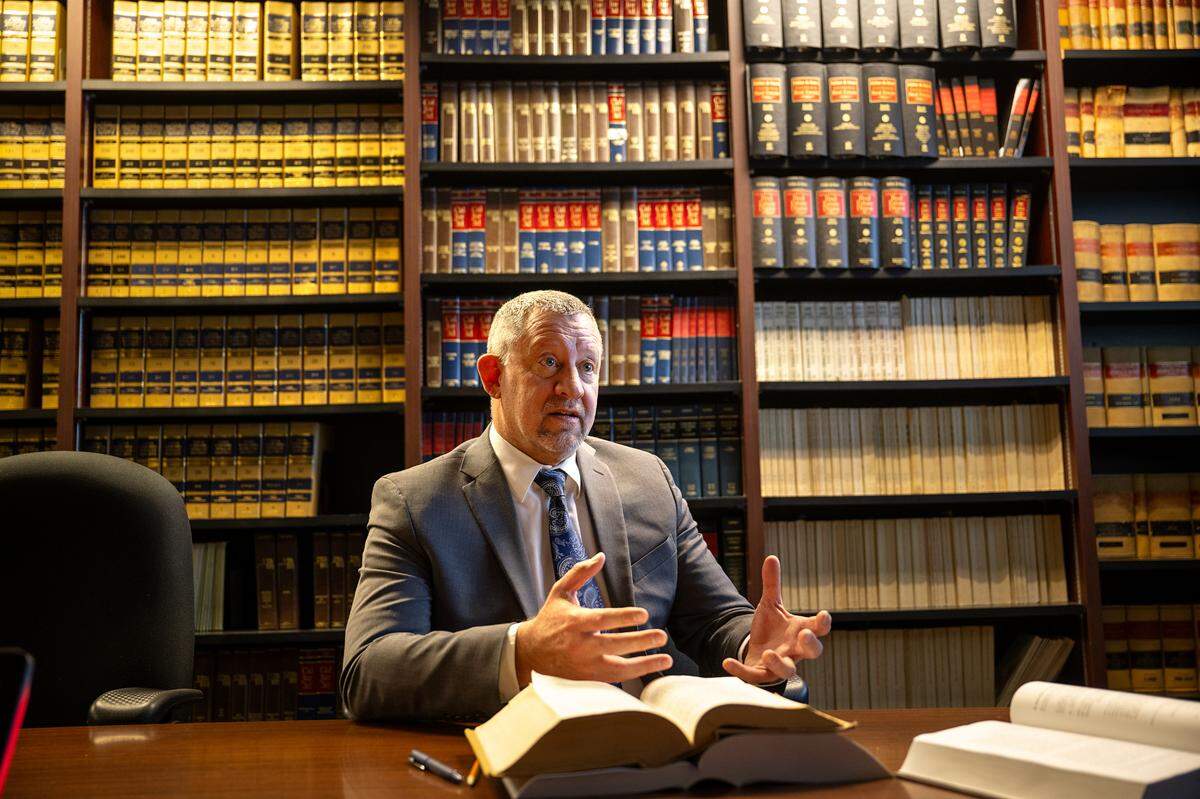
“Any area that you’re working in, say it’s Public Works, Planning and Community Development, [Stanislaus County Behavioral Health and Recovery Services] or any of those large departments, it’s something that you have to have a pretty good handle on so that you don’t run afoul of the requirements,” he said.
Here’s what the Brown Act requires:
Agendas:
Meeting agendas with time and place should be published in a 24-hour accessible location 72 hours in advance of a regular meeting and 24 hours in advance of a special meeting.
Agenda items should be written clearly and provide enough information for a member of the public to determine if they want to provide comment.
Salceda said when possible, it’s helpful for legislative bodies to look beyond the bare bones of what the Brown Act requires and look toward how to make meetings as accessible as possible.
“There’s posting requirements for an agenda and those are usually met by posting the agenda on their website or at city hall,” she said. “But you know, not everyone goes to their city hall to see what notices are being posted — literally posted on a notice board. Not everyone goes on to their websites.”
She recommends posting agendas on social media or other places where people can more easily access them and encourages people to go above and beyond to increase public participation.
Meetings
Meetings by a legislative body should be open and accessible to the public.
Decisions must be made in public – meaning there are no secret ballots.
A quorum cannot discuss an item coming before the board as an official item of business outside of a public meeting.
Christina Pritchard, a Sacramento-based attorney who works with small government bodies, said one thing she wants her clients to remember is “daisy-chaining.” This is when one member of a public body speaks to another member of that body, who speaks to another member until eventually, they all end up discussing an item coming before the board for action before the public has a chance to weigh in.
“It’s so easy to get into conversations with somebody and just forget about the fact that they may go in and talk to another council member, and you’re not even thinking about it,” Pritchard said.
Anything that results in a majority of the board discussing an agenda item could constitute a “serial meeting.”
“It comes up a lot with developers,” Boze said. “That desire to meet with electeds can cause some Brown Act issues.”
Public comment
The public is allowed to comment both generally on issues within the body’s jurisdiction and on any and all items on the agenda before a decision is made by the body.
Members of the public should be given an equal opportunity to speak.
Members of the public are not required to provide their names in order to comment.
Speakers can criticize the public body but they may not disrupt a public meeting. After a warning, commenters can be removed if they are disrupting a meeting during public comment.
Boze said he would like to think the public is well-versed in the Brown Act, but he’s not sure that’s true.
“I think it’s important that people who are interested in local government take the time to understand the Brown Act and what it requires,” Boze said. “Sometimes the things that we do that make the public scratch their head, and say, ‘Why are you doing this?’ is because of requirements in the Brown Act.”
The American Civil Liberties Union created a toolkit for the public to help the public better understand the Brown Act.
Things to keep in mind about the Brown Act
There are narrow exemptions to the Brown Act centered on public policy, including closed sessions for discussion of ongoing litigation or real estate negotiations, employment issues or for small under quorum ad-hoc committees.
“The Brown Act generally says all business of a local public entity shall be done in the open,” Boze said. “That’s great, but with every law there are exceptions, and there are exceptions to those exceptions.”
For specific circumstances, it’s recommended representatives seek legal consultation.
Pritchard said she wants the public to give elected officials a break. She said the law is very complicated and hard to understand for people elected to small agencies.
“I think that there is very little nefarious activity going on, in comparison to how much the public thinks that their government is working against them,” Pritchard said.
Something that sets the Brown Act apart from sunshine laws in other states is that it offers the opportunity to “cure and correct” Brown Act violations. This means that public bodies have the opportunity to ratify a decision by properly agendizing it and having an open meeting where they go through the discussion and decision-making process again.
Boze said he really encourages the public to learn a little bit more about the Brown Act. “Especially the residents of Modesto – they should be especially proud of it and feel like this is part of their history.”
This story was originally published January 10, 2025 at 12:00 PM.