Modesto completes funding for six-story apartment building downtown. When will it open?
Modesto has secured all of the money needed to erect a six-story apartment building downtown.
The low-income project is expected to open at Seventh and J streets sometime in 2027. The 79 units are a key step toward making the city’s core more dense and walkable.
A state agency on Wednesday, Dec. 11, allocated the final funding piece: $37.5 million from the sale of bonds to investors. They will get credits on their federal income taxes in exchange for reduced payments from renters.
Other state, city and nonprofit sources will help cover the roughly $70 million total cost of the project, called Seventh Street Village. Modesto is partnering on it with Visionary Home Builders of California, a nonprofit based in Stockton.
“We hear residents’ concerns about the lack of affordable housing much too often,” Mayor Sue Zwahlen said in a news release. “Seventh Street Village is one way to reduce the disparity.”
Construction will start next fall and take 18 to 24 months, said an email from Sonya Severo, public relations and legislative affairs manager for the city. The developer will need various permits, and the City Council must finalize agreements with funding sources.
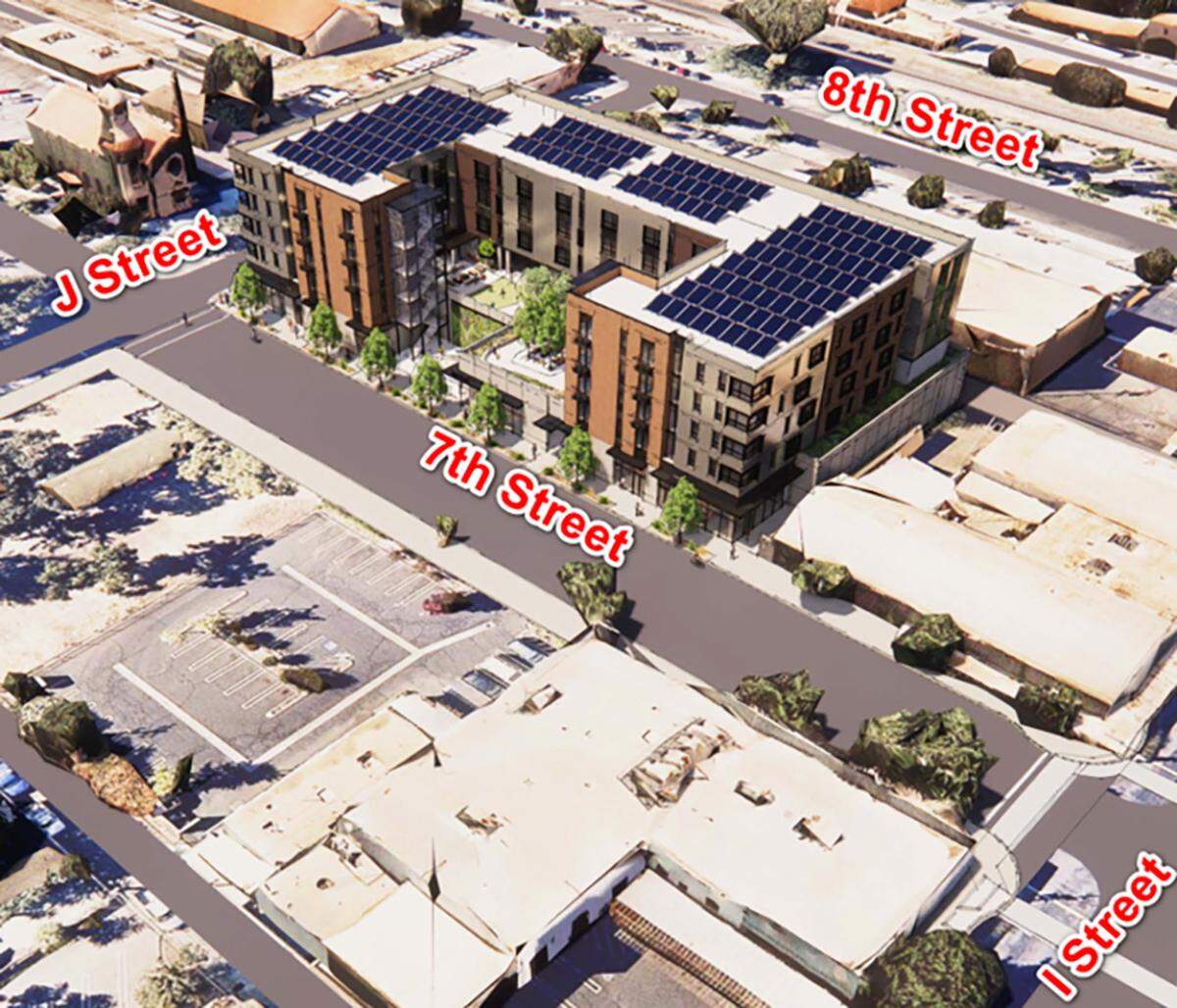
A short walk to bus and future rail hub
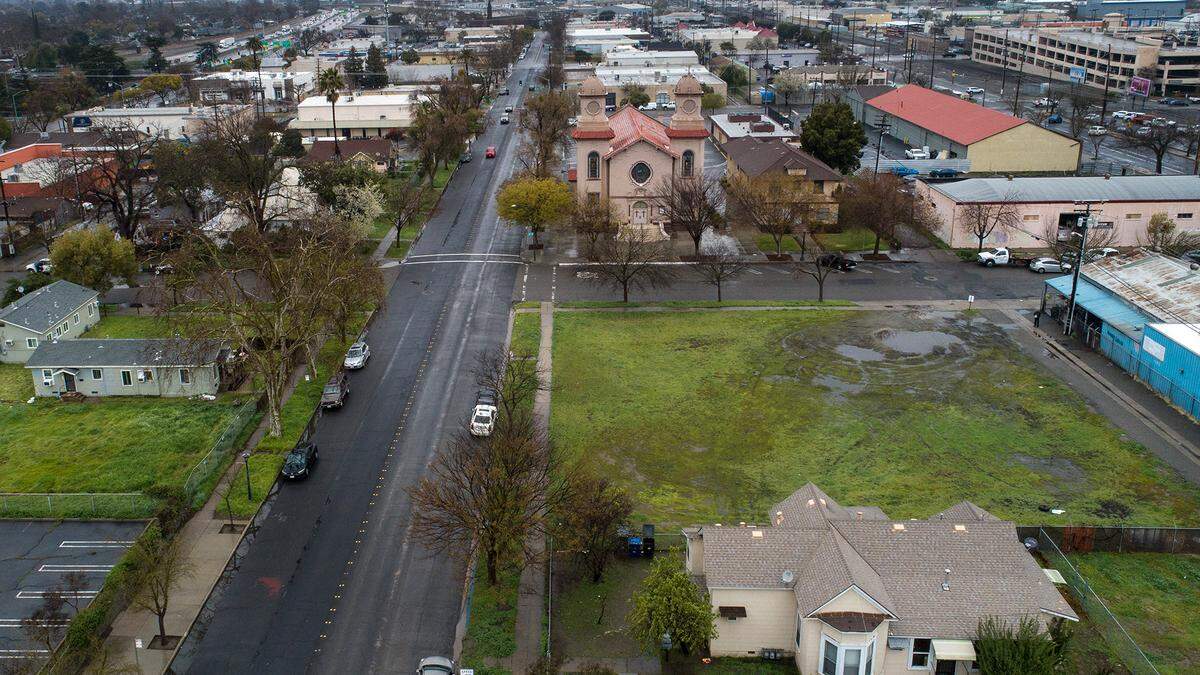
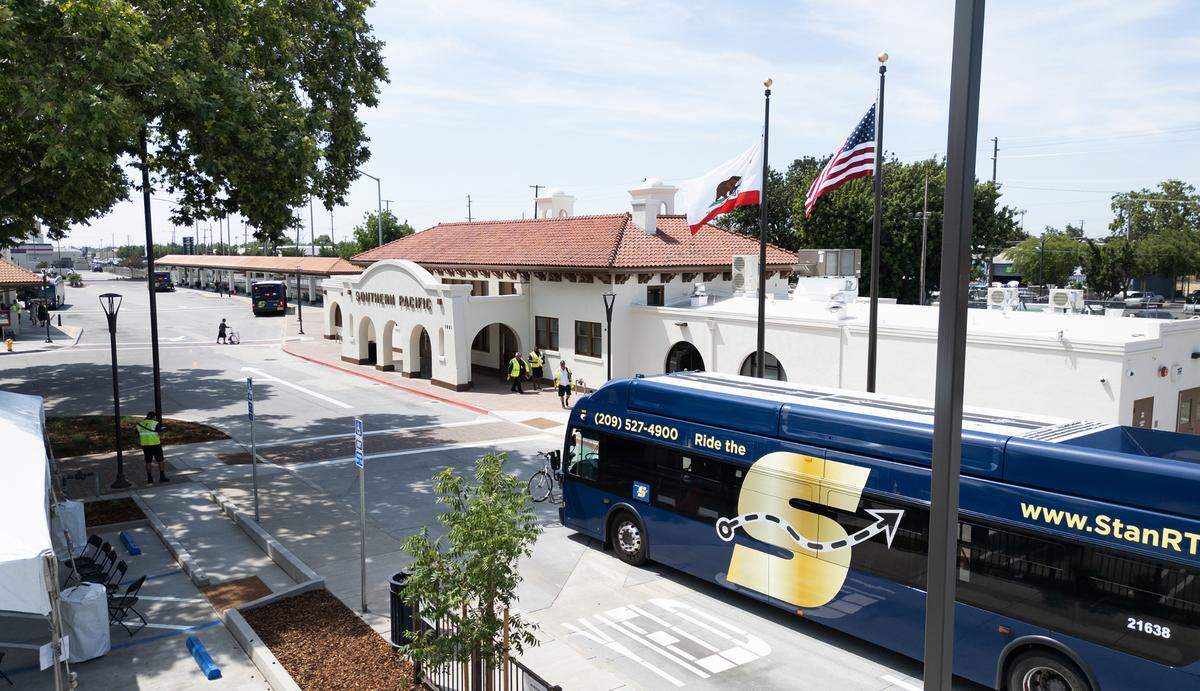
The site is just a block from the Modesto Transit Center, a recently restored hub for buses. It also will serve the expanding Altamont Corridor Express rail line as soon as late 2026.
The location reflects a move away from annexing farmland in favor of building upward downtown and along underused retail strips.
Downtown has only two large apartment complexes to date, both built for seniors on 17th Street. Ralston Tower opened in 1974 and Tower Park in 2016.
The district has plenty of office workers, along with restaurants and entertainment venues. Leaders have said Seventh Street Village could encourage market-rate housing along with subsidized units.
The average rent citywide was $1,711 in November, according to RentCafe. Some of those units are occupied by people who might buy houses if they were affordable. Stanislaus County’s median sale price was $480,000 as of September, out of reach for 71% of its households, the California Association of Realtors reported.
What is the rent range for the project?
Seventh Street Village will be for households making 30% to 80% of the area’s median income, currently $72,900 a year for a family of four.
Monthly payments will start at $512 for a one-bedroom unit for renters who make 30% of the median income. The top rent will be $1,895 for a three-bedroom unit for a family at 80%. The project also will have two-bedroom apartments. Two manager units are among the 77 subsidized homes. The rents cover utilities, including electricity partially from rooftop solar panels.
Seventh Street Village will have parking on the first two stories, and most of the apartments will be on the other four. The ground floor also will have a social center, a Head Start program for preschoolers, and possibly a small grocery store.
Visionary Home Builders will announce the application process as construction advances.
“Seventh Street Village is more than just a development, it’s a beacon of opportunity and transformation for the Modesto community,” said Carol Ornelas, president and chief executive officer. “This project will bring quality housing, create jobs and revitalize downtown, catalyzing economic growth and social connections.”
The tax-exempt financing was recommended by the staff for the California Tax Credit Allocation Committee. It was approved 3-0 by the members: State Treasurer Fiona Ma, Controller Malia Cohen and Gustavo Velasquez, director of the California Department of Housing and Community Development. A total of 79 projects around the state got a total of $2.82 billion in funding at the meeting.
What are the other funding sources?
Seventh Street Village got money last year from the state Affordable Housing and Sustainable Communities program. It provided $17.3 million for the building itself and $15 million for transportation elements. The latter includes $6 million to buy a zero-emission locomotive for ACE and $9 million worth of new sidewalks, bicycle lanes and street trees near the apartment site.
ACE has run since 1998 between Stockton and San Jose, mainly serving commuters to Bay Area jobs. Its southern extension could reach Modesto and Ceres in late 2026 and Turlock and Merced a few years later. A northern branch will go as far as the Natomas area of Sacramento.
The expanded service would mainly serve Bay Area commuters to start but could eventually have a timetable useful to leisure travelers.
Seventh Street Village’s other funding sources are:
- $6.75 million from various state housing programs that the City Council set aside in early 2023.
- $6.24 million from deferral of the city developer fees for five years. The fees account for demand on various city services.
- $970,000 from the Raza Development Fund, a Phoenix-based lender focusing on Latinos.
This story was originally published December 11, 2024 at 6:06 PM.